DR. PAM | MEDIA PSYCHOLOGIST
THE PSYCHOLOGY OF DIGITAL BEHAVIORS
  • Home
  • Blog
  • About
    • About Dr. Pamela Rutledge
    • Media Psychology
      • What Is A Media Psychologist?
      • 8 Reasons Why We Need Media Psychology
      • Careers in Media Psychology
      • Example Careers in Media Psychology
      • Media Psychology at Fielding Graduate University
      • Positive Media Psychology
    • MPRC
      • Media Psychology Research Center
    • Media Psychology Review
  • Consulting
    • Speaking & Consulting
    • Audience Engagement: Why Use Personas?
      • How to Build a Persona
    • Adapting to Change
    • Transmedia Storytelling
      • Storytelling Across Platforms
      • Transmedia Storytelling Starts with the Power of Story
      • Our Transmedia World
      • Transmedia Case Study: The Three Little Pigs
      • Transmedia Storytelling Workshop
  • Story Power
    • Brand Storytelling
    • Storytelling: Brands, Entertainment & Organizations
      • Storytelling for Organizations
      • Core Story: Case Study
  • In the News
    • Press Quotes & Interviews 2022-2025
    • 2021-2019
    • 2018-2016
    • 2016-2017
    • 2015-2013
    • 2012 & EARLIER
    • Video Interviews & Webinars
  • Resources
    • Mindful Media & Digital Literacy
      • Positive Media Psychology
      • Benefits of Video Games Part 1
      • Benefits of Video Games Part 2
      • Benefits of Video Games Part 3
      • Becoming Mindful: Exercises
      • Mindful Media Journal
    • Academic Materials
      • Media Psychology Syllabus 2021
      • Media Psychology Syllabus 2012
      • Media Psychology Syllabus 2015
    • Articles
      • Persuasion & Augmented Reality
      • Psychology of Transmedia Engagement
      • Theories of Attention
      • The Psychology of Color
      • Website Design: How to Use Psych Theory
      • Data Strategy: Listen to Your Consumers’ Stories
      • The Psychology of Story
  • Archives
  • Contact
DR. PAM | MEDIA PSYCHOLOGIST
  • Home
  • Blog
  • About
    • About Dr. Pamela Rutledge
    • Media Psychology
      • What Is A Media Psychologist?
      • 8 Reasons Why We Need Media Psychology
      • Careers in Media Psychology
      • Example Careers in Media Psychology
      • Media Psychology at Fielding Graduate University
      • Positive Media Psychology
    • MPRC
      • Media Psychology Research Center
    • Media Psychology Review
  • Consulting
    • Speaking & Consulting
    • Audience Engagement: Why Use Personas?
      • How to Build a Persona
    • Adapting to Change
    • Transmedia Storytelling
      • Storytelling Across Platforms
      • Transmedia Storytelling Starts with the Power of Story
      • Our Transmedia World
      • Transmedia Case Study: The Three Little Pigs
      • Transmedia Storytelling Workshop
  • Story Power
    • Brand Storytelling
    • Storytelling: Brands, Entertainment & Organizations
      • Storytelling for Organizations
      • Core Story: Case Study
  • In the News
    • Press Quotes & Interviews 2022-2025
    • 2021-2019
    • 2018-2016
    • 2016-2017
    • 2015-2013
    • 2012 & EARLIER
    • Video Interviews & Webinars
  • Resources
    • Mindful Media & Digital Literacy
      • Positive Media Psychology
      • Benefits of Video Games Part 1
      • Benefits of Video Games Part 2
      • Benefits of Video Games Part 3
      • Becoming Mindful: Exercises
      • Mindful Media Journal
    • Academic Materials
      • Media Psychology Syllabus 2021
      • Media Psychology Syllabus 2012
      • Media Psychology Syllabus 2015
    • Articles
      • Persuasion & Augmented Reality
      • Psychology of Transmedia Engagement
      • Theories of Attention
      • The Psychology of Color
      • Website Design: How to Use Psych Theory
      • Data Strategy: Listen to Your Consumers’ Stories
      • The Psychology of Story
  • Archives
  • Contact
Mar 03

Twitter and Sheen: We Can’t Resist a Good Narrative

  • March 3, 2011
  • Pamela Rutledge
  • 2 Comments

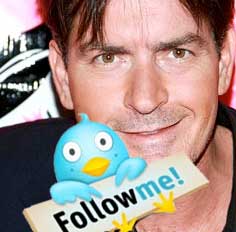
Twitter’s Authenticity and Immediacy are turning Charlie Sheen into (even more of) a Media Sensation.

Twitter is just like sitting courtside. While plenty of people have thrown in their two cents on Charlie Sheen’s recent and extraordinarily public bad boy behavior, what’s most interesting to me is that Sheen has taken his campaign to Twitter. While I have no doubt that Sheen has a team of public relations professionals, the use of Twitter makes it appear much more direct.  Unlike other forms of media, like Entertainment Tonight interviews, we experience Twitter as authentic, immediate, and down and dirty.

This is true for two reasons.  First, any interview, press report, or magazine expose is subject to editing and framing, the questions the journalist or commentator asks, as well as the decisions made by the editor and producer.  And while media professionals often strive for some sort of truth, they also are influenced by ratings if not their personal point of view.

Second, Twitter has the aura of transparency.  We monitor world changing events, watch revolutions, we feel angst and bear witness to violence.  At the more superficial end, we hear how long the line is at the supermarket.  But what we do see feels real.  It’s constrained only by 140 characters and the author’s good sense, and not subject to the normal rules and gatekeepers of mass media or journalistic positioning.  On Twitter, we have the sense that we are first hand witnesses to Sheen’s downward spiral.  It is the same sense of Twitter’s genuineness that makes us respond to the striving of Egyptian protestors and the pain of Haitian earthquake victims.  It’s not about the relative importance of the events.  It’s about the sense of immediacy that Twitter delivers.

It isn’t surprising that Sheen would rack up the Twitter followers.  It’s more than morbid curiosity.  Sheen has created a very compelling narrative.  We could cast Sheen as various protagonists—from the fallen hero to the puer aetemus (eternal boy) in a drug-addled kind of way.  Or we can just say that it’s got all the stuff good TV movies are made of: privilege, wealth, success, drugs, sex, celebrity, notoriety, hookers, movie stars, broken families, tragedy, and probably some mental illness (although to be honest, without actually knowing him, diagnosing is both unethical and impossible).  But I mean, really, short of a mafia hit man, what more could Hollywood want?

Not only do humans like a good story, though, they crave closure.  Our brains demand it.  We are driven to know how something ends just to get peace of mind—even when it doesn’t really affect us.  How many times have you watched a terrible movie and sat it out to the end to find out what happens?

It’s fair to say that Sheen’s either fairly troubled or pushing the envelope as a brilliant media strategist—perhaps both.  But Sheen’s use of Twitter takes the story out of the hands of the mass media and puts all those journalists and commentators in the spectator seats right next to the rest of us.  They are no longer the mediators of Sheen’s adventure.  That makes it all the more gritty and interesting.  Advertisers are, unfortunately, even revisiting his potential in product endorsements.  But Sheen should hurry with the ending.  We have a notoriously short attention span for this kind of thing.  Just ask Lindsay Lohan.

  • Facebook
  • Twitter
  • Reddit
  • LinkedIn
  • E-Mail

About The Author

Pamela Rutledge, PhD, MBA is the Director of the Media Psychology Research Center. A consultant, author, speaker, and professor, she consults on a variety of media projects developing audience engagement and brand storytelling strategies.

2 Comments

  1. Egglet
    March 4, 2011 at 9:48 am ·

    What is remarkable about this story is that commentators feel almost compelled to describe his current situation as a “downward” spiral.
    From a complete position of ignorance, I don’t know if his life has really changed from 5 years ago or even 10 years ago.

    The only thing different this time is how his employers have reacted to his actions. And since his audience doesn’t seem to be abandoning him, his employers will most definitely have a change of heart… I could imagine the monster ratings that CBS will achieve for episode one next season.

    On the topic of Twitter, while Charlie certainly has built a (world record) twitter following in record time…he certainly hasn’t said anything as near as interesting as his short lived media blitz early this week.

    Where are the new classic and ironic phrases as “winning”, “tigers blood”, “rock star from mars” that he fed the traditional press? Hopefully, he can find his twitter mojo soon…but I must admit the first post was entertaining.

  2. N
    October 9, 2013 at 7:30 am ·

    I heard about a great MOOC (free university online courses) entitled “The future of storytelling”, and I wanted to share the good news with everybody interested in storytelling.

    The MOOC will be about :
    – storytelling basics,
    – serial formats (on the TV, web and beyond),
    – storytelling in role-playing games,
    – interactive storytelling in video games,
    – transmedia storytelling,
    – alternate-reality gaming,
    – augmented reality and location-based storytelling,
    – the role of tools,
    – interfaces and information architectures in current storytelling.

    The course starts on October 25th, 2013 (so it’s time to share this news…)

    To discover the course and/or enrol, it’s at this URL : https://iversity.org/courses/the-future-of-storytelling?r=14bd5

    May be I’ll meet other readers of this blog in the MOOC?! 🙂

Leave a reply

Your email address will not be published. Required fields are marked *

This site uses Akismet to reduce spam. Learn how your comment data is processed.

FOR THE PRESS

Dr. Pam Rutledge, media psychologistDr. Pamela Rutledge is available to reporters for comments on the psychological and social impact of media and technology on individuals, society, organizations and brands.  pamelarutledge@gmail.com

SEARCH THE SITE

RECENT POSTS

  • The Legacy of Daytime Talk Shows Lives in Your Feed
  • Oprah's High Road: Diverging Paths in Daytime Talk Shows
  • Daytime Talk Shows: Why We Couldn’t Look Away
  • FAFO Parenting: Letting Kids Learn the Hard Way
  • Meta Is Using Your AI Chats to “Personalize Your Experience”

MEDIA PSYCHOLOGY RESEARCH

The Media Psychology Research Center (MPRC) is an independent research organization directed by Dr. Pam Rutledge.  Read about MPRC at www.mprcenter.org.

CONSULTING PROJECTS

Dr. Rutledge consults on a variety of media projects using psychology to translate data into human behavior for powerful results.

  • Parenting in a Digital World webinar series
  • Persona Development for audience segmentation
  • Fan and Audience Engagement: Identifying audience narratives to satisfy needs
  • Brand Storytelling: Supercharging brand meaning

RECENT POSTS

  • The Legacy of Daytime Talk Shows Lives in Your Feed
  • Oprah's High Road: Diverging Paths in Daytime Talk Shows
  • Daytime Talk Shows: Why We Couldn’t Look Away
  • FAFO Parenting: Letting Kids Learn the Hard Way
  • Meta Is Using Your AI Chats to “Personalize Your Experience”

SEARCH

Content copyright Pamela Rutledge 2026.