DR. PAM | MEDIA PSYCHOLOGIST
THE PSYCHOLOGY OF DIGITAL BEHAVIORS
  • Home
  • Blog
  • About
    • About Dr. Pamela Rutledge
    • Media Psychology
      • What Is A Media Psychologist?
      • 8 Reasons Why We Need Media Psychology
      • Careers in Media Psychology
      • Example Careers in Media Psychology
      • Media Psychology at Fielding Graduate University
      • Positive Media Psychology
    • MPRC
      • Media Psychology Research Center
    • Media Psychology Review
  • Consulting
    • Speaking & Consulting
    • Audience Engagement: Why Use Personas?
      • How to Build a Persona
    • Adapting to Change
    • Transmedia Storytelling
      • Storytelling Across Platforms
      • Transmedia Storytelling Starts with the Power of Story
      • Our Transmedia World
      • Transmedia Case Study: The Three Little Pigs
      • Transmedia Storytelling Workshop
  • Story Power
    • Brand Storytelling
    • Storytelling: Brands, Entertainment & Organizations
      • Storytelling for Organizations
      • Core Story: Case Study
  • In the News
    • Press Quotes & Interviews 2022-2025
    • 2021-2019
    • 2018-2016
    • 2016-2017
    • 2015-2013
    • 2012 & EARLIER
    • Video Interviews & Webinars
  • Resources
    • Mindful Media & Digital Literacy
      • Positive Media Psychology
      • Benefits of Video Games Part 1
      • Benefits of Video Games Part 2
      • Benefits of Video Games Part 3
      • Becoming Mindful: Exercises
      • Mindful Media Journal
    • Academic Materials
      • Media Psychology Syllabus 2021
      • Media Psychology Syllabus 2012
      • Media Psychology Syllabus 2015
    • Articles
      • Persuasion & Augmented Reality
      • Psychology of Transmedia Engagement
      • Theories of Attention
      • The Psychology of Color
      • Website Design: How to Use Psych Theory
      • Data Strategy: Listen to Your Consumers’ Stories
      • The Psychology of Story
  • Archives
  • Contact
DR. PAM | MEDIA PSYCHOLOGIST
  • Home
  • Blog
  • About
    • About Dr. Pamela Rutledge
    • Media Psychology
      • What Is A Media Psychologist?
      • 8 Reasons Why We Need Media Psychology
      • Careers in Media Psychology
      • Example Careers in Media Psychology
      • Media Psychology at Fielding Graduate University
      • Positive Media Psychology
    • MPRC
      • Media Psychology Research Center
    • Media Psychology Review
  • Consulting
    • Speaking & Consulting
    • Audience Engagement: Why Use Personas?
      • How to Build a Persona
    • Adapting to Change
    • Transmedia Storytelling
      • Storytelling Across Platforms
      • Transmedia Storytelling Starts with the Power of Story
      • Our Transmedia World
      • Transmedia Case Study: The Three Little Pigs
      • Transmedia Storytelling Workshop
  • Story Power
    • Brand Storytelling
    • Storytelling: Brands, Entertainment & Organizations
      • Storytelling for Organizations
      • Core Story: Case Study
  • In the News
    • Press Quotes & Interviews 2022-2025
    • 2021-2019
    • 2018-2016
    • 2016-2017
    • 2015-2013
    • 2012 & EARLIER
    • Video Interviews & Webinars
  • Resources
    • Mindful Media & Digital Literacy
      • Positive Media Psychology
      • Benefits of Video Games Part 1
      • Benefits of Video Games Part 2
      • Benefits of Video Games Part 3
      • Becoming Mindful: Exercises
      • Mindful Media Journal
    • Academic Materials
      • Media Psychology Syllabus 2021
      • Media Psychology Syllabus 2012
      • Media Psychology Syllabus 2015
    • Articles
      • Persuasion & Augmented Reality
      • Psychology of Transmedia Engagement
      • Theories of Attention
      • The Psychology of Color
      • Website Design: How to Use Psych Theory
      • Data Strategy: Listen to Your Consumers’ Stories
      • The Psychology of Story
  • Archives
  • Contact
Mar 14
Talk to Kids about Coronavirus

12 Things Parents Should Know When Talking To Kids About Coronavirus

  • March 14, 2020
  • Pamela Rutledge
  • No Comments

Trying to get answers makes us feel safer.  This isn’t just true of adults.  It’s true for kids, too.  That’s why it’s important to talk with kids during times of crisis and uncertainty.  
Talk to Kids about Coronavirus

While parents grapple with making sense of it all, kids aren’t immune to the stories.  Kids are dealing with their own social and academic uncertainties and highly tuned in to their own sources and worries.  Kids hear a lot of what adults hear but it’s filtered and translated by young brains and shared around the playground or in the chat in Minecraft.  This means kids are easy targets for misinformation.  Add to this the tendency of all of us to hyper-focus on the scariest things when we’re already afraid.  When you don’t know much about viruses and epidemiology—and how many of us do–a lot of wrong information can sound very believable and terrifying.

As coronavirus cascades around us, it’s easy to become anxious and fearful.  That is, after all, a natural response to the inability to control danger.  Blame the reptilian brain.  During times of stress, we have an instinctive need to seek information.  

Don’t let the narratives around coronavirus get defined by the media. Even when there are no easy answers, open communication based on facts rather than fear and rumors go a long way toward making us feel connected and safe.

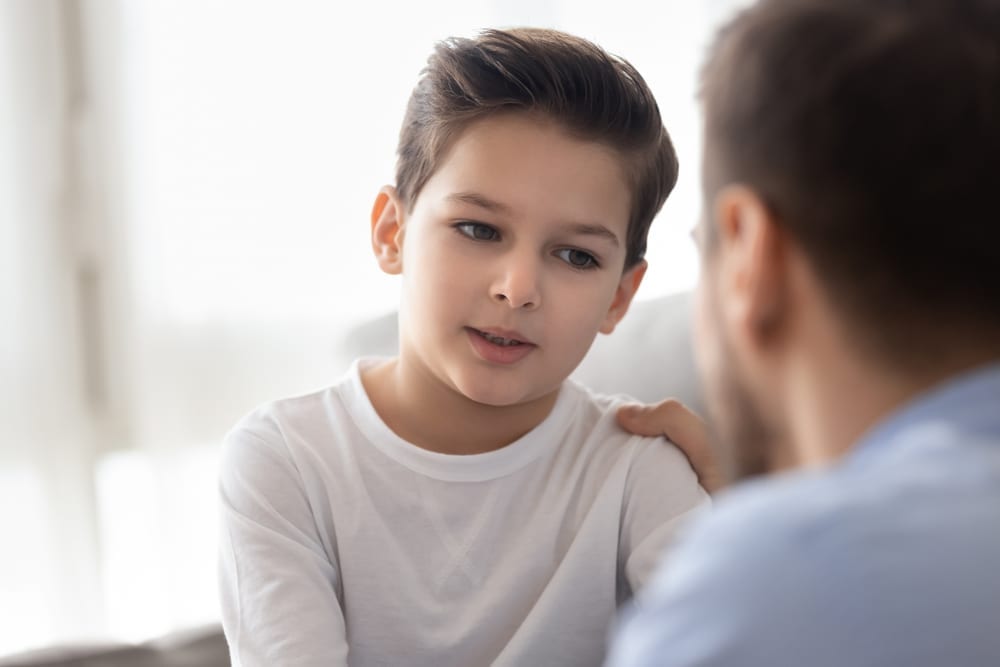
How do you talk to your kids about the coronavirus when there are so many things we don’t know? Here are 12 ideas:

  • Start with your own anxiety.  Do a quick check-in with yourself to see how you’re feeling. We communicate emotions just like we communicate information.  Voice, movement, facial expressions and even being distracted all communicate our state of mind.  Transmitting your own anxiety won’t help your kids.
  • Before you talk, figure out what is important for kids to know.  What is age appropriate?  What helps them understand what is going on in their world?  Remember that they are worried about different things than you are.  You may be worried about buying toilet paper.  They are worried about seeing their friends if school closes or who will feed the class hamster.
  • Listen.  Acknowledge their worries.  Find out what your kids already know or may have heard.  This not only tells you what actual facts they possess but can give you insight into misinformation and their potential sources of anxiety.
  • Communicate.  Explain things clearly.  Be honest. Don’t promise they won’t get sick.  Promise what you can deliver–that you will do everything in your power to keep them safe and that you will be there for them.
  • Alleviate fear. Fear not only makes people act crazy, it is hard on the immune system.  Focus on the precautions people are taking, not the risks and danger.  Tell them all the thing you are doing in your family to stay healthy.
  • Reassure them.  We’re all egocentric in times of crisis, but kids are developmentally that way. Talk about how coronavirus matters to them.  For kids, it’s helpful to let them know that kids seem to have very mild symptoms. The important thing is to stop it from spreading.
  • Explain why precautions like hand-washing matter. Tell them how viruses spread through coughing, sneezing or nose-blowing. Give them a silly song to sing that lasts 20 seconds.  (Google ‘20 second handwashing songs’ for inspiration. Old Town Road is popular in our house, but you have to add the bridge and the first line of the chorus for it to be 20 seconds.) 
  • Inspire them with stories of how people are working together, helping each other out.
  • Keep the lines of communication open.  The news is changing every day – be open to a continued conversation, especially as things affect them, like school closures and activity cancellations.
  • Keep things as normal as possible.  Don’t give up on mealtime or getting dressed in the morning because their school is closed.  Many will have a chance to experience some form of distance learning “Classroom to Cloud” with Google classroom, Zoom  or other tools. Make it an adventure.
  • Give yourself a break from the steady stream of COVID-19 news on social media.  We’re lucky to have streaming entertainment, access to digital books, and online events. 
  • Look for things that lift your spirit rather than rev your adrenaline.  Thursday night, the Philadelphia Philharmonic performed Beethoven’s 5th and 6th live on Facebook because they couldn’t have an audience.  The combination of the music and watching the fans respond with gratitude moved me to tears–a much-needed release.  Invest in your own immune system with some self-care. 
  • Facebook
  • Twitter
  • Reddit
  • LinkedIn
  • E-Mail

About The Author

Pamela Rutledge, PhD, MBA is the Director of the Media Psychology Research Center. A consultant, author, speaker, and professor, she consults on a variety of media projects developing audience engagement and brand storytelling strategies.

Leave a reply

Your email address will not be published. Required fields are marked *

This site uses Akismet to reduce spam. Learn how your comment data is processed.

FOR THE PRESS

Dr. Pam Rutledge, media psychologistDr. Pamela Rutledge is available to reporters for comments on the psychological and social impact of media and technology on individuals, society, organizations and brands.  pamelarutledge@gmail.com

SEARCH THE SITE

RECENT POSTS

  • The Legacy of Daytime Talk Shows Lives in Your Feed
  • Oprah's High Road: Diverging Paths in Daytime Talk Shows
  • Daytime Talk Shows: Why We Couldn’t Look Away
  • FAFO Parenting: Letting Kids Learn the Hard Way
  • Meta Is Using Your AI Chats to “Personalize Your Experience”

MEDIA PSYCHOLOGY RESEARCH

The Media Psychology Research Center (MPRC) is an independent research organization directed by Dr. Pam Rutledge.  Read about MPRC at www.mprcenter.org.

CONSULTING PROJECTS

Dr. Rutledge consults on a variety of media projects using psychology to translate data into human behavior for powerful results.

  • Parenting in a Digital World webinar series
  • Persona Development for audience segmentation
  • Fan and Audience Engagement: Identifying audience narratives to satisfy needs
  • Brand Storytelling: Supercharging brand meaning

RECENT POSTS

  • The Legacy of Daytime Talk Shows Lives in Your Feed
  • Oprah's High Road: Diverging Paths in Daytime Talk Shows
  • Daytime Talk Shows: Why We Couldn’t Look Away
  • FAFO Parenting: Letting Kids Learn the Hard Way
  • Meta Is Using Your AI Chats to “Personalize Your Experience”

SEARCH

Content copyright Pamela Rutledge 2026.