DR. PAM | MEDIA PSYCHOLOGIST
THE PSYCHOLOGY OF DIGITAL BEHAVIORS
  • Home
  • Blog
  • About
    • About Dr. Pamela Rutledge
    • Media Psychology
      • What Is A Media Psychologist?
      • 8 Reasons Why We Need Media Psychology
      • Careers in Media Psychology
      • Example Careers in Media Psychology
      • Media Psychology at Fielding Graduate University
      • Positive Media Psychology
    • MPRC
      • Media Psychology Research Center
    • Media Psychology Review
  • Consulting
    • Speaking & Consulting
    • Audience Engagement: Why Use Personas?
      • How to Build a Persona
    • Adapting to Change
    • Transmedia Storytelling
      • Storytelling Across Platforms
      • Transmedia Storytelling Starts with the Power of Story
      • Our Transmedia World
      • Transmedia Case Study: The Three Little Pigs
      • Transmedia Storytelling Workshop
  • Story Power
    • Brand Storytelling
    • Storytelling: Brands, Entertainment & Organizations
      • Storytelling for Organizations
      • Core Story: Case Study
  • In the News
    • Press Quotes & Interviews 2022-2025
    • 2021-2019
    • 2018-2016
    • 2016-2017
    • 2015-2013
    • 2012 & EARLIER
    • Video Interviews & Webinars
  • Resources
    • Mindful Media & Digital Literacy
      • Positive Media Psychology
      • Benefits of Video Games Part 1
      • Benefits of Video Games Part 2
      • Benefits of Video Games Part 3
      • Becoming Mindful: Exercises
      • Mindful Media Journal
    • Academic Materials
      • Media Psychology Syllabus 2021
      • Media Psychology Syllabus 2012
      • Media Psychology Syllabus 2015
    • Articles
      • Persuasion & Augmented Reality
      • Psychology of Transmedia Engagement
      • Theories of Attention
      • The Psychology of Color
      • Website Design: How to Use Psych Theory
      • Data Strategy: Listen to Your Consumers’ Stories
      • The Psychology of Story
  • Archives
  • Contact
DR. PAM | MEDIA PSYCHOLOGIST
  • Home
  • Blog
  • About
    • About Dr. Pamela Rutledge
    • Media Psychology
      • What Is A Media Psychologist?
      • 8 Reasons Why We Need Media Psychology
      • Careers in Media Psychology
      • Example Careers in Media Psychology
      • Media Psychology at Fielding Graduate University
      • Positive Media Psychology
    • MPRC
      • Media Psychology Research Center
    • Media Psychology Review
  • Consulting
    • Speaking & Consulting
    • Audience Engagement: Why Use Personas?
      • How to Build a Persona
    • Adapting to Change
    • Transmedia Storytelling
      • Storytelling Across Platforms
      • Transmedia Storytelling Starts with the Power of Story
      • Our Transmedia World
      • Transmedia Case Study: The Three Little Pigs
      • Transmedia Storytelling Workshop
  • Story Power
    • Brand Storytelling
    • Storytelling: Brands, Entertainment & Organizations
      • Storytelling for Organizations
      • Core Story: Case Study
  • In the News
    • Press Quotes & Interviews 2022-2025
    • 2021-2019
    • 2018-2016
    • 2016-2017
    • 2015-2013
    • 2012 & EARLIER
    • Video Interviews & Webinars
  • Resources
    • Mindful Media & Digital Literacy
      • Positive Media Psychology
      • Benefits of Video Games Part 1
      • Benefits of Video Games Part 2
      • Benefits of Video Games Part 3
      • Becoming Mindful: Exercises
      • Mindful Media Journal
    • Academic Materials
      • Media Psychology Syllabus 2021
      • Media Psychology Syllabus 2012
      • Media Psychology Syllabus 2015
    • Articles
      • Persuasion & Augmented Reality
      • Psychology of Transmedia Engagement
      • Theories of Attention
      • The Psychology of Color
      • Website Design: How to Use Psych Theory
      • Data Strategy: Listen to Your Consumers’ Stories
      • The Psychology of Story
  • Archives
  • Contact
Dec 30

New Media IS the New Museum, Part 1

  • December 30, 2010
  • Pamela Rutledge
  • No Comments

By Pamela Rutledge and Bonnie Buckner

Previously published on Psychology Today’s “Positively Media.”

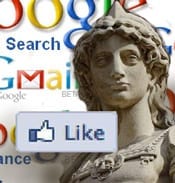
In her recent post Museums 2.0: What Happens When Great Art Meets New Media?, Arianna Huffington, though normally an enthusiastic supporter of new media, expressed misgivings about museums adopting social media. We believe that she misses some important points. It’s not a question of whether museums should adopt new media. New media IS the new museum.

Ms. Huffington describes her ambivalence toward the appearance of new media in museums. She writes that museums are our place of departure and imagination, a respite from the rest of the world, and that social media as connection for connection’s sake is, in her words, pointless here. “At their best social media build community and enhance communication.” How very 2010.

Social media IS community, made so by virtue of an ever- present and participatory dialogue. Social media is a powerful communication thread that ties us together in the present and with the past-it is the wiki of our lives. And what, if not that, are museums? Museums are the ultimate form of communication, connecting people from one time to many others, through the artifacts, thoughts, imaginations and conversations throughout centuries. The bemoaning of the museum for the quiet contemplation is a struggle between old and new, between the technology speakers and the technology ambivalent or even passers-by.

When Edward Rothstein, New York Times’ cultural critic-at-large, complains that artifacts become memories before they’ve begun by being photographed, he’s also missing the point. It’s not about the tools, it’s about the intent. Today’s culture is increasingly interactive and participatory. Boundaries are blurring between artist and participant. The fourth wall has been broken. And while Mr. Rothstein may choose to experience artifacts by standing quietly, observing and thinking about them-and we’re okay with that-the digital natives have a different approach. They roll up their sleeves and become part of it. This is not about being addicted to technology or having short attention spans or needing immediate gratification. This is about a different way of experiencing art using a different language. They capture it, mash it, personalize it, share it and make it their own. What better homage to the masters than to make their contributions vibrant and alive? What better way to experience artifacts than to live them? We act out Shakespeare, we disseminate it through different kinds of media. We celebrate the ability of filmmakers who can take the intrinsic themes and emotions and make them more powerful by their relevance. We do not expect people to learn by sitting quietly and contemplating. Learning is most powerful when it is immersive, multi-sensory, and interactive. Why not interact with our art and history, too?

Ms. Huffington describes a new media world where experience and import are diminished because information can be Googled, posted or re-tweeted real time. To say that social media, and the use of technology tools today, are simply information repositories and senders is too reductive – it’s like focusing on the front door of Notre Dame when there’s a whole building of riches behind it. The building behind social media is the ability to step into a world unconstrained by the physical reality of a place. New media expands the halls of the museums to the worlds to place the artifacts simultaneously in historical context and individual relevance. Mr. Rothstein can appreciate quiet, left-brain contemplation, but the new world is increasingly about right-brain experiencing-from the world of art to economic and scientific innovation. From our perspective, we will take the energy, chaos, and creative potential of a mash-up any day to the shushing of museum etiquette. 

To underscore her point, Ms. Huffington quotes neuroscientist Antonio Damasio’s description of art and the museum experience as being about discovery, to: “turn a corner in a museum, and encounter something you’ve heard about or looked for — or have never heard about, but is very beautiful. That element of surprise is part of the trigger.”

But this actually proves our point: if widening the world of discovery is the critical ingredient of art and museums, then new media is aiding that venture. The greatest artists are those who challenge the way we see.

In part 2, we will discuss how the question of social media in museums is really a question of the “right” way to view art.

  • Facebook
  • Twitter
  • Reddit
  • LinkedIn
  • E-Mail

About The Author

Pamela Rutledge, PhD, MBA is the Director of the Media Psychology Research Center. A consultant, author, speaker, and professor, she consults on a variety of media projects developing audience engagement and brand storytelling strategies.

Leave a reply

Your email address will not be published. Required fields are marked *

This site uses Akismet to reduce spam. Learn how your comment data is processed.

FOR THE PRESS

Dr. Pam Rutledge, media psychologistDr. Pamela Rutledge is available to reporters for comments on the psychological and social impact of media and technology on individuals, society, organizations and brands.  pamelarutledge@gmail.com

SEARCH THE SITE

RECENT POSTS

  • The Legacy of Daytime Talk Shows Lives in Your Feed
  • Oprah's High Road: Diverging Paths in Daytime Talk Shows
  • Daytime Talk Shows: Why We Couldn’t Look Away
  • FAFO Parenting: Letting Kids Learn the Hard Way
  • Meta Is Using Your AI Chats to “Personalize Your Experience”

MEDIA PSYCHOLOGY RESEARCH

The Media Psychology Research Center (MPRC) is an independent research organization directed by Dr. Pam Rutledge.  Read about MPRC at www.mprcenter.org.

CONSULTING PROJECTS

Dr. Rutledge consults on a variety of media projects using psychology to translate data into human behavior for powerful results.

  • Parenting in a Digital World webinar series
  • Persona Development for audience segmentation
  • Fan and Audience Engagement: Identifying audience narratives to satisfy needs
  • Brand Storytelling: Supercharging brand meaning

RECENT POSTS

  • The Legacy of Daytime Talk Shows Lives in Your Feed
  • Oprah's High Road: Diverging Paths in Daytime Talk Shows
  • Daytime Talk Shows: Why We Couldn’t Look Away
  • FAFO Parenting: Letting Kids Learn the Hard Way
  • Meta Is Using Your AI Chats to “Personalize Your Experience”

SEARCH

Content copyright Pamela Rutledge 2026.