Storytelling for a Social World: Transmedia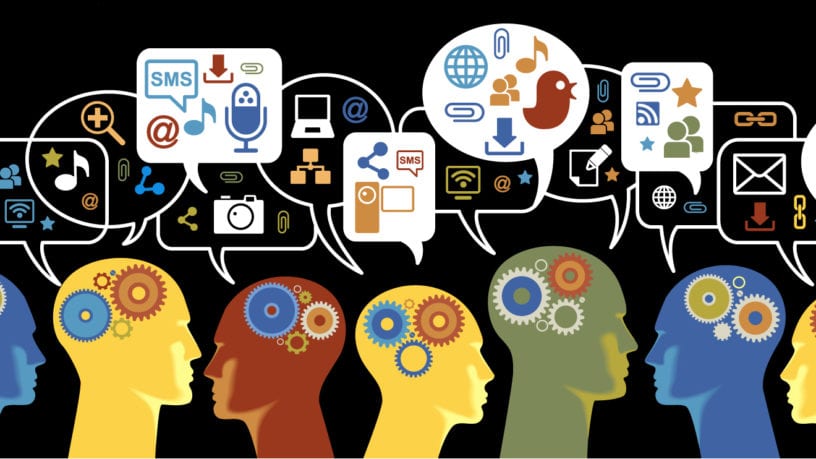
The focus on transmedia storytelling is an exciting approach to entertainment, branding, marketing, and advocacy. Storytelling has gone from a “new technique” to being the core approach to communications over the last 20 years. Transmedia storytelling emerged as technology enabled the consumer experience to expand from consumption to interaction, creation, and distribution of content. Transmedia storytelling describes the creation of a ‘story experience’ both for—and with—an audience that unfolds over several media channels. While not new, the attention is has been getting is a big deal for three reasons.
- It represents the acceptance of a fundamental shift in consumer expectation from passive to active
- It is consumer-centric
- Storytelling taps into the core human experience through the psychology of story. Storytelling is a uniquely human skill that engages our imagination, and emotion, increasing connection, increasing and pleasure.
Transmedia storytelling has broad social and commercial implications. Media convergence where transmedia is the norm, not the exception. The lines are blurring, not just between technologies, but also between traditional roles of producer-consumer roles. Today’s audience lives in an interactive and participatory world; they expect and demand that ability to actively engage.
Transmedia Storytelling: The Reemergence of Fundamentals

Transmedia storytelling weaves together individual strands of a story into a larger and richer interactive fabric and offers the audience multiple ways to participate, through content production, collaboration, and interaction. When the story has authenticity, coherence, and integrity, it provides a common language that unleashes vast amounts of creativity and invites maximum engagement through audience participation.
The Matrix franchise is one of the early and best-known transmedia pioneers. The main narrative presented in the Matrix movies was self-contained but, for the enthusiastic fan, it could be enriched by information, back story, and character development obtainable only in the video games and Animatrix DVD. Social media connectivity plays a central role in the success of transmedia storytelling not only because content can flow across media channels but also because social media and networked communications have created an audience that understands, enjoys, and seeks out this kind of activity and collaboration.
As a media psychologist, I find transmedia storytelling exciting because it represents a movement away from technology for its own sake and toward human experience. In spite of the breadth and dazzle of media technologies, transmedia storytelling is really about using technology in the service of a higher goal: connecting through storytelling.
Transmedia storytelling, because it constructs a story across different platforms and invites audience participation and collaboration, is simultaneously linear and multi-dimensional, and both individual and collaborative. Transmedia storytelling is not the same as taking content and ‘repurposing’ it for different media; it builds a story universe (what psychologists call a narrative) and invites the audience in. The storytellers take advantage of the characteristics of each medium—traditional and new—to contribute a distinct part of the narrative that is satisfying as a standalone experience. Yet each part also adds a unique and meaningful contribution to the overall story experience. Transmedia storytelling has multiple points of entry making it accessible to different types of consumers and media-users. It relies on the audience and so it by necessity treats them with respect. It does not “sell” them, but rather invites them to become co-participants to expand the narrative.
Companies have created remarkable immersive environments through story in Alternate Reality Games (ARGs) that tap the “collective intelligence” and integrate media experience with reality. ARGs are transmedia experiences that integrate platforms so seamlessly so that the real world becomes a functional extension of the gameplay. Players participate in an evolving narrative, seeking out and gathering information from multiple media sources to solve puzzles, and interact with characters and other players, real-time in the real world. “The Beast,” created to promote the Spielberg film A.I. Artificial Intelligence, and I Love Bees, developed to engage fans prior to the release of the video game Halo 2, gathered thousands of participants who formed collaborative communities to solve problems presented by the narrative.
Many early adopters of this approach came from big-budget entertainment franchises and product launches. In spite of these expensive and complex examples, however, transmedia storytelling is a fundamental approach to communications—internal and external—that all organizations should adopt. The drivers of the success do not rest on the economics but on the quality and integrity of the story. While many scholars and practitioners approach transmedia storytelling with game studies or fan culture roots, the true power of transmedia storytelling rests on the story, not the articulated media elaborations. A story is created and experienced, first and foremost, in the mind.
—
Dr. Rutledge gives workshops and presentations on transmedia storytelling and finding your story for corporate, nonprofit, and advocacy groups. She also teaches Brand Psychology and Transmedia Storytelling and Audience Engagement through Persona Development at Fielding Graduate University. These courses are offered through both the Master of Arts Program and through a special 3-course certificate program. Fielding Graduate University is the home of the first PhD program in media psychology in the world and remains at the forefront of the field.
 Dr. Pamela Rutledge is available to reporters for comments on the psychological and social impact of media and technology on individuals, society, organizations and brands.
[…] Scoop.it – tvappmarketRT @rafstevens: Psychology of storytelling: http://t.co/HCgHc7ZJ…Via athinklab.com Be Sociable, Share! […]