You can test yourself and determine your stage of development.
TEXT MESSAGING STAGES
Stage 1: Infancy to early childhood
- Basic Psychological Conflict: Trust vs. Doubt
- Important Developmental Tasks: Signing on
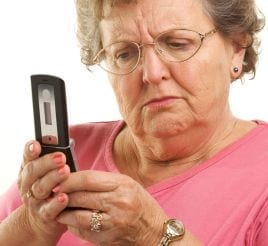
- Outcome: Individuals at this stage type in complete sentences, use regular punctuation including the apostrophe in contractions, and do not abbreviate words. They begin messages with formal greeting, e.g., “Hi Honey!” and sign text messages as if receiver didn’t know who was sending it, e.g., “Love, Dad.” Often they are venturing into this unknown communication form at the insistence of others or due to the inability to locate their children.

Stage 2: Preschool to School Age
- Basic Psychological Conflict: Initiative vs. Inferiority
- Important Developmental Tasks: Exploration of text functions
- Outcome: Like the previous stage, individuals at this stage type in complete sentences, use regular punctuation, including the apostrophe, do not abbreviate words very often but they do understand that they don’t have to include a greeting or their signature. They do sometimes use emoticons (smiley faces), but not the fancy ones. Blackberry owners in this stage sometimes struggle to understand the difference between email and texting.
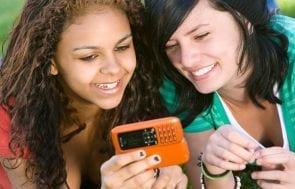
Stage 3: Adolescence
- Basic Psychological Conflict: Identity vs. Generational Confusion
- Important Developmental Tasks: Setting up Speed Dial and Fave Fives
- Outcome: The individuals at this stage began with AOL Instant Messaging on their computer but transitioned without trauma to cell phones. They don’t capitalize or punctuate, they abbreviate words some but tend to do it phonetically (like cash registers) rather than use textspeak . (Textspeak, chatspeak, or textese is the SMS language with abbreviations for many words and common expression, such as the familiar ones like LOL: Laughing Out Loud; LMAO: Laughing My Ass Off; BRB: Be Right Back; TTYL: Talk To You Later; and ?: I don’t understand.) At this stage of development, an individual might use LOL, but is more inclined to type “haha.” If the message is too long, they will more often edit than abbreviate.

Stage 4: Adulthood
- Basic Psychological Conflict: Intimacy vs. Isolation
- Important Developmental Tasks: Expanding the address book, setting up custom ring tones.
- Outcome: Individuals at this stage are functional but not totally in to using txtspk. They are able to carry on complete conversation in text but they revert to the phone for meaningful or longer discussions. Their technical skill has progressed to the point where seeing the keyboard is optional and speed of texting ranges from moderate to crazy fast. They are, however, still satisfied with T-9 word (keypad is like regular phone with integrated word recognition program) and often uncomfortable about making the transition to a slide phone.
Stage 5: Maturity
- Basic Psychological Conflict: Communication Integration vs. Depths of Despair
- Important Developmental Tasks: Constant Sharing of Every Minute of the Day
- Outcome: Individuals at this stage have graduated to QWERTY texting device with a foldout keyboard. They are completely fluent in txtspk and seeing the keyboard is not necessary. In fact, many individuals at this stage can text while their cell phone is in their backpack or pocket. For these individuals, texting is the main form of communication with everyone who matters to them and, in many cases has rendered email, obsolete (so don’t take it personally if your kid off at college doesn’t answer your emails). Texting replaces the traditional attachment processes with the ability to ping and nudge all day long. The cell phone is no longer a cell phone; it is an information hub, alarm clock, and music player that accesses everything from Facebook to taxi service (or Mom, as the case may be.) This skill level allows multitasking while in low-productivity situations such as math class and driving. Successfully reaching this stage is celebrated in rituals such as the LG Texting Competition.
Admittedly, I am still working my way through these important developmental stages, hovering somewhere between school age and adolescence (LOL!). Lest you scoff at the importance of such efforts, you should know that Dr. Bev Plester, head researcher on the Children’s Text Messaging and Literacy projects at Coventry University reports that children’s use of texting is positively associated with word reading ability and may contribute to reading development. For those of you worried that texting is destroying the English language, Dr. Plester’s study found no evidence of a detrimental effect of text speak on conventional spelling. Quoted in BBC News, Plester said, “What we think of as misspellings, don’t really break the rules of language and children have a sophisticated understanding.
Like most languages, text messaging has its own etiquette and structures. Just as kids can more easily learn multiple languages (like Spanish, English, or Chinese), they can also learn different written languages without degrading their understanding of any of them. That also explains why some of us in the earlier developmental stages of texting are mystified by the facility with which some people are able to communicate via text messaging. You were right – it IS a foreign language.
From a cognitive perspective, texting is just the processing of symbols into meaning. When you think about it, texting is a highly efficient form of communication designed to deliver maximum information in minimum space and time, forcing focused editing and judgment. More exposure to information creates richer cognitive maps that increase the ability to process future information more accurately and effectively. In the case of the written word, more exposure increases literacy. It makes sense that the more kids read, the better they read. The more kids want to read stuff, the more value reading has. Think of texting as a form of motivation. As Plester notes: “we tend to get better at things that we do for fun.”
—
Resources:
Plester, B.; Wood, C.; Joshi, P. (2009). Exploring the relationship between children’s knowledge of text message abbreviations and school literacy outcomes. British Journal of Developmental Psychology, Vol 17 (1). Pp. 145-161.
—
Postscript: Yesterday I posted the above “Lifespan Developmental Stages of Text Messaging” on my Psychology Today blog, Positively Media. Clearly it’s a loose adaptation of Erikson‘s psychosocial stages and will, I hope, be entertaining to ‘psychnerds’ as one of my Twitter followers remarked. (I take that moniker as a compliment, BTW.) Joking aside, there are, however, observable differences in how people use text messaging based on their adoption age and rate. It has to do with how they engage in interpersonal communication and whether they view texting as a replacement for some kind of contact rather than as a way of making contact in its own right, not in comparison.
In the meantime, I had a charming email from my mom saying: “Being a digital immigrant I don’t know how to get to your developmental stages thingy. “
That made me laugh out loud, while simultaneously being grateful to have a reader even it is is my mother. It also reminded me that, like with text messaging, different people have different understandings of how blog posts and notifications work.
![Reblog this post [with Zemanta]](http://img.zemanta.com/reblog_e.png?x-id=567b471c-496f-42df-83b0-a8b50770f6bc)

 Dr. Pamela Rutledge is available to reporters for comments on the psychological and social impact of media and technology on individuals, society, organizations and brands.
There’s good info here. I did a search on the topic and found most people will agree with your blog. Keep up the good work mate!
I’m Out! 🙂