
DR. PAM | MEDIA PSYCHOLOGIST
THE PSYCHOLOGY OF DIGITAL BEHAVIORS
  • Home
  • Blog
  • About
    • About Dr. Pamela Rutledge
    • Media Psychology
      • What Is A Media Psychologist?
      • 8 Reasons Why We Need Media Psychology
      • Careers in Media Psychology
      • Example Careers in Media Psychology
      • Media Psychology at Fielding Graduate University
      • Positive Media Psychology
    • MPRC
      • Media Psychology Research Center
    • Media Psychology Review
  • Consulting
    • Speaking & Consulting
    • Audience Engagement: Why Use Personas?
      • How to Build a Persona
    • Adapting to Change
    • Transmedia Storytelling
      • Storytelling Across Platforms
      • Transmedia Storytelling Starts with the Power of Story
      • Our Transmedia World
      • Transmedia Case Study: The Three Little Pigs
      • Transmedia Storytelling Workshop
  • Story Power
    • Brand Storytelling
    • Storytelling: Brands, Entertainment & Organizations
      • Storytelling for Organizations
      • Core Story: Case Study
  • In the News
    • Press Quotes & Interviews 2022-2025
    • 2021-2019
    • 2018-2016
    • 2016-2017
    • 2015-2013
    • 2012 & EARLIER
    • Video Interviews & Webinars
  • Resources
    • Mindful Media & Digital Literacy
      • Positive Media Psychology
      • Benefits of Video Games Part 1
      • Benefits of Video Games Part 2
      • Benefits of Video Games Part 3
      • Becoming Mindful: Exercises
      • Mindful Media Journal
    • Academic Materials
      • Media Psychology Syllabus 2021
      • Media Psychology Syllabus 2012
      • Media Psychology Syllabus 2015
    • Articles
      • Persuasion & Augmented Reality
      • Psychology of Transmedia Engagement
      • Theories of Attention
      • The Psychology of Color
      • Website Design: How to Use Psych Theory
      • Data Strategy: Listen to Your Consumers’ Stories
      • The Psychology of Story
  • Archives
  • Contact
DR. PAM | MEDIA PSYCHOLOGIST
  • Home
  • Blog
  • About
    • About Dr. Pamela Rutledge
    • Media Psychology
      • What Is A Media Psychologist?
      • 8 Reasons Why We Need Media Psychology
      • Careers in Media Psychology
      • Example Careers in Media Psychology
      • Media Psychology at Fielding Graduate University
      • Positive Media Psychology
    • MPRC
      • Media Psychology Research Center
    • Media Psychology Review
  • Consulting
    • Speaking & Consulting
    • Audience Engagement: Why Use Personas?
      • How to Build a Persona
    • Adapting to Change
    • Transmedia Storytelling
      • Storytelling Across Platforms
      • Transmedia Storytelling Starts with the Power of Story
      • Our Transmedia World
      • Transmedia Case Study: The Three Little Pigs
      • Transmedia Storytelling Workshop
  • Story Power
    • Brand Storytelling
    • Storytelling: Brands, Entertainment & Organizations
      • Storytelling for Organizations
      • Core Story: Case Study
  • In the News
    • Press Quotes & Interviews 2022-2025
    • 2021-2019
    • 2018-2016
    • 2016-2017
    • 2015-2013
    • 2012 & EARLIER
    • Video Interviews & Webinars
  • Resources
    • Mindful Media & Digital Literacy
      • Positive Media Psychology
      • Benefits of Video Games Part 1
      • Benefits of Video Games Part 2
      • Benefits of Video Games Part 3
      • Becoming Mindful: Exercises
      • Mindful Media Journal
    • Academic Materials
      • Media Psychology Syllabus 2021
      • Media Psychology Syllabus 2012
      • Media Psychology Syllabus 2015
    • Articles
      • Persuasion & Augmented Reality
      • Psychology of Transmedia Engagement
      • Theories of Attention
      • The Psychology of Color
      • Website Design: How to Use Psych Theory
      • Data Strategy: Listen to Your Consumers’ Stories
      • The Psychology of Story
  • Archives
  • Contact
May 02

Will Hiding “Likes” Change Instagram’s Influence?

  • May 2, 2019
  • Pamela Rutledge
  • No Comments

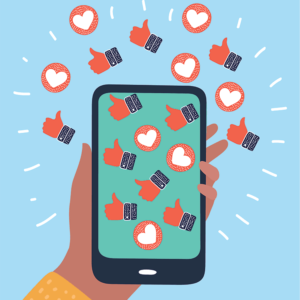
Instagram has announced that it is going to experiment with hiding Likes on posts to everyone except the account owner. Their goal, according to Instagram head Adam Mosseri, is to get people focused more on connecting with those they care about and less time worrying about Likes.

While the intention of hiding Likes has merit in a global sense, it’s naive and unlikely that the outcome will achieve the desired effect. When technology changes, people adapt their behaviors to realize their goals. Knowing how many people “Like” you is pretty compelling stuff. People won’t give that up lightly in spite of all the warnings about the dangers.

The banishing of Likes isn’t being requested by Instagram users. It’s a central feature of the platform, which, by the way, is gaining users, in contrast to Facebook whose numbers are declining. If Instagram users didn’t want Likes, they would quit using them. It is a move in response to broader social concerns, worried parents, therapists (whose clients self-select to those predominantly with problems), social media technophobia and a very small amount of research.

Likes are symbolic of affiliation and inclusion. Likes provide validation and trigger the brain’s reward system. It feels good to be liked. Likes also signal information, conferring social capital to the recipients, essentially “warranting” those with lots of Likes as being socially valued in some way. It isn’t the existence of Likes that is the problem. It is the overvaluing of what is essentially a meaningless action; the misinterpretation of a click with an equation of value.

Except for some, it isn’t. Some people make money from Likes. The loss of this metric will be a challenge for the marketing industry’s influencer segment. Likes are a form of social proof and encourage other people to Like whatever is most Liked, increasing the monetizability of Instagram posts for Influencers.

The most obvious workaround in the place of Likes is that people will begin using comments with emojis or shares so that an alternative behavioral metric will replace the Like count. The other alternative is to find a new platform and migrate your followers. Those savvy in Instagram will have already figured out how to make their popularity widely known. How else can all those celebrities and Influencers generate buzz and cash flow?

Hiding Likes will not change social exclusion, stop bullying, remove superficial role models or fix the impact of the Like economy on people who are vulnerable to self-esteem issues. Nor will it help those who use social comparison in unhealthy ways. Instagram users tend to skew young and the young are the most social. They are also the most vulnerable to more fragile self-esteem, identity, and social comparison issues since identity development and finding one’s place in one’s social milieu is the primary developmental task of adolescence and young adulthood.

However, this move to hide Likes raises awareness of the issue, makes Instagram-parent Facebook look like they’re trying to do something positive for a change, and starts a dialogue. This last is important since the “cure” of a problem is seldom achieved by suppressing the symptoms. Disempowering likes has to be done psychologically, not electronically.

  • Facebook
  • Twitter
  • Reddit
  • LinkedIn
  • E-Mail

About The Author

Pamela Rutledge, PhD, MBA is the Director of the Media Psychology Research Center. A consultant, author, speaker, and professor, she consults on a variety of media projects developing audience engagement and brand storytelling strategies.

Leave a reply

Your email address will not be published. Required fields are marked *

This site uses Akismet to reduce spam. Learn how your comment data is processed.

FOR THE PRESS

Dr. Pam Rutledge, media psychologistDr. Pamela Rutledge is available to reporters for comments on the psychological and social impact of media and technology on individuals, society, organizations and brands.  pamelarutledge@gmail.com

SEARCH THE SITE

RECENT POSTS

  • The Legacy of Daytime Talk Shows Lives in Your Feed
  • Oprah's High Road: Diverging Paths in Daytime Talk Shows
  • Daytime Talk Shows: Why We Couldn’t Look Away
  • FAFO Parenting: Letting Kids Learn the Hard Way
  • Meta Is Using Your AI Chats to “Personalize Your Experience”

MEDIA PSYCHOLOGY RESEARCH

The Media Psychology Research Center (MPRC) is an independent research organization directed by Dr. Pam Rutledge.  Read about MPRC at www.mprcenter.org.

CONSULTING PROJECTS

Dr. Rutledge consults on a variety of media projects using psychology to translate data into human behavior for powerful results.

  • Parenting in a Digital World webinar series
  • Persona Development for audience segmentation
  • Fan and Audience Engagement: Identifying audience narratives to satisfy needs
  • Brand Storytelling: Supercharging brand meaning

RECENT POSTS

  • The Legacy of Daytime Talk Shows Lives in Your Feed
  • Oprah's High Road: Diverging Paths in Daytime Talk Shows
  • Daytime Talk Shows: Why We Couldn’t Look Away
  • FAFO Parenting: Letting Kids Learn the Hard Way
  • Meta Is Using Your AI Chats to “Personalize Your Experience”

SEARCH

Content copyright Pamela Rutledge 2026.