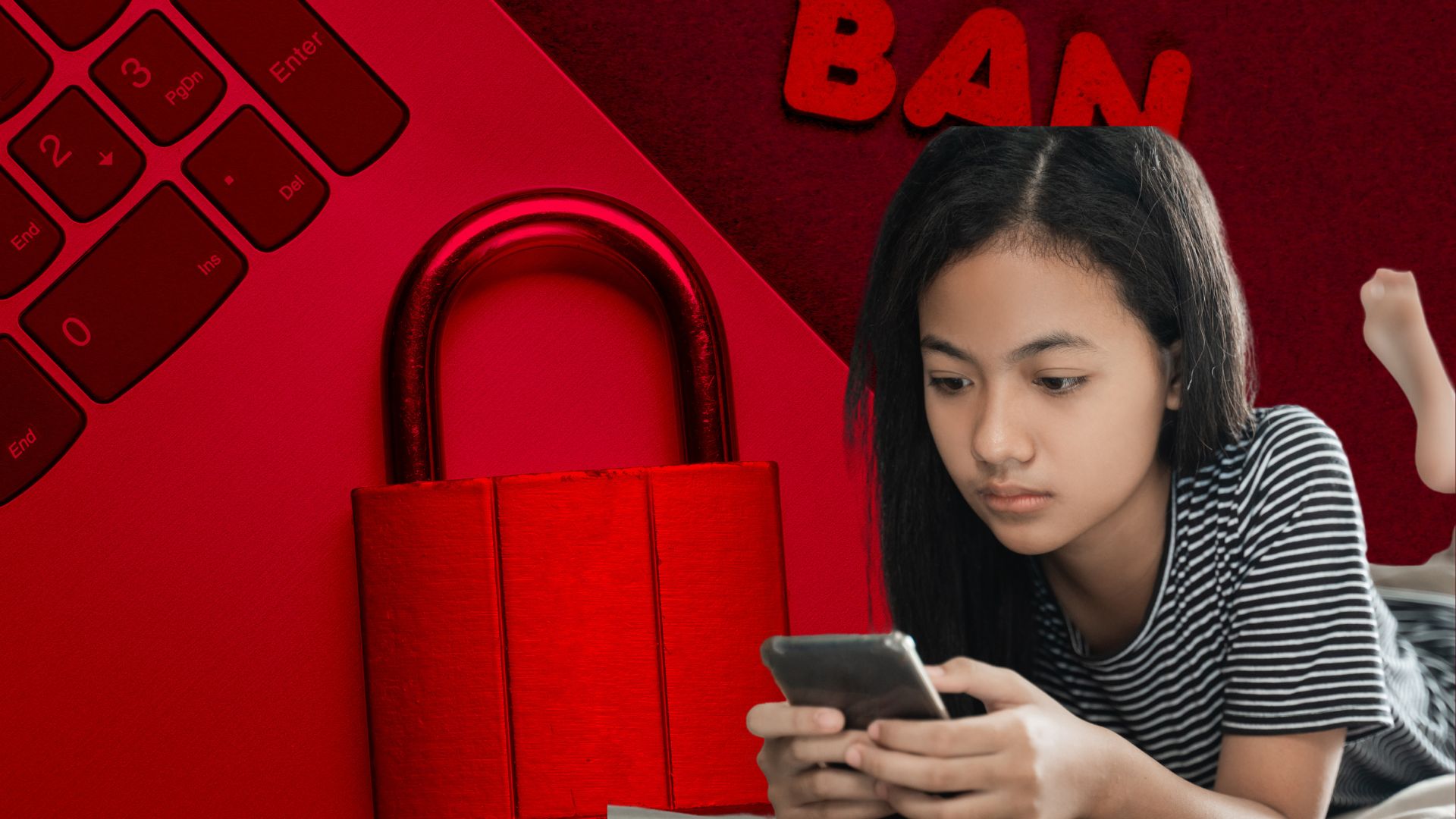
Laws to regulate social media use by kids are popping up everywhere. Unlikely to achieve their stated goals, they may even cause harm by leaving our kids less prepared for their digital world. If legislators really wanted to help kids, they would fund digital literacy programs that teach critical thinking and strategies for healthy media use.
Key Points
- Proposed legal bans on social media for kids are based on moral panics, not research
- The preoccupation with social media use ignores the needed skills to safely navigate the digital world
- Not only will the laws be difficult to enforce but verification proposals raise serious privacy issues for sensitive information
- Lawmakers could help kids more by funding digital literacy programs
Politicians can't get their pens out fast enough to draft laws to regulate social media use by kids. Advertised as "child protection" laws, the proposed bans show how little politicians understand about social media, kids, and interpreting research. The proposals, however, are getting lots of media coverage as politicians make frightening, exaggerated, and often unsubstantiated claims about the negative effects of social media on mental health. There are legitimate concerns about kids' mental health, but recent reviews of multiple research studies find little direct evidence to support the laser beam focus on technology use (Ferguson et al., 2022) and/or screen time (Orben & Przybylski, 2019) to the exclusion of other factors. If improving kids' mental health is the goal, the proposed bans not only won't get the job done but can cause more harm than good by taking our eyes off what really matters: teaching our kids to be media literate, responsible digital citizens.
Regulations Don't Cure Moral Panics
Politicians have always used moral panics to generate votes. However well-intentioned, these laws will do nothing to help a child more successfully navigate in a digital world. No amount of restrictions will help kids develop the skills and critical thinking to be safe and productive in the digital space, such as self-regulation, dealing with bullying, ethical behavior, identifying misinformation, recognizing manipulation, understanding social influence, and protecting their privacy. If they want to do some good, why not fund media literacy programs in the schools to teach them what they need to know to have healthy and safe relationships with technology?
Photos: Andresr/Getty Image Signature & Sharpner/Getty Images
Restricting minor kids' unsupervised use of social media makes intuitive sense if you're a parent, especially when they are under the age of 13. These are critical years for cognitive and emotional development. The bans miss the mark by overlooking some fundamental factors and open the door to a host of unintended consequences.
What Will the Bans Accomplish?
- Restrictions will make social media use seem attractive to kids - especially teens
- "Big Brother" regulations give parents a false sense of security that the regulations will handle things so they don't have to
- The bans and regulations include NOTHING that will help kids learn healthier media behaviors or encourage critical thinking and better decisionmaking
Phones Aren't Phones. They Are Portals to a Social World
Online devices are a portal to the kids' social world. Social media is social currency—it's how kids keep up with pop culture, trends, and their friends. It's how they know what's going on in their world. Pew Research found that the three main uses of mobile devices by teens were: passing the time (90%), connecting with others (84%), and learning new things (83%). Being successful on social media has also become a desired career path, glamourized by the celebrated financial and social success of young Influencers (Kidfluencers) on YouTube, TikTok, and Instagram, many of whom are under 13, whose popularity brings earns big money from sponsors. In a 2019 survey, 86% of young Americans wanted to be a social media influencer (Morning Consult, 2019).
You Need a Lot of Personal Data to Verify Age and Consent
To enforce the proposed laws, age, and identity have to be verified. This raises serious privacy issues around the collection and use of personal information. Utah's laws could require kids, their parents, and other users to upload birth certificates and government IDs, use facial recognition technology, or provide biometric data so that social media platforms can verify age and identity. Talk about a hacker's and marketer's dream database.
Utah's bills are infantilizing to kids and disrespectful to parents. In addition to limiting access to social media between the hours of 10:30 p.m. to 6:30 a.m. by anyone under 18, they require a parent's express consent for minors to sign up for apps like Twitter, Instagram, and TikTok (Evans, 2023, April 4). The bill also would give parents administrative access rights to their kids' direct messages and interactions. If the politicians had read the research, they would see how this would undermine the trust and open communication necessary for providing kids with appropriate guidance (Wisniewski et al., 2022).
User-Centered Approaches: What's Best for the Kids?
Kids' needs for personal space change as they age. Autonomy is an important part of the developmental process as kids transition from a child to an adult and learn how to navigate their world. Like it or not, these kids live in a digital world. Risk-taking is part of the maturational process. Monitoring teens online and imposing authoritarian restrictions and privacy-invasive monitoring negate the developmental needs of teens. Parents are an important source of guidance, but the ultimate goal is helping kids make smarter and safer decisions, not turning parents into police.
Kang et al. (2022) found that parental restriction and lack of privacy boundaries resulted in backlash behavior, with teens making decisions without considering the risks to themselves and without exercising critical thinking. Yardi and Bruckman (2011) also found that teens are more seek out workarounds and are likely to engage in riskier behaviors to avoid parental observation, rules, and technology constraints.
If safety and well-being are the primary concerns of parents, empirical evidence shows that a more open and trust-based approach works best. Considering the needs and desires of the kids, rewarding positive behaviors, raising risk awareness, and negotiating age-appropriate online boundaries are the most effective at preparing kids to use technology well and become good digital citizens (Wisniewski et al., 2022). Teaching media literacy and digital citizenship is, admittedly, a lot more work than hoping the government can regulate the problem away.
Parents Are Important Role Models
Don't underestimate the importance of parental guidance. A study of nearly 4,000 teens found that 65% of the kids had positive parental communication, and these kids were more likely to have a healthy relationship with technology, greater well-being, and more positive body image. Parental involvement included communication, parental attention to their own technology and social media use, and rules focused on content and activity rather than screentime. The 37% of remaining kids deemed 'at-risk' had screentime-based rules or no rules at all with no parental involvement.
Whether or not these laws can be enforced, or if the number of exclusions by powerful lobbyists makes them meaningless, there is no evidence that the proposed bans will achieve the intended goals. Instead of focusing exclusively on social media platforms, we need to teach kids age-appropriate, essential skills to be safe online without risking privacy or undermining their autonomy. The answer lies in creating user-centered approaches, such as teaching media literacy, negotiating age-appropriate boundaries, and rewarding positive behaviors, to effectively prepare children to become good digital citizens.
References
Evans, A. (2023, April 4). Utah’s Social Media Ban: Who Will Enforce And Which States Will Follow Suit? Salt Lake Magazine. Retrieved May 2, 2023, from https://www.saltlakemagazine.com/utah-social-media-ban/
Ferguson, C. J., Kaye, L. K., Branley-Bell, D., Markey, P., Ivory, J. D., Klisanin, D., Elson, M., Smyth, M., Hogg, J. L., McDonnell, D., Nichols, D., Siddiqui, S., Gregerson, M., & Wilson, J. (2022). Like this meta-analysis: Screen media and mental health. Professional Psychology: Research and Practice, 53(2), 205-214.
Kang, H., Shin, W., & Huang, J. (2022). Teens' privacy management on video-sharing social media: the roles of perceived privacy risk and parental mediation. Internet Research, 32(1), 312-334. https://doi.org/10.1108/INTR-01-2021-0005
Morning Consult. (2019). The Influencer Report: Engaging Gen Z and MIllennials. Retrieved May 2, 2023, from https://morningconsult.com/wp-content/uploads/2019/11/The-Influencer-Report-Engaging-Gen-Z-and-Millennials.pdf
Orben, A., & Przybylski, A. K. (2019). The association between adolescent well-being and digital technology use. Nature Human Behaviour, 3(2), 173-182. https://doi.org/10.1038/s41562-018-0506-1
Wisniewski, P. J., Vitak, J., & Hartikainen, H. (2022). Privacy in adolescence. In B. P. Knijnenburg, X. Page, P. Wisniewski, H. R. Lipford, N. Proferes, & J. Romano (Eds.), Modern Socio-Technical Perspectives on Privacy (pp. 315-336). Springer International Publishing Cham.
Yardi, S., & Bruckman, A. (2011). Social and technical challenges in parenting teens’ social media use. SIGCHI Conference on Human Factors in Computing Systems,

 Dr. Pamela Rutledge is available to reporters for comments on the psychological and social impact of media and technology on individuals, society, organizations and brands.