In the latest news story related to ‘death by selfie,’ a 66-year-old Japanese tourist fell down a flight of steps at the Taj Mahal. We increasingly hear reports of death and injury attributed to selfie-taking. The emphasis on selfie-driven mayhem skews our selfie-related fears and also fans the underlying message that selfie-taking is somehow inherently problematic. Questions continually arise and include reactionary suggestions of governmental requirements for ‘cautionary messages’ on selfie taking and even regulations. (The Russian Government has created a “How Not to Take Selfies” pamphlet). These imply that people are not in control; that they are victims of some overwhelming force that propels them to snap away while leaning off tall buildings or in the path of stampeding bulls. If regulatory bodies want to do something useful, they should teach people more biology.

Source: Pamela Rutledge/Shutterstock
There is nothing wrong with taking selfies (See Get Over Selfie Shame). In spite of popular rhetoric, it is not a sign of narcissism or mental illness or any other deviant state of mind. Owning a flip-lens-enabled smartphone linked to Instagram does not change your character,personality, judgment or innate drives. Selfie-taking, our perceptions of it, and the scrapes we get into while doing it are products of human biology.
There’s No Danger in Selfie-Taking That a Biology Course Can’t Cure
There are a lot of reasons why selfies are fun and engaging ways of communicating. But there are also reasons why selfie-taking is putting people into harm’s way that have to do with human biology, not character or values.
Social Connection
Selfies are emotionally engaging because they are personal. Humans are social animals. We are hardwired to connect. We innately want to prolong human connection. Most selfies are taken to capture an experience with another person, showcase being in an interesting or special location or to record a social moment. When we do this, our brains are very, very busy. We focus on the image in the camera lens, feeling the emotions that made a moment worth capturing. The “urgency” of a selfie–its fleeting quality–heightens our concentration. We are, consciously or unconsciously, looking to see how we look, if everyone is in the picture and if it captures the subjective experience. We are also, with our incredibly facile brains, projecting a little into the future. We are anticipating–imagining seeing and sharing the image and remembering the moment, the event, the people, and the feelings.
Selective Attention
When our brains are this preoccupied with a task, we don’t see what’s around us. Projecting visually makes us hyper-focused. Humans have selective attention—when we focus on one thing with great intentionality, it diminishes our cognizance of other things. It decreases our situational awareness. The well-known ‘Invisible Gorilla’ study demonstrated this when video-watchers, asked to count how many times players passed a basketball to one another, did not see a man in a gorilla suit walk into the center or the action, beat his chest and move on. Other research has shown that people on a cell phone conversation don’t see objects plainly in their field of vision, whether it’s context appropriate, such as warning signs, or humorously incongruous. We have all experienced the sense of presence when we talk on the phone to loved ones and, in our minds’ eye, we are seeing them, and are not aware of our own surroundings in something as busy as an airport terminal. The number of people walking into signs or stepping off curbs in front of moving vehicles while engaged with a digital device, from mobile phones to iPods, is mounting.
Inability to Multi-Task
Contrary to popular mythology, our brains don’t multitask. We really can’t do two things at once. We can task switch very well – some people remarkably well – but it takes cognitive energy to redirect our intentionality. This is probably why teens, that developmental high point of undirected energy, think they are multi-tasking when they are really task switching and why exhausted parents are so skeptical.
The Human Brain Is Hardwired To Fear Snakes Not Selfies
We come equipped with certain responses to detect danger that are part of our survival instinct. We will leap out of the way of a snake long before we cognitively register “snake.” Such primitive responses were awesome on the Savannah, but they aren’t much use in a technology-rich world.
Bad Risk Evaluation
Our brains are also terrible at evaluating risk. We have innate biases in how we make judgments about risk that often get us into trouble or lead us to the wrong choices. For example, we innately think dramatic events are riskier than mundane ones. Thus most people feel flying is more dangerous than driving, in spite of the staggering numbers to the contrary. What could be more innocuous than a selfie? It’s just a little picture, a snap of a moment. It’s not even as important as a ‘real picture.’
Our brains also mistake our perceptions of control over an activity in how we estimate risk. Selfie-taking is simple. We have an innate sense that we are in control. Therefore, we are likely to discount other real risk factors. Selfies are fast. It’s our own camera. We’ll have the shot in no time. What could go wrong?
They’re Dumb, I’m Not
Add to that another cognitive phenomenon. We have a tendency to think things will influence others but not us, particularly if it reflects on our . Other people might be dumb enough to back off a cliff while taking a selfie, but not us.
While all these cognitive biases and innate tendencies make us not particularly good at risk evaluation, young people are the champs at making bad judgments. Not only do teens have the same biases as older people, they also have less practice gauging probabilities and predicting future outcomes. This is compounded by the fact that the decision center of the human brain is still developing until we reach our mid-20s. Teens don’t even have all the brain cells they need to do assess situational danger well, not to mention all the identity and peer-driven pressures that accompany adolescence.
Understanding the Equipment: Our Brains, Not the Phones
The solution to dangerous selfie-taking is to teach people about the equipment they use. Not their phones: their brains. We have technologies that take intense stimuli and make it mobile and personal. Nothing is more compelling to our brains at all levels than the human face, social connection and emotion.
I am a glass half-full person when it comes to mobile technology. Mobile and wearable technologies have incredible potential for supporting human goals, individually and globally. But technology is powerful. We are making a big mistake when our solutions are to restrict technology rather than teach people about the structural issue—human cognitive and neurological capabilities. Instead of advocating for device restriction, we need to start figuring out how to make these unique abilities—and limitations–of our brains palpable to technology users. They need to really “get” the problems in order to be safe and take advantage of the strengths. The capabilities of technology are perfectly suited to offer learning experiences that simulate these issues in interactive and meaningful ways. ‘Rules without training’ is like holding a balloon under water. It only stays under for so long. It also sacrifices the upside for fear of the down.
Today’s mobile camera-equipped phone won’t be around for long. We’re entering a world where the devices will increasingly be more transparent but our ability to layer information over what we so egotistically call ‘reality’ will increase. We have a lot of the knowledge, but we don’t have much confidence in our fellow travelers. We tend to restrict rather than empower. Our technological success will depend on empowerment: teaching how human capabilities interact with media experience so we can all make more accurate judgments and choices about use.
This is, of course, at the heart of what we teach in media psychology.
A version of this article appeared on my blog on PsychologyToday.com Positively Media.

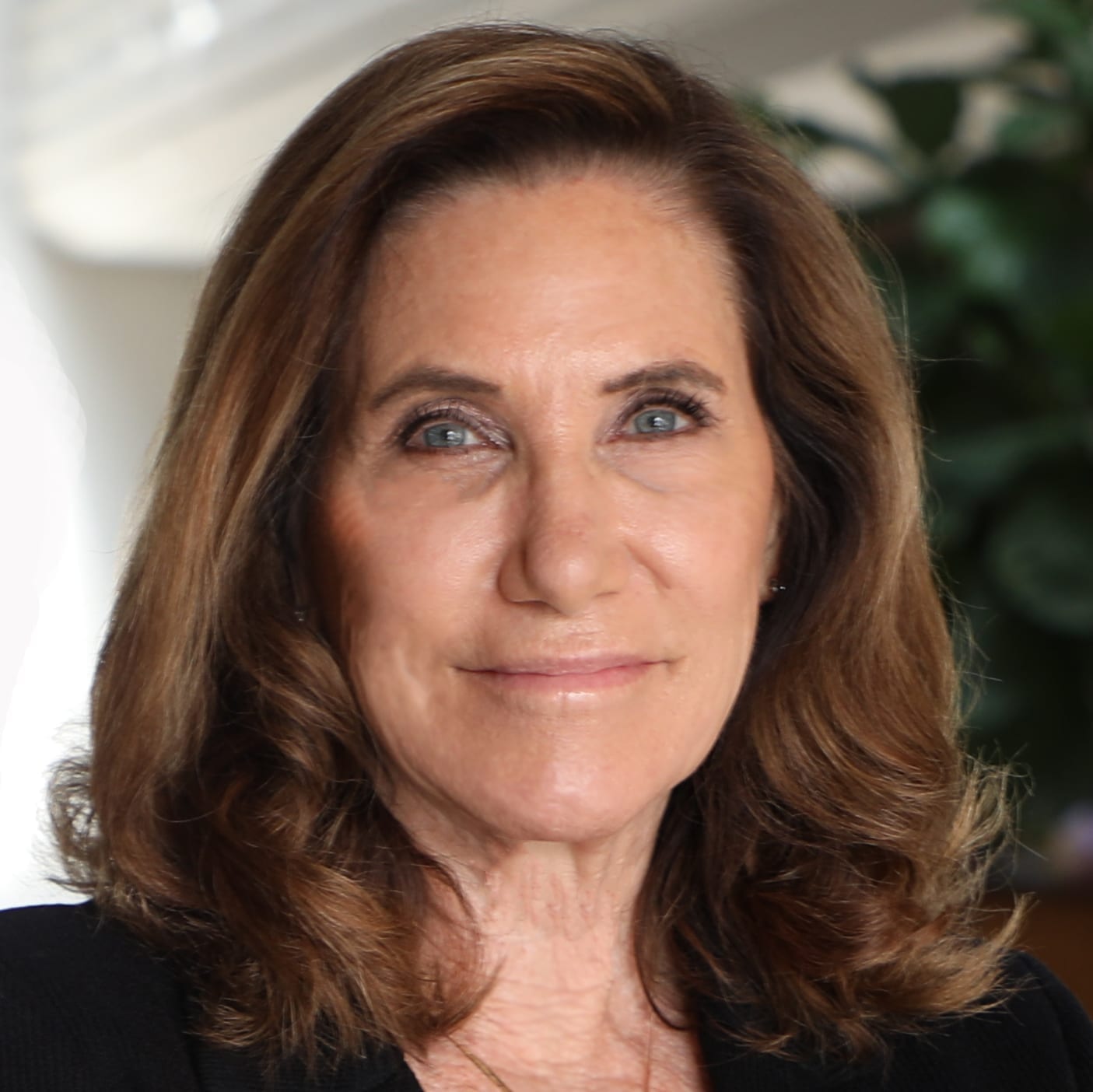 Dr. Pamela Rutledge is available to reporters for comments on the psychological and social impact of media and technology on individuals, society, organizations and brands.
Shane Pase liked this on Facebook.
Matthew McHolland liked this on Facebook.
KhaLid Oualarbi liked this on Facebook.