DR. PAM | MEDIA PSYCHOLOGIST
THE PSYCHOLOGY OF DIGITAL BEHAVIORS
  • Home
  • Blog
  • About
    • About Dr. Pamela Rutledge
    • Media Psychology
      • What Is A Media Psychologist?
      • 8 Reasons Why We Need Media Psychology
      • Careers in Media Psychology
      • Example Careers in Media Psychology
      • Media Psychology at Fielding Graduate University
      • Positive Media Psychology
    • MPRC
      • Media Psychology Research Center
    • Media Psychology Review
  • Consulting
    • Speaking & Consulting
    • Audience Engagement: Why Use Personas?
      • How to Build a Persona
    • Adapting to Change
    • Transmedia Storytelling
      • Storytelling Across Platforms
      • Transmedia Storytelling Starts with the Power of Story
      • Our Transmedia World
      • Transmedia Case Study: The Three Little Pigs
      • Transmedia Storytelling Workshop
  • Story Power
    • Brand Storytelling
    • Storytelling: Brands, Entertainment & Organizations
      • Storytelling for Organizations
      • Core Story: Case Study
  • In the News
    • Press Quotes & Interviews 2022-2025
    • 2021-2019
    • 2018-2016
    • 2016-2017
    • 2015-2013
    • 2012 & EARLIER
    • Video Interviews & Webinars
  • Resources
    • Mindful Media & Digital Literacy
      • Positive Media Psychology
      • Benefits of Video Games Part 1
      • Benefits of Video Games Part 2
      • Benefits of Video Games Part 3
      • Becoming Mindful: Exercises
      • Mindful Media Journal
    • Academic Materials
      • Media Psychology Syllabus 2021
      • Media Psychology Syllabus 2012
      • Media Psychology Syllabus 2015
    • Articles
      • Persuasion & Augmented Reality
      • Psychology of Transmedia Engagement
      • Theories of Attention
      • The Psychology of Color
      • Website Design: How to Use Psych Theory
      • Data Strategy: Listen to Your Consumers’ Stories
      • The Psychology of Story
  • Archives
  • Contact
DR. PAM | MEDIA PSYCHOLOGIST
  • Home
  • Blog
  • About
    • About Dr. Pamela Rutledge
    • Media Psychology
      • What Is A Media Psychologist?
      • 8 Reasons Why We Need Media Psychology
      • Careers in Media Psychology
      • Example Careers in Media Psychology
      • Media Psychology at Fielding Graduate University
      • Positive Media Psychology
    • MPRC
      • Media Psychology Research Center
    • Media Psychology Review
  • Consulting
    • Speaking & Consulting
    • Audience Engagement: Why Use Personas?
      • How to Build a Persona
    • Adapting to Change
    • Transmedia Storytelling
      • Storytelling Across Platforms
      • Transmedia Storytelling Starts with the Power of Story
      • Our Transmedia World
      • Transmedia Case Study: The Three Little Pigs
      • Transmedia Storytelling Workshop
  • Story Power
    • Brand Storytelling
    • Storytelling: Brands, Entertainment & Organizations
      • Storytelling for Organizations
      • Core Story: Case Study
  • In the News
    • Press Quotes & Interviews 2022-2025
    • 2021-2019
    • 2018-2016
    • 2016-2017
    • 2015-2013
    • 2012 & EARLIER
    • Video Interviews & Webinars
  • Resources
    • Mindful Media & Digital Literacy
      • Positive Media Psychology
      • Benefits of Video Games Part 1
      • Benefits of Video Games Part 2
      • Benefits of Video Games Part 3
      • Becoming Mindful: Exercises
      • Mindful Media Journal
    • Academic Materials
      • Media Psychology Syllabus 2021
      • Media Psychology Syllabus 2012
      • Media Psychology Syllabus 2015
    • Articles
      • Persuasion & Augmented Reality
      • Psychology of Transmedia Engagement
      • Theories of Attention
      • The Psychology of Color
      • Website Design: How to Use Psych Theory
      • Data Strategy: Listen to Your Consumers’ Stories
      • The Psychology of Story
  • Archives
  • Contact
Mar 11

The Upside of Social Media

  • March 11, 2019
  • Pamela Rutledge
  • No Comments

We are awash in technophobia. Social technologies are currently taking the blame for a range of sins, from undermining democracy to destroying personal relationships.  Can social media be problematic? Absolutely.  But here’s the bottom line.  It’s not going away.  The solution isn’t to run for the hills.  It’s for each one of us to get smart about what technology can and can’t do and figure out how to use it well.

Social media can do a lot of good.  It all depends on how you use it.  As Ronnie Koenig points out in an article on NBCNews.com, it can help you to find out about new things—whether it’s for a trip or just going out to dinner.  This allows you to have new experiences and expand your thought patterns and behavioral options.  New experiences give you new skills (even if it’s minor like finding the converted farmhouse in an area you didn’t know) which can increase your sense of confidence.  This type of experience is part of what positive psychologist Barbara Fredrickson’s  (2004) model captures—the cumulative effect of positive emotions.  Her Broaden and Build Theory of Positive Emotions suggests that positive emotions contribute to increased resilience, optimism, confidence and well being.  (Keep in mind this is all incremental and not some grand ta-da moment.)  The increased sense of self-efficacy in these experiences can make you more adventurous.  After all, if it went well before, you have increased confidence that it has the potential for a positive outcome again.  The important point is that positive experiences build on each other and it doesn’t have to be in a lab.

While we worry a lot about the negative content on social media, we often forget that looking at positive images (aesthetically pleasing, inspirational or downright funny) can also create positive emotions that trigger your neuro reward system and increases what Fredrickson (2005) calls your “thought-action repertoire” — positive emotions makes you more open to new ideas and increase your creativity.  Thus, a quick scroll through positive images can be a good break when you’re stuck on a project.  

We are awash in technophobia. Social technologies are currently taking the blame for a range of sins, from undermining democracy to destroying personal relationships.  Can social media be problematic? Absolutely.  But here’s the bottom line.  It’s not going away.  The solution isn’t to run for the hills.  It’s for each one of us to get smart about what technology can and can’t do and figure out how to use it well.

Reviewing your own photos and focusing on the good stuff from the past and even sharing those good feelings with others can enable you to savor those moments, amplifying the positive emotions in the experience.  Images, in particular, can trigger sensory and emotional responses not just cognitive pathways, so you really can re-experience an event.

Social media also allows you to feel connected to the people who matter, whether it’s by text, WhatsApp, Facebook or Instagram.  Intimacy (i.e. closeness, not sex) is a function of feeling connected and sharing moments with others.  Social media can provide the ‘glue’ between F2F opportunities.  In some cases, where geography is an issue, it keeps distance relationships closer by increasing the sense of presence and enabling a smoother reconnection when people meet in person.  

Social media can let you connect with others who share your interests or challenges.  It can normalize life’s difficulties (loss, illness, hardships) and give you ideas of how to cope.  Sharing goals can provide motivation (behavior change goals like weight loss, fitness, quitting smoking, etc.) and gives you a way to seek support at any time.  Even when it’s not synchronous, you have the sense of your friends’ presence and it feels like you’re talking to them. 

Social media is also empowering.  You can learn how to change a faucet, stop a leak, cook a roast, install cycle cleats, design a room, give a child’s birthday party, change the oil in your car, plant tulips and literally thousands of other activities where you can even watch someone demonstrate the process on video. And you can repeat it as many times as you need.  YouTube videos are an incredible boon to those of us who are visual learners.  Thanks to YouTube, I just changed the motherboard on my automatic cat box so it had WIFI and would notify my iPhone when the box jams. This may not seem like a big deal to you, but it was to my cat.  Consider how difficult this type of information would have been to get before, how many sources you would have to explore—and you still might not have had a visual demonstration.

Social comparison even gets a bad rap.  Social comparison, first, goes in all directions (up, down and sideways.)  It can make us feel better about our own situation (downward—“And I thought I had it bad”), sideways (normalizing behavior “I thought I was the only one nerding out”) or upward.  In spite of common perspectives, even upward perception can be good if you’re using it to learn how to change things you can control, not things that are beyond your control  I can be inspired by Serena Williams commitment to hard work and learn from that.  If, however, I compare my height or amazing athleticism to hers—there’s not really anything I can do to match her stature or her talent and that comparison can make me feel lacking.  This feeling, however, is entirely within my control through my choice of cognitive framing of the object of my comparison.  Ultimately, if I can’t seem to get past the height thing (or whatever), the “off” button is entirely in my control.  

Social media has lots of positives.  My advice to all social media users is straight from the media literacy books.  Become a smart user.  Don’t ever forget that the choice is yours. 

1) learn about each app and platform’s settings so you are aware of what you are giving away (i.e. data and privacy) for the “free” service you want to use.

2) be aware of your choices (mindful, if you will) and the results of your use on your emotions, your relationships and your life. 

3) If your use is positive, do it and quit worrying about it.  If it is negative, make a change. 

4) Remember that you have many tools to restore your balance and equanimity: stop following, unlink, unfriend, set limits.  You have the power.

A final word:  There is an overuse of the word “addiction” in relation to social media and Internet use. There is a big difference between overuse and addiction.  Addiction is a clinical term with very specific diagnostic criteria.  If, however, you feel unable to establish boundaries and your use of anything, from social media to online gambling, is negatively impacting your life, please seek qualified, professional help for an appropriate diagnosis. 

Fredrickson, B. L. (2004). The Broaden-and-Build Theory of Positive Emotions. Phil. Trans. Royal Society London, 359, 1367-1377.

Fredrickson, B. L. (2005). Positive Emotions Broaden the Scope of Attention and Thought-Action Repertoires. Cognition and Emotion, 19(3), 313-332.

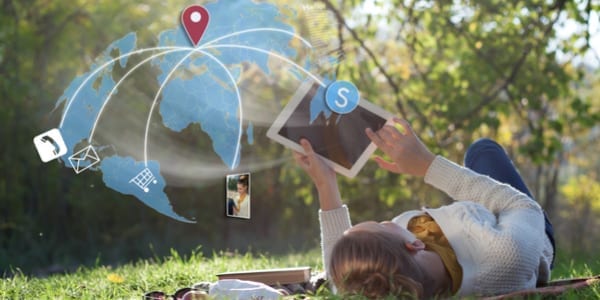
Photo source: Shutterstock

  • Facebook
  • Twitter
  • Reddit
  • LinkedIn
  • E-Mail

About The Author

Pamela Rutledge, PhD, MBA is the Director of the Media Psychology Research Center. A consultant, author, speaker, and professor, she consults on a variety of media projects developing audience engagement and brand storytelling strategies.

Leave a reply

Your email address will not be published. Required fields are marked *

This site uses Akismet to reduce spam. Learn how your comment data is processed.

FOR THE PRESS

Dr. Pam Rutledge, media psychologistDr. Pamela Rutledge is available to reporters for comments on the psychological and social impact of media and technology on individuals, society, organizations and brands.  pamelarutledge@gmail.com

SEARCH THE SITE

RECENT POSTS

  • The Legacy of Daytime Talk Shows Lives in Your Feed
  • Oprah's High Road: Diverging Paths in Daytime Talk Shows
  • Daytime Talk Shows: Why We Couldn’t Look Away
  • FAFO Parenting: Letting Kids Learn the Hard Way
  • Meta Is Using Your AI Chats to “Personalize Your Experience”

MEDIA PSYCHOLOGY RESEARCH

The Media Psychology Research Center (MPRC) is an independent research organization directed by Dr. Pam Rutledge.  Read about MPRC at www.mprcenter.org.

CONSULTING PROJECTS

Dr. Rutledge consults on a variety of media projects using psychology to translate data into human behavior for powerful results.

  • Parenting in a Digital World webinar series
  • Persona Development for audience segmentation
  • Fan and Audience Engagement: Identifying audience narratives to satisfy needs
  • Brand Storytelling: Supercharging brand meaning

RECENT POSTS

  • The Legacy of Daytime Talk Shows Lives in Your Feed
  • Oprah's High Road: Diverging Paths in Daytime Talk Shows
  • Daytime Talk Shows: Why We Couldn’t Look Away
  • FAFO Parenting: Letting Kids Learn the Hard Way
  • Meta Is Using Your AI Chats to “Personalize Your Experience”

SEARCH

Content copyright Pamela Rutledge 2026.