Overview
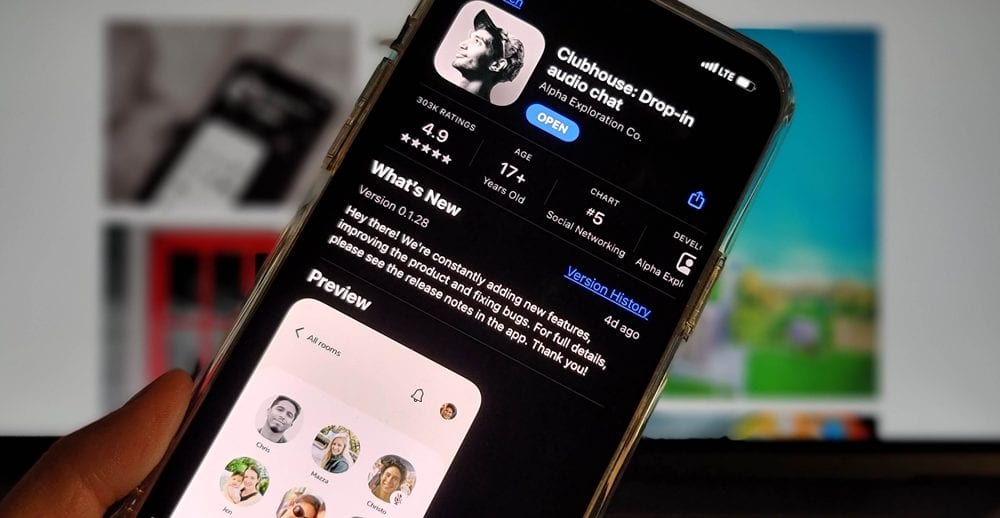
- Clubhouse is the ‘app du jour.’ A throwback, it is audio-only for drop-in discussions, serendipitous meetings, and eavesdropping without shame.
- Invitation- and IOS-only, exclusivity, celebrity, and FOMO fuel its appeal; voice transmits emotion without the distraction of video, creating a sense of intimacy.
- Popular with marketers and Influencers, there is a heavy undercurrent of purposeful audience building for monetization.
- Wherever there are Influencers, brands will follow, but so far, they haven’t figured out how to capitalize on the all-audio format.
- Topics range from business strategies, global wellness, and individual empowerment self-help to inspiration. Be aware, however, there have been reports of abuse, misogyny, anti-Semitism, and racism, in spite of community standards.
The Rise of Clubhouse
In the wake of Zoom fatigue, the rising popularity of the social audio (aka voice-only) app Clubhouse makes a lot of sense. Clubhouse sounds like an app for kids. It’s not. There’s nothing to watch, no dancing, no lip-syncs, and no funny cat videos. It is a throwback: audio-only. You can move from room to room, listen or speak and find people with like interests, but you can’t see or text. The app is iPhone-only. You also have to be invited to join by another user. In spite of this (or because of this), the app has been downloaded nearly 13 million times in its first year. Its rapid adoption has triggered a wave of Clubhouse competitors from heavy-hitters like Facebook and Twitter to a handful of start-ups.
The appeal? Exclusivity, the emotional resonance of voice, FOMO-fueled unpredictability, and you can still wear your sweats.

Photo by Dollar GIll/Unsplash
A lot of Clubhouse’s popularity has been attributed to the buzz created by celebrity users such as Elon Musk, who used it to interview Robinhood CEO Vlad Tenev about GameStop, Oprah Winfrey, and Mark Zuckerberg.
COVID has also been a big gust of wind in Clubhouse’s sails. The cancellation of most professional events and the normalization of virtual communication has made the opportunity to network with the chance of meeting luminaries hard to resist.
Clubhouse feels like a cross between WhatsApp and LinkedIn or a fluid and participatory podcast. It also feels a bit like a conference, where you can peruse different rooms and speakers. Like a conference, it’s easy to get lost and miss things that you might want to see. Part of that is fascinating. As our online world becomes increasingly governed by algorithms that constrain the information we see, it is rare to come across something new and unexpected.
Let’s face it; it’s an extrovert’s (or Influencer’s) paradise. If you’re social and enjoy meeting new people, the newness and fluidity make it a great place to find those with similar interests. Like any social media, it takes effort to put yourself out there enough to find them — and you have the time. Influencers are swarming the app, looking for ways to monetize the experience and take advantage of the quasi-captive audiences each room represents.
There are a lot of professional reasons for joining Clubhouse, especially if you’ve something to sell. Still, I’d argue that Clubhouse’s popularity is fueled as much by innate human drives as economics or lofty intellectualism.
The Psychology Behind Clubhouse
Curiosity
Humans are naturally curious. It is an automatic response to the unknown, part of that biological imperative that tries to keep us safe. There are a lot of curiosity triggers at works in Clubhouse’s structure. First, anything that is exclusive is instantly more desirable. Exclusivity is scarcity. It’s much safer to be “in” than “out.” Exclusivity not only drives interest and desire; once you are “in,” you can relish in the sense of superiority it confers.
Social Influence and Illusions of Authority
There is an added level of exclusivity in how each room (conversation) has moderators, like a panel of experts. They are on the “stage,” which triggers metaphors of performance, keynotes, and the like, giving those on the stage an aura of authority. But do they really know anything? Are they really “important”? Here’s where curiosity can take you into a real rabbit hole. Click on an individual’s picture, and you’ll see their bio, links to Instagram and Twitter, and anything else they care to include, emojis and all. You can also see who they are connected to and what clubs they joined. Still curious about their network of connections? Continue exploring by clicking on the icons and images of their followers and clubs… and so on and so on.
Serendipity
Curiosity also fuels the appeal of serendipity — that sense you might actually run into someone really interesting or well-known. There is no way of knowing for sure. Clubhouse is like a giant slot machine. As casinos know, the most effective means of behavior change is unpredictable rewards. You never know who you’ll find, but famous early users created some expectations or at least aspirations that you’ll run into influential people. So better show up to find out.
Emotional Resonance
Clubhouse is a nice counterpoint to Zoom fatigue. Like Zoom with your camera off, you don’t have to brush your hair or change out of your pj’s, but you still get the emotional advantage of voice which transmits emotions where text does not. In fact, without the distraction of video, you hear a lot more in voice which creates a sense of intimacy and connectedness. And you don’t have to stare at yourself which keeps you focused on the person talking.
Socially-sanctioned Eavesdropping
It has the thrill of voyeurism and eavesdropping but with the shame. You can search for people and topics by name, interest, club or even by emojis used in a member profile. You can lurk without contributing and slink away more or less unnoticed by clicking on the “leave quietly” button. It’s also mobile, which makes it portable so you can walk the dog while attending discussions. For some, Clubhouse is the new talk radio that runs in the background.
Monetization Opportunities
Ok, call me naïve, but I didn’t expect the pronounced emphasis on building followers, lead generation, and, presumably, monetization. There is a pronounced focus on building audiences, starting personally-branded clubs, and a generally high level of self-promotion, from tips to overt selling. All this occurs amidst all the high-minded topics like the Philosophy of Creativity, How to Succeed in Product Management, and Quiet Morning Meditation but you can’t miss it. As I write that, the next room up on my feed is The Rise of Clubhouse 2: Monetization and Predictions.
Considerations For Individual Users
- If monetization is your goal, your bio is super important. In fact, bio writing optimized for Clubhouse searches is one way some folks are monetizing their expertise.
- You can link your Clubhouse membership to Instagram and Twitter so people can contact you directly. There’s no chatting in Clubhouse but I heard several moderators ask people to DM them in Instagram to follow up on potential opportunities.
- Since the app is relatively new, the experienced users haven’t been there all that long. Consequently, it is a pretty friendly and welcoming place. Follow someone and they will invite you to join their club. There is a little of the early Twitter “you follow me, I’ll follow you” exuberance.
- If you sign up to be on the “invite me” list and someone in your address book is a member, the app will notify them that you need an invite. Good news, bad news. If someone is in your address book and you are a member, you will get the notice to invite them.
- You can only change your username once — a change made to discourage fake accounts — so pick one you can live with.
- There is no recording within Clubhouse, but there are lots of workarounds, so don’t count on privacy, just like on any social media platform.
- There are private rooms and, forewarned is forearmed, there have been reports of abuse, misogyny, antisemitism, and racism even though they are against guidelines.
As with every new app, the only way to figure out if it is of value to you is to 1) try it and 2) figure out your goals to see if spending time and effort on the app helps or hurts.
Considerations for Brands
The swarming of Influencers into Clubhouse says brands won’t be far behind. Because discussions occur in rooms, they are easier to control and, therefore, sponsoring one is safer for brands. Each room provides a dedicated audience if the branded content is relevant and of value to the conversation taking place. However, conversation is the key. Audio-only relies on more subtle and authentic factors than typically drive advertising.
Therefore, Clubhouse may not be the friendliest place for brands, particularly those with the hard-sell model. It’s easy for the audience to leave with a bad taste in their mouth. The halo effect is very real when brands back the wrong horse. Negativity sticks to the brands a lot longer than it does to an Influencer who made a mess in the first place. Other types of social media are curated and edited. Clubhouse is live. Just because it’s not recorded doesn’t mean things heard there won’t spread, especially given the structural links with Twitter and Instagram.
Brands are experimenting with the best way to take advantage of an app with surprisingly large watch times. Some brands have hired content creators to host discussions. Pernod, for example, hosted a series on Black female entrepreneurs during Black History Month. Others have used the platform to talk about company earnings featuring execs.
Chat Apps like Clubhouse and the alarming rise of Omegle among kids were the April 6 topics of the Tuesday Tech Talk webinar I do on the first Tuesday of each month with Diana Graber and Arias Collins of Cyberwise and Rick Andreoli of Parentology. Our monthly webinar targets parents’ concerns. For future dates and topics, see Upcoming Events. For implications extended to brands, feel free to contact me directly. The recording is available on this website under recent webinars and on YouTube at https://www.youtube.com/watch?v=-rViiXJs9iU.

 Dr. Pamela Rutledge is available to reporters for comments on the psychological and social impact of media and technology on individuals, society, organizations and brands.