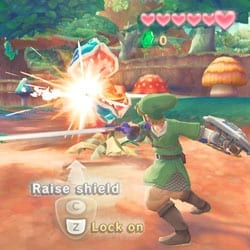
Video games have been at the forefront of interactive media and continue to be a significant part of the participatory media environment. The thought of a video game still may strike horror into the hearts of many, but video games are just a digital manifestation of a very basic human behavior: play. Playing is where we learn.
In my last post The Positive Side of Video Games Part I, I talked about how games are just one part of the changing media environment that creates new assumptions and expectations about participation and interactivity In this post, I will describe how games function as learning environments.
The Power of Gameplay for Learning and Growth
Throughout history, games and gaming have been an integral part of human expression of culture and identity, facilitating collaboration and creativity. Play is vital to a child’s social and emotional development. Play is where we work through emotions, learn to share, negotiate joining groups or ongoing play, experience the perspectives of others, learn to cope with our own emotions, and explore our self-perceptions (Piaget, 1962). It’s only the technology that is new.
The bulk of video game-related research has focused on the interactivity, cognitive resources, and impact of content (Klimmt & Hartmann, 2009). However, the experience of playing video games can impact self-efficacy in a number of ways. These include 1) the expansion and exploration of identity, 2) generation of and participation in communities of learning, 3) building social connections through collaboration and negotiation, 3) the promotion of problem-solving and decision-making in low-risk situations, 4) development of intrinsic motivation, and 4) the creation of positive emotions.
Games Expand the Sense of Self
No matter how simple or elaborate the technology, games are fundamentally a set of rules and goals that function within a culture of social and communication behaviors specific to the game community. The culture defines membership and create game-based social norms (Steinkuehler, 2004). In other words, games provide structure and a social identity.
Video games allow people to adopt virtual identities. According to Przybylski, Weinstein, Murayama, Lynch, and Ryan (2012), the appeal of video games is in part due to the players’ ability to explore aspects of their ideal selves that might not find expression in real life. Gameplay experiences that were congruent with perceptions of a player’s ideal self were the most intrinsically motivating and emotionally engaging. Klimmt and Hartmann (2009) suggest that feelings of increased self-efficacy also enhance the motivation to play.
The experience of immersion in gameplay can enhance feelings of identification with self and others (Gee, 2007), which can promote self exploration (Klimmt, Hefner, & Vorderer, 2009) and results in the reevaluation and rescripting of self-narratives (Cunliffe & Coupland, 2012; Dagirmanjian, Eron, & Lund, 2007). For children with learning disabilities, they are often struggling not just with their disability but also with the label and social stigma who often view themselves as less competent across multiple domains, such as intelligence, academic skills, behavior and social acceptance (Smith & Nagle, 1995).
Open-ended collaborative games, such as Wizard 101, encourage creativity and imagination. Games in general provide a learning space that functions like Erikson’s (1956) concept of psychosocial moratorium — a safe place to think, take risks and explore. Similarly, Bruner (1973) suggested that the purpose of play is to practice and explore behavioral patterns that a child can later use in other situations. Others researchers believe that play enhances the ability to understand and identify causal elements amidst irrelevant information (Weisler & McCall, 1976).
You Have to Learn to Play
Whether you play with other players or alone, in order to play, you must learn. Learning and playing are often indistinguishable because game structure mirrors well-established learning models (Van Eck, 2006). If you are learning in a game, you make progress. If you make progress in a game, you see evidence such as points or levels, reinforcing your perceptions of accomplishment and self-efficacy (Gee, 2007).
In multi-player games, newcomers learn through full participation. There’s no such thing as World of Warcraft ‘Light.’ You have to play to learn and you have to play with others, because it is by negotiating social relationships and developing collaborative skills that allow players to acquire genuine expertise.
Expertise in in any field is social capital and valued by peers. This motivates new players to engage in an “over-learning” period of extended practice aided by immediate feedback from the game system, such as error-produced death of your avatar, and encouragement from other participants, “Dude that was awesome!”
Where traditional educational outcomes tend to be score- and grade-based, the learning in gaming environment, whether individual or collaborative, is focused on skill acquisition around an activity because the goal is mastery for future play (Steinkuehler, 2004). There is no sustained social or intellectual capital accumulation in short-term rewards. Gameplay success through mastery elicits commendations and validation from other players both within the magic circle of gameplay but also in the larger community of players who play that specific game.
Games create communities of practice — groups of people who share a common competence and interest, whether it’s Farmville or Call of Duty. Participation creates a shared understanding and reinforces the social identity that comes from being included in the group (Lave & Wenger, 1990).
Game knowledge and skill is a social language that provides connection and context, like any other sport, art, or specialized endeavor. The shared knowledge of a popular game creates what James Paul Gee (2007) calls “affinity groups” provide a way to identify other group members. It works for Call of Duty the same way it works for NFL Football. The common ground functions as a social bridge, allowing for social interaction with peers that has little to do with game content and a great deal to do with demonstrating competence, membership and social validation. Peer validation then reaffirms and reinforces the community-based identity and the social currency of learning as a community-valued asset (Lee & Hammer, 2011).
In multi-player games like World of Warcraft, the game culture often encourages players to ask questions of those more accomplished or to offer advice to those less experienced. Game producers recognize the value in promoting these types of collaborative cultures because rewarding play experiences translate into profitable commercial ones. Thus, multiplayer games include built-in functionality to support player discourse, such as chat channels. Beyond demonstrating expertise or facilitating learning, game play with collaborative missions necessitate mastering a much more serious social skill, cooperation such as the negotiation of moral behaviors and trust relationships necessary to complete quests and challenges (Nardi, Ly, & Harris, 2007) .
Games Encourage Comfort with Decision-Making
Games, like much of life, are a series of puzzles and decisions. Unlike life, however, games make risk-taking easy. They often create situations where players not only must make decisions, they must make them quickly and must they must continually adapt to changing circumstances and rules. These circumstances encourage cognitive flexibility, the tolerance of ambiguity and comfort with decision-making without full information—excellent skills for dealing with real world situations on a daily basis at work, at school and at home (Reeves, Malone, & O’Driscoll, 2008).
Reeves et al (2008) go so far as to say that World of Warcraft provides an excellent training ground for effective leadership strategies, in large part because it teaching an understanding of the types of environments that facilitate adaptive decision-making.
In Part 3, I will conclude with a discussion of how thoughtful development and implementation of game design principles can ignite problem-solving, creativity, and learning and create positive emotions. Positive emotions lay the foundations for enhanced self-efficacy and resilience which also support a child’s ability to become a self-advocate for his or her own learning experience in an educational environment.
References
Bruner, J. (1973). Organization of early skilled action. Child Development, 44, 1-11.
Cunliffe, A., & Coupland, C. (2012). From hero to villain to hero: Making experience sensible through embodied narrative sensemaking. Human Relations, 65(1), 63-88. doi: 10.1177/0018726711424321
Dagirmanjian, S., Eron, J., & Lund, T. (2007). Narrative solutions: An integration of self and systems perspectives in motivating change. [Journal; Peer Reviewed Journal]. Journal of Psychotherapy Integration, 17(1), 70-92. doi: 10.1037/1053-0479.17.1.70
Erikson, E. (1956). The problem of Edo Identity. Journal of the American Psychoanalytic Association, 4, 56-121.
Gee, J. P. (2007). What Video Games Have to Teach Us About Learning and Literacy (Revised & Updated) (2nd ed.). New York: Palgrave Macmillan.
Klimmt, C., & Hartmann, T. (2009). Effectance, Self-Efficacy, and the Motivation to Play Video Games. In P. Vorderer & J. Bryant (Eds.), Playing Video Games: Motives, Responses and Consequences (pp. 153-169). United Kingdom: Taylor & Francis.
Klimmt, C., Hefner, H., & Vorderer, P. (2009). The video game experience as “true” identification: A theory of enjoyable alterations of players’ self-perception. Communication Theory, 19(4), 351-373.
Lave, J., & Wenger, E. (1990). Situated Learning: Legitimate Peripheral Participation IRL Report (Vol. 90-0013). Palo Alto, CA: Institute for Research on Learning.
Lee, J. J., & Hammer, J. (2011). Gamification in Education: What, How, Why Bother? Academic Quarterly, 15(2), 1-5.
Nardi, B., Ly, S., & Harris, J. (2007). Learning Conversations in World of Warcraft. Paper presented at the Hawaii International Conference on Systems Sciences 2007, Big Island, Hawaii.
Piaget, J. (1962). Play, Dreams and Imitation in Childhood (C. Gattegno & F. M. Hodgson, Trans.). New York: W.W. Norton & Company.
Przybylski, A. K., Weinstein, N., Murayama, K., Lynch, M. F., & Ryan, R. M. (2012). The Ideal Self at Play : The Appeal of Video Games That Let You Be All You Can Be. Psychological Science, 23, 69-76.
Reeves, B., Malone, T. W., & O’Driscoll, T. (2008). Leadership’s Online Labs. Harvard Business Review, May, 1-10.
Smith, D. S., & Nagle, R. (1995). Self-Perceptions and Social Comparisons Among Children with LD. Journal of Learning Disabilities, 28(6), 364-371.
Steinkuehler, C. (2004). Learning in Massively Multiplayer Online Games. Paper presented at the ICLS ’04 Proceedings of the 6th international conference on Learning sciences Santa Monica, CA. Conference Paper retrieved from http://jcmc.indiana.edu/vol11/issue4/steinkuehler.html
Van Eck, R. (2006). Digital Game-Based Learning: It’s Not Just the Digital Natives Who Are Restless…. EDUCAUSE Review, 41(2).
Weisler, A., & McCall, R. B. (1976). Exploration and Play: Resume and Redirection. American Psychologist, July, 492-508.

 Dr. Pamela Rutledge is available to reporters for comments on the psychological and social impact of media and technology on individuals, society, organizations and brands.
[…] The Positive Side of Video Games: Part I, Part II, Part III (from Dr. Pamela Rutledge) Video games have been at the forefront of interactive media and continue to be a significant part of the participatory media environment. The thought of a video game still may strike horror into the hearts of many, but video games are just a digital manifestation of a very basic human behavior: play. Playing is where we learn. […]