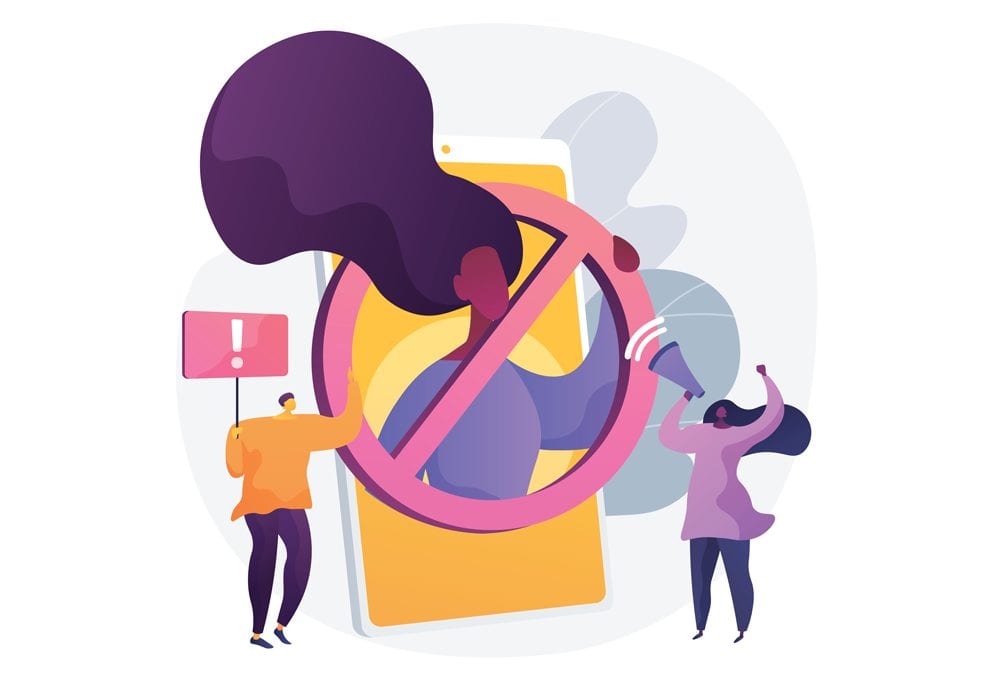
Don’t agree with them? Find them offensive? Don’t like them? Cancel them!
Cancel culture is pervasive. Publicly ‘canceling’ or calling out someone for words or actions that you find offensive, disagree with, or just plain don’t like is everywhere. It can be simple finger-pointing or a coordinated demand for retribution for alleged transgressions, urging the audience to join in and add their voice to hasten the severe penalties of social ostracization. It started as a means of social change, a way of speaking individual truths to positions of power. But where it was once focused on authority figures, public humiliation and shaming have become the ‘go-to’ means of voicing disapproval, real or imaginary, against anyone. It’s gone from social issues to personal ones, from celebrities to classmates. We have a big problem if this is how we’re teaching our kids to deal with problems and each other. Cancel culture has turned into bullying with a cooler name. It promotes ostracization over education, condemnation over compassion, and is deaf to redemption and change.
Public Shaming and Social Exclusion are Not New
Public shaming and social exclusion have long been a means of controlling people and social behavior. They inflict significant psychological pain. One of the most effective means of getting people to follow the party line is denying their existence. Think ex-communication. Kicking people out is also an effective way to draw the boundary lines between groups–they are bad or wrong, therefore they are “out” or in the psychological literature, the “other.” Our group is right and good. We are “in.”
When used responsibly, public exposure of sins can be an effective means of raising awareness and achieving social change. Boycotting has a long history in social resistance efforts and civil rights movements. ‘Outing’ transgressions can increase awareness and stimulate change, such as in #MeToo. Social media can give voice to the underrepresented, unknown, and abused.
However, the same tactics are agnostic and can equally be used to scare people into submission, such as the McCarthy-era Red Scare. When canceling is used irresponsibly—or worse, with the intent of going harm—it goes far beyond banishment; it is a coordinated and vicious attack. It destroys lives, careers, and families and violates a basic principle of the American legal system—innocent until proven guilty, not called guilty. Canceling triggers mob mentality, people’s tendency to jump on the bandwagon and join in an activity because others are doing it. Participation is motivated as much by fear-of-missing-out or fear of being targeted for not supporting the cause as by higher values. Kids are especially likely to ‘join the crowd’ because the threat of social exclusion is so powerful at that age. Brain scans have shown that social exclusion is experienced as genuine, physical pain. It takes a very strong sense of self for a teen to stand against a pack. It’s rare enough in adults, as we’ve seen with all the political maneuvering.
Cancel Culture is Polarizing
Cancel culture has picked up political overtones as name-calling and labeling have become embedded in social discourse, sometimes from the very people we should be able to look up to. The more you cancel, the more you can dehumanize the other person. The less human they are, the less you feel compassion, empathy, or the need to listen to their point of view. The banner of ‘canceling’ provides a smokescreen that distracts us from the fundamental moral issues of the act by confusing us with an emotionally-charged event that threatens our rights and, often, our identity. We get so bound up in arguments that we don’t consider the broader implications of condoning public shaming.
The ubiquity of social media gives canceling a broad reach that can do a lot of damage. It has become so prevalent that it is an accepted practice among teens. As teens jockey for power and social status (normal behaviors), canceling bears very little resemblance to social justice. However, it is a very effective tool for wreaking psychological and social havoc at a time when kids are particularly vulnerable. Teens are driven by social concerns. This is part of their normal and healthy development; they need to fit in, to be liked, and to have friends. It is how they learn to navigate the larger social world waiting for them went they leave the nest.
The Two Really Bad Lessons Cancel Culture Teaches Our Kids
First, cancel culture is all or nothing. It gives no room for change and growth over time, accepting responsibility and learning. No opportunities for the Prodigal Son here.
Second, and perhaps more important, we are teaching kids that it’s OK—cool even–to attack those we disagree with, find annoying, or dislike. Under the banner of accountability, we are accepting public shaming and bullying as acceptable behavior for navigating power differentials with no attention to values and purpose. This is not the kind of model that makes for a healthy or productive society.
For kids, cancel culture happens fast and rarely with any explanation. The range of cancelable offenses among teens is subjective and changes continuously. An offhand remark can trigger full-scale retribution that devolves into personal attacks and threats. It’s what happens in the pop-culture world, so why not in middle school or high school? Being canceled can dismantle a teen’s entire social network. It isn’t just missing Friday night’s party. It is becoming an object of scorn. Teens will tell you, once you’re canceled, it can be hard to come back. No one questions what got you canceled, but everyone worries about being connected to you in case they become canceled, too.
We can’t control what others do either in person or on social media. We can, however, provide guidance and skills to help them deal with social pressures such as canceling, peer pressure and cyberbullying. Those are skills that will serve them well for the rest of their lives.
See How Parents Can Help Kids Navigate Cancel Culture. Also, check out Cyberwise Chats. On March 9, 2021, Dr. Rutledge joins Diana Graber from Cyberwise for another Tech Topic Tuesday with guest Parentology Editor Rick Andreoli to tackle Cancel Culture.
If you miss it, look for the video under Resources > Recent Webinars

 Dr. Pamela Rutledge is available to reporters for comments on the psychological and social impact of media and technology on individuals, society, organizations and brands.