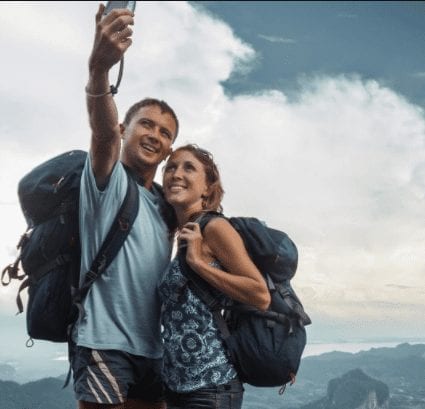
 A recent study on selfies (The Selfie Paradox: Nobody Seems to Like Them Yet Everyone Has Reasons to Take Them. An Exploration of Psychological Functions of Selfies in Self-Presentation by Sarah Diefenbach and Lara Christoforakos) shows the differential between our impressions of other’s selfies and those of our own. Not surprising. We all tend to attribute positive intentions to ourselves. Couple this with ego maintenance and the negative perception of selfies as an indication of self-indulgence, narcissism and it makes sense that we would think our own selfie-taking behavior is more positive and benevolent. All the negative press following the explosion of selfies comes from the technology-enabled disruption of how, when and who can take portraits. The big concerns about rampant pathology (addiction, narcissism, etc.) have not been uniformly born out in the literature. Yet the stigma remains as the behavior challenges existing mental models (such as whether or not it’s okay for women to self-promote). This influences how we explain our use so that it’s consistent with our self-view.
In my research, participants felt that their friends posted many more selfies than they personally did; participants also viewed their own uses as more positive than that of others, consistent with the findings of the Munich researchers. The values that are called into question by selfie-taking and posting, such as the need for attention, the desire to present a ‘best-self’ for public approval and validation and the inherent lack of authenticity in those behaviors, are attributed to others more than self.
However, from a positive psychology perspective, I argue that the ‘best self’ selfies or aspirational selfie is not a negative, but a valuable way of seeing a path to desired behaviors and attributes for internal purposes rather than getting external Likes. But we should not completely dismiss Likes as a negative. Humans are social animals, hardwired to form relationships and tribes. Likes are a way of validating affiliation and social norms.
Posting high points in life can increase confidence, empowerment, gratitude and appreciation through mindfulness and the ability to visualize desired outcomes. Thus selfie-taking behaviors are, in fact, authentic behaviors when conceptualized in this way. Selfie-takers experience of personal selfies as a positive can also reflect the ability of image to allow us to revisit and appreciate past positive events, increasing positive emotions. Thus the cognitive dissonance, or social conflict, people feel regarding selfies can be reconciled by this split attribution of intention.
See the article in Quartz by Leah Fessler “Scientists figured out why your selfies are funny and authentic but everyone else’s are so narcissistic.”
Note: There is, as always, a caveat to selfie-taking and any behavior, on or offline, that triggers insecurities. Excessive time spent in any behavior or rumination over others’ perceptions and the need for others’ approval can be problematic. Balance is the key in the use of all digital tools. If social media activities generate more negative emotions than positive for anyone or become obsessive, I recommend a social media audit (a few days of journaling that includes: what you use, why you used it and how you felt at the time.) This is similar to other behavior logs that help people identify the emotional responses and triggers behind maladaptive behaviors. If the self-insight from the audit doesn’t help, alway seek professional help.

 Dr. Pamela Rutledge is available to reporters for comments on the psychological and social impact of media and technology on individuals, society, organizations and brands.