
“Transforming the News Media into Honest and Balanced News” is the tagline of the online Swedish newspaper www.Tillit.info that exists for the purpose of disseminating positive news. (I posted a an update about this on my Facebook page and someone asked “How do you know” since the site in in Swedish. I wish I could claim to have fabulous multi-lingual skills, but there is a link about three lines down in the center that says “Translate the website into your language.”) I had a lovely email from Tillit’s producer Jack Johansson and their CEO and publisher Mikael Engström describing their mission. I learned from them that Tillit means “trust” or “faith” in Swedish. Tillit has been working as a non-profit for for several years and has distributed more than 370 000 copies of positive news through volunteers. They have received an enormous positive response from their readers in Scandinavia. They are now working on a business plan in order to get investors,making Tillit an interesting example of social entrepreneurship.


Beyond the emphasis on positive news, there are two other very cool things about their site. One is in the “isn’t technology amazing” category. A Google translator will translate the site into different languages. I haven’t found the exact gadget yet, but I’m eager to put in on this blog. The translator changed Swedish into English is about 2 seconds–who says the Internet isn’t bringing people together? And the second is cool thing is the “Hall of Happy News.” This wonderful montage of faces attached to positive news stories is an wonderfully simple example of how emotion can be expressed in digital media, especially for kid’s sites and classroom applications. The energy of all the smiling faces is infectious. Check it out! If you have research studies that will help their cause, there is a contact form on their site.
When I was a child, I loved the Disney movie Pollyanna about an eternally optimistic orphan child who transforms a community of grouches. What Pollyanna did was the exact same thing that Aaron Beck, Christine Padesksy, David Burns, Martin Seligman, or a host of other cognitive behavioral therapists would have you do (with slightly more theoretical focus than Hayley Mills). Reframe your thinking from negative and hopeless to positive and optimistic. That’s why I love the concept of making positive news. Sites like Tillit not only shift our emphasis from half-empty to half-full, they also challenge the rest of us to think about how to make positive news compelling in a way that attracts viewers in a system driven by eyeballs (ratings). A more positive take on news is definitely worth thinking about in a time when people are anxious and afraid. If we can inspire and energize people to engage and create on their own behalves, we will not only climb out of our current economic and psychological slump, but we will be laying the groundwork for a more productive, optimistic, and resilient society.

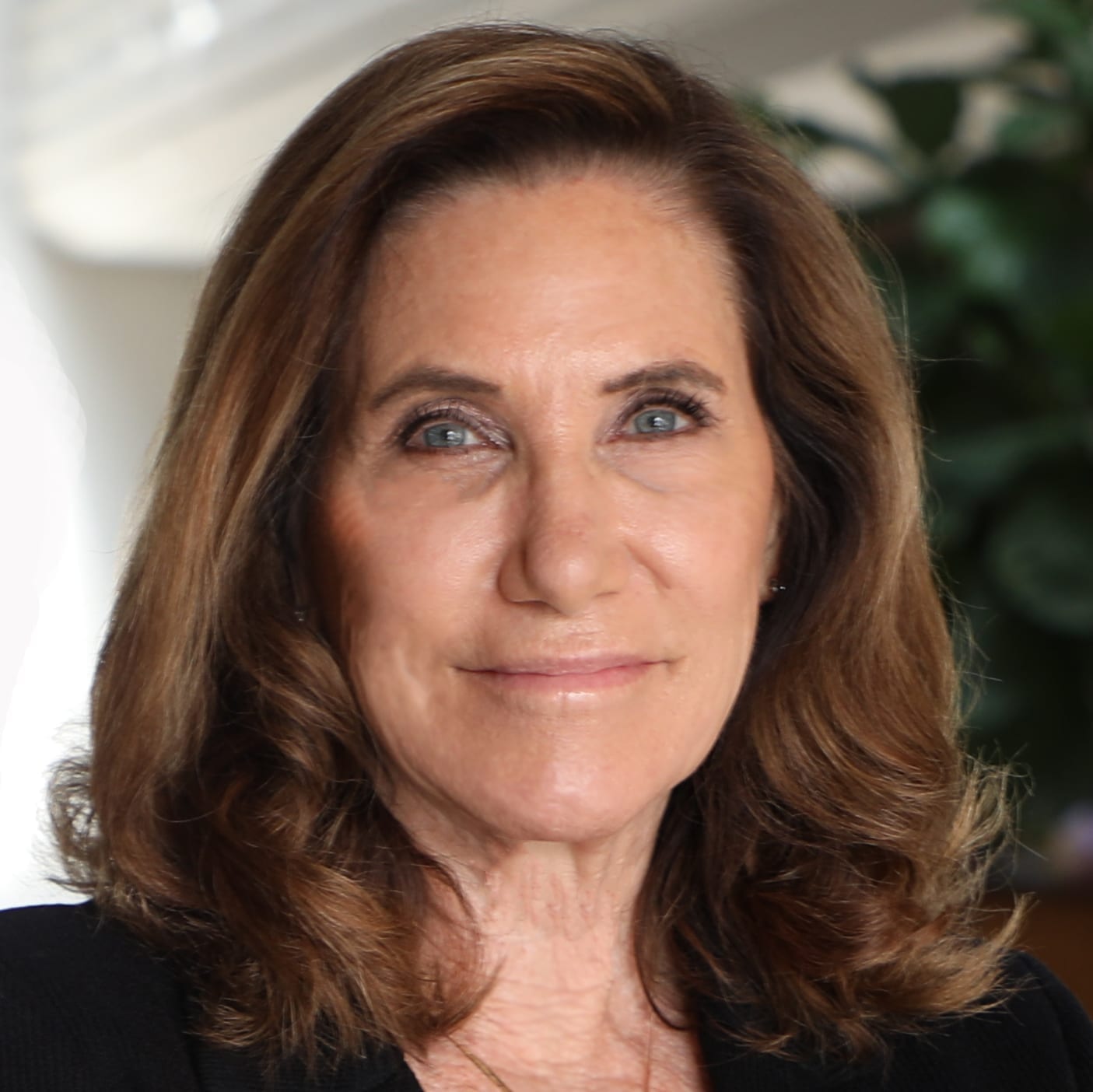 Dr. Pamela Rutledge is available to reporters for comments on the psychological and social impact of media and technology on individuals, society, organizations and brands.
Great concept!
Thank you for this! I awoke yesterday feeling that anything was possible, but by the time I read my local paper’s headlines, I felt that possibility draining. Every single headline included at least 2 negative words!
Whether or not a story is “negative” is in the eye of the beholder. Is the story that my city is facing budget cuts, or that the City Council is doing a yeoman’s job of trying to ensure my community has the services it needs? Are they to be admired for their strength or berated for every action? Those are all reporting choices, and as you note, those choices affect both our world view and our very being.
(Also, on a personal note, the Hayley Mills movie is a big reason my book is called The Pollyanna Principles: Reinventing “Nonprofit Organizations” to Create the Future of Our World. I feel myself to be in good company seeing that it is a favorite of yours as well!)
Thank you again for this great post!
Hildy
Hi Hildy,
Thanks for your comment! I agree that negativity is in the eye of the beholder, but media sources often emphasize the negative to trigger our biologically-based need to attend to things that are worrisome or threatening. Just like Pollyanna finding the positive, a continual negative skew even on benign stories must take it’s toll on our mood, as you note, or on our generally state of heightened awareness to danger. In cognitive therapy techniques, we make a conscientious effort to redirect our thinking. It would be interesting spending a day “reframing” all the news stories we see. I don’t hold out much hope for retraining mass media until we retrain the audience, because where the audience goes, mass media will follow. Instead of the Great American Smoke-Out, we need the Great American Psych-Out. Probably there’s a better name 🙂 I’ll look for your book! Pollyanna’s of the world unite!
Pam
the first books I borrowed at the library when I started to read at age 6 were two storybooks, “the story of disneyland” with pictures of the park, and “the secret of pollyanna” with pictures of the film
living in europe I had to wait until the age of 20 something to finally see the movie (and read the novel)
now at age 50 I still watch it all the time as well as all the extras on the dvd and I made other fans around me
pollyannas of the world unite!!
thanks for your site!!!!!
what do you mean my comment is awaiting moderation? oops! I never intended to offend anyone
Hi Wendy,
Thanks for taking the time to comment on our blog. The “waiting for moderation” just means that one of us looks at all the comments before posting, just in case they are spam, like ads for poker games or something more colorful. This is common practice on many blogs. It doesn’t imply anything at all about your message which was a lovely (and positive) comment. I agree the world could use more Pollyanna’s. The ability to look at things optimistically is a big contributor to our sense of well-being and our belief in our ability to get things done — as well as makes us all much more pleasant and uplifting to be around. Positive attitudes create energy; negative ones drain it away from not only the “perpetrator” but those around him/her. Psychologists believe, based on cognitive and positive psychologies, that you can learn to be more optimistic and reap all the benefits that brings. Check out Seligman’s “Learned Optimism.”
Thanks!
Pam
so that’s why you feel so tired around negative people
thanks ! now I’ll be even more careful to remember it and play the glad game all the time