 Is it possible to share profound human experience in 140 characters or less? NPR’s popular host, Scott Simon, live-tweeted his 84-year-old mother’s passing from her bedside in a Chicago hospital. By doing so, he challenged some commonly held beliefs about social media in general and Twitter in particular. Twitter, due to its terse style, is often held up to be superficial, void of genuine emotion and incapable of creating a meaningful narrative. Simon’s eloquence, charm, pain and humor over five difficult days should have created a bit of cognitive dissonance for those who think that Twitter-speak reduces people to idiots. If you read his posts during the last hours he spent with his mother, you would be impressed by his ability to say so much with so little. Like many others, you would be moved to tears. And you might also reevaluate the ability of social media to capture meaningful human experience.
Yes, it defied convention. The structure of Twitter, however, enables the chronicling of life events in very powerful ways. It documents a slice of life through words and images that, cumulatively, is incredibly powerful. Twitter is simple. Posting is easy. It alleviates the need to do anything other than spotlight meaningful moments. You don’t have to provide segues to get the reader from one thought to the next. The continuity and meaning is constructed through the accumulation of events, not any one point of brilliance. Not many of us have the verbal acuity and finesse of Scott Simon. His words were simple, yet poignant, devoid of text-speak and resembled poetry not stereotypical tweets.
Like a dot-to-dot drawing, the construction of a narrative in Twitter encourages engagement. The little gaps arouse our curiosity and invite participation and contribution. The audience could follow along, share their own experiences, respond to Simon or create side conversations with other followers. In this way, social media facilitated not just the expression of grief but also the processing of it.

Twitter delivers a unique sense of intimacy. In spite of the 140-character limit, it feels immediate and real because it is. Unlike most media content, there is little that stands between the author’s experience and the send button. No handlers, PR people, or censors (and, granted, sometimes people also have no judgment). It feels real, raw and, in this case, powerful.
There are some people who were offended by Simon’s real-time chronicle as he experienced his mother’s passing. Although Simon has stated that he had his mother’s consent, some felt that the venue was too public to be respectful. Others felt that using Twitter demeaned the experience. Yet humans have always shared meaningful experiences. It’s the opposite that’s unusual. Several scholars have noted that, in contemporary western societies, death is now relegated to hospitals and institutions and out of the public view. We used to gather around the campfire or town square. Now we gather around social media. It is our campfire.
Simon’s Twitter stream was a news event for two reasons. First, we spend a lot of time acting like death doesn’t happen. We rarely see a public display of the process or experience of the death of a loved one. Usually we get an announcement after the fact, not a ringside seat to the emotion.
Second, loss is a time when we benefit from the support of others. As a popular, public media figure, Simon had wide-ranging circles of people who would want to offer support. We all have spheres of connections that spread outward through levels of intimacy, albeit imperfectly and with overlaps— partners and immediate family, close friends, extended family, casual friends, colleagues, neighbors, group affiliations and so on. The on- and offline worlds both extend and complicate what we mean by friends or connections, but the connections are no less real. In the case of Simon, his sphere of connections extends to fan, listeners, and followers. Many of his regular listeners may feel they know Simon as a friend. As Horton and Wohl suggested back in 1956, people can form parasocial or one-sided relationships with celebrities, especially when they engage with them on regular basis. The human brain is wired for social connection. Seeing Oprah’s face in your living room five days a week or hearing Simon’s voice every weekend, can make you feel like you know them and we care–or at least are interested in what happens to–the people we know. We become psychologically invested in their lives.
In the digital media era, celebrity-audience relationships are not totally one-sided. Multiple social media tools, like Twitter and Facebook, facilitate the sense of contact from both sides. For a performer, the support of fans feels good. It’s motivating and rewarding and, when an audience likes you, it also helps you keep your job.
Simon, as a radio host, was already sharing his experiences with the audience. It makes perfect sense that he continues sharing with them by whatever tools was at his disposal. In sharing such a human moment, he allows his fans to send emotional support and appreciation his way. Whether Simon has met them personally or not, the knowledge of that goodwill and energy can be powerful.
Authenticity and relationships are the hallmarks of social media. Simon’s use of Twitter was unusual in that it disrupted social convention. He has an audience, however, that cares what happens to him and values his take on what he experiences. That he could strike such an impressive balance of grace, humor, humility and emotion is a testimony to both his relationship with his mother and his skill as a communicator. However, if you think that using Twitter demeaned the process, then consider how many people he touched because of Twitter’s reach. How many people were moved literally to tears reading by his words and then, as people often do, reflected on our their own lives or had a moment of gratitude for their own mother, son or good health?
The boundary is blurring between public and private. It isn’t just data that flows more freely. Emotions and experiences do as well. Part of this argues that we need to invest in more media literacy so people can make informed judgments about what they want to be public and private in their own lives. However a larger message is that we can judge media by the content and intention not the tools and embrace these new ways of sharing. After all, is making meaningful human experience public really such a bad thing?

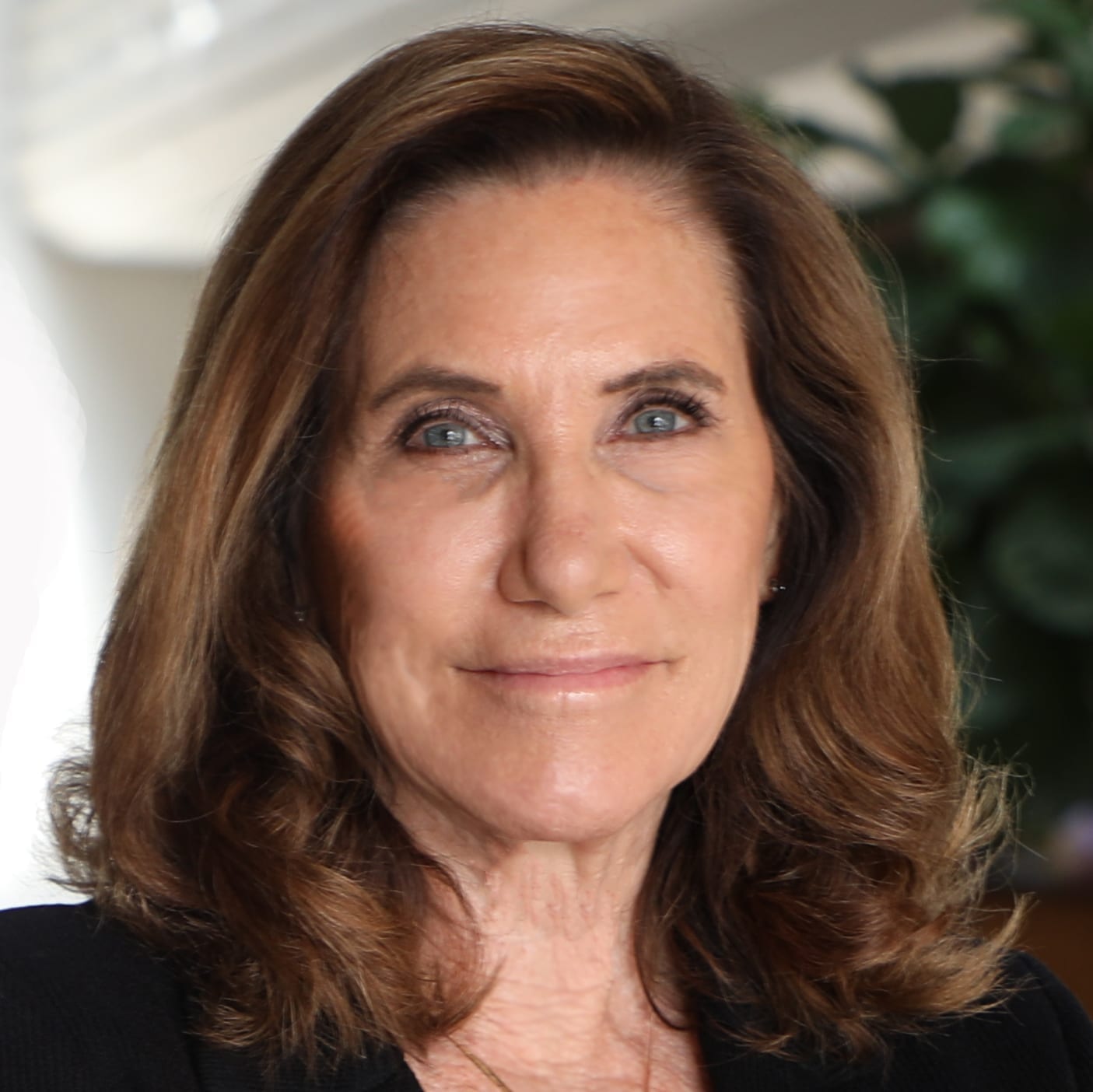 Dr. Pamela Rutledge is available to reporters for comments on the psychological and social impact of media and technology on individuals, society, organizations and brands.
NPR’s Scott Simon: Live-Tweeting Death : Is it possible to share profound human experience in 140 characters or… http://t.co/J5ozMd6QIn
Jill Elswick liked this on Facebook.
[…] NPR’s popular host, Scott Simon, live-tweeted his mother’s passing from her hospital bedside. In doing so, he challenged some commonly-held beliefs about social media. Most who read his posts were deeply moved. […]
Jill Elswick liked this on Facebook.
NPR’s Scott Simon: Live-Tweeting Death http://t.co/ty2EnNykQ4 #psychology
NPR’s Scott Simon: Live-Tweeting Death http://t.co/ty2EnNykQ4 #psychology
RT @PsychoBest: NPR’s Scott Simon: Live-Tweeting Death http://t.co/ty2EnNykQ4 #psychology
RT @PsychoBest: NPR’s Scott Simon: Live-Tweeting Death http://t.co/ty2EnNykQ4 #psychology
Tweeting death – the line between business & personal is well and truly blurred. http://t.co/IIs8uRFSwh @nprscottsimon via @pamelarutledge
Tweeting death – the line between business & personal is well and truly blurred. http://t.co/IIs8uRFSwh @nprscottsimon via @pamelarutledge
RT @Cal444: Tweeting death – the line between business & personal is well and truly blurred. http://t.co/IIs8uRFSwh @nprscottsimon via @pam…
RT @Cal444: Tweeting death – the line between business & personal is well and truly blurred. http://t.co/IIs8uRFSwh @nprscottsimon via @pam…
RT @Cal444: Tweeting death – the line between business & personal is well and truly blurred. http://t.co/IIs8uRFSwh @nprscottsimon via @pam…
RT @Cal444: Tweeting death – the line between business & personal is well and truly blurred. http://t.co/IIs8uRFSwh @nprscottsimon via @pam…
RT @mediapsychology: NPR’s Scott Simon: Live-Tweeting Death : Is it possible to share profound human experience in 140 characters or… htt…
RT @mediapsychology: NPR’s Scott Simon: Live-Tweeting Death : Is it possible to share profound human experience in 140 characters or… htt…
RT @Cal444: Tweeting death – the line between business & personal is well and truly blurred. http://t.co/IIs8uRFSwh @nprscottsimon via @pam…
RT @Cal444: Tweeting death – the line between business & personal is well and truly blurred. http://t.co/IIs8uRFSwh @nprscottsimon via @pam…
NPR’s Scott Simon: Live-Tweeting Death http://t.co/kBdZmOI3SE
NPR’s Scott Simon: Live-Tweeting Death http://t.co/kBdZmOI3SE
gr8 #twitter article about “judging media by the content and not the tool” #medialiteracy @pamelarutledge http://t.co/8qhhIrRRG0
gr8 #twitter article about “judging media by the content and not the tool” #medialiteracy @pamelarutledge http://t.co/8qhhIrRRG0
[…] By doing so, he challenged some commonly held beliefs about social media in general and Twitter in particular. Twitter, due to its terse style, is often held up to be superficial, void of genuine emotion and incapable of creating … […]
@BeCyberwise @pamelarutledge yep, his musings in 140 were profound/ relatable clearly cathartic; #sm as support http://t.co/EFitbDuuLx
invisalign The Woodlands, Tx
NPR’s Simon: Live-Tweeting Death