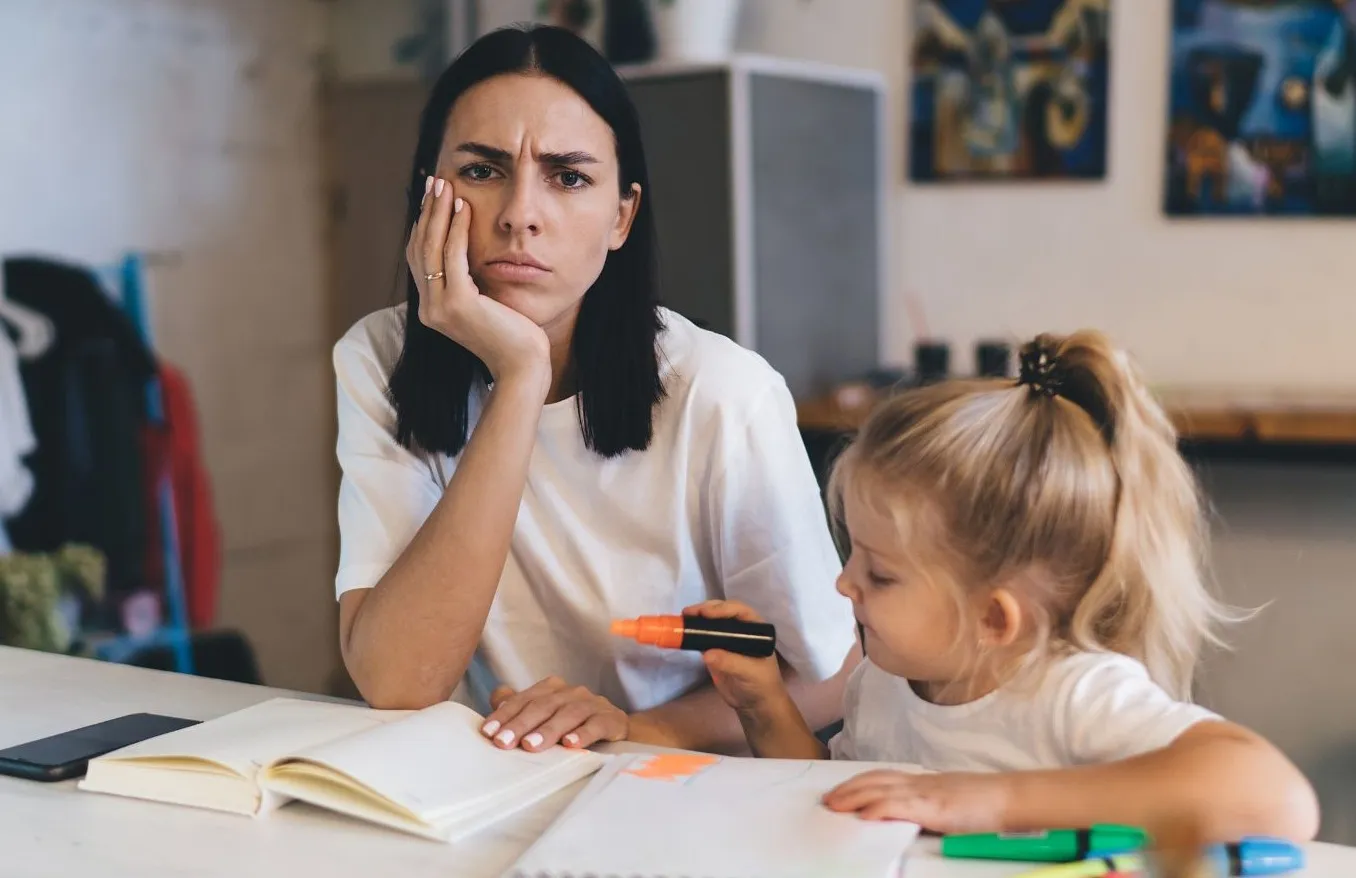
The latest parenting trend on social media says let kids experience the consequences of their actions rather than intervening. Sounds good. Does it work?
Key Points
- FAFO parenting emphasizes natural consequences but requires age-appropriate judgment and emotional support.
- Social media turns parenting into identity markers and morality, amplifying comparison and anxiety.
- Research continues to show that warmth plus structure produces the healthiest outcomes.
- The success of any approach depends on the parent-child relationship that anchors it.
When I heard about the FAFO parenting trend, I was curious. I’m always interested in how social media channels construct (or destroy) meaning as information spreads. As a parent of six kids, I’m interested in how parenting has evolved. (When I started, there was no gerund form of the word parent.)
The acronym FAFO stands for “F**k Around and Find Out” and describes letting kids reap the consequences of their actions. The term is said to have come from motorcycle gang culture, which kind of sums up the problem of taking information at face value on the Internet.
At first, FAFO sounds sensible because, after all, as adults, we face the consequences of our decisions all day long. The example I keep seeing showing how well FAFO works is about a kid who won’t wear his coat. Rather than forcing the issue, a FAFO parent would say, “Ok, you can go without it, but you may get cold.” But when I started making up other examples (and assuming that most parents would intervene if it got to the jumping-off-the-roof stage), I wasn’t so sure how well FAFO would work for most things. There are obviously times when it would work well. Getting cold and uncomfortable is a good learning experience—it creates embodied cognition. If the kid also gets angry, frustrated, or sad, the lesson is further embedded because emotion helps make memories sticky. But the list of applicable uses may be fairly short because the logic doesn’t follow past the narrow view of the consequences to the child, not everyone else involved.
What about something that seems similarly benign, like drawing on the walls? OK, make the kid clean the wall. But who, exactly, is in charge of making the kid clean the wall? I don’t want that job. It’s worse than taking away the crayons. Or what if the child who won’t go to bed wakes her sister up, and now they are both running around the house? Yeah, they’ll be tired in the morning, but in the meantime, you, the parent, have no private time that evening because you can’t last as long as they can, and then you have to deal with tired and cranky children the next morning. Let them be late, FAFO would say. Yeah, it’s great for my professional credibility when I show up an hour late for a client meeting. Wouldn’t it have been easier to enforce a bedtime, even if it meant arguing? Wouldn’t that, on net, have resulted in more time spent in a positive parent-child interaction than letting the “teaching moment” impact the next morning? Hasn’t it shifted more burden onto the parent? One of the problems with TikTok advice is that it’s been stripped down to a “take-it-or-leave-it” nugget without logic, evidence, or nuance. The following post is that rumination.
Thanks for reading!
Dr. Pam
People position FAFO as a reaction to “gentle parenting,” which was frequently interpreted as overly permissive or emotionally draining. FAFO is presented as the antidote to the “argue and lecture” method that turns every disagreement into a debate. The term’s blunt, meme-friendly language has increased its appeal and traction online and in parenting circles. It also reflects how parents are grappling with the evolving view of parenting culture and social norms about the relative roles and responsibilities of parents and children in the family, what constitutes “good parenting,” and how children learn.
Parenting Styles in Perspective
Parenting styles were first described in the 1960s, evolving from observations of how parental behavior was related to children’s social development (Baumrind, 1968; Maccoby & Martin, 1983). Plotting the balance between two dimensions, control and warmth, produced what is now a standard framework of four parenting styles.
- Authoritative parenting (high warmth, high control) blends clear rules with emotional support.
- Authoritarian parenting (low warmth, high control) emphasizes obedience and order, often through rigid rules or punitive measures.
- Permissive parenting (high warmth, low control) offers affection but few boundaries.
- Neglectful parenting (low warmth, low control) lacks involvement and structure.
Decades of research confirm that children thrive when parents balance empathy and expectations characteristic of authoritative parenting. However, linking childhood experiences to lifelong outcomes puts pressure on parents that has intensified with the rise of social media. TikTok and Instagram have made parenting a public act, amplifying every choice and emotion and opening parents up to the judgment of others.
Parenting in Public
Parenting trends like “gentle parenting” or “FAFO parenting” are modern variations that lean into different sides of the warmth-control equation. This simplification makes them perfect for memes, hashtags, and an algorithmically driven world, but less effective in real life.
Social media is full of parenting advice, and parenting styles have become identity markers, signaling values and morality as much as technique. Adopting a Momfluencer’s philosophy can simplify decision-making and restore a sense of control. But parenting advice truncated into a TikTok video has little room for nuance. Accepting beliefs from social media may provide a sense of validation and belonging. However, influencers can be dangerous when emotional authenticity becomes a stand-in for training and expertise, or when the curated, filtered images of calm, stylish, and patient parenting trigger negative social comparison and self-doubt.
Why FAFO Feels Refreshing
Parenting is hard. After years of hearing that they are supposed to be empathetic, present, and responsive, cook healthy food, limit screen time, arrange playdates, and design educational activities (preferably outside), while still making it to work on time, it’s not surprising that many parents feel exhausted. FAFO parenting is popular because it gives parents “permission” to step back. Turning kids loose to learn through manageable consequences appears to offer clarity and less emotional labor.
FAFO style would say that if a child forgets homework, they face the teacher. If they won’t go to bed, fatigue teaches the lesson. Supporters argue this promotes responsibility and resilience by allowing cause and effect to do the teaching.
However, FAFO is a half-baked loaf.
FAFO overlooks 1) developmental and individual differences; 2) the importance of empathy and emotional support, and 3) the impact of individual behavior on a family system over time. Not only must children be developmentally ready to link choices and outcomes, and the consequences be safe and proportional, but parents must also consider that “letting a child face the consequences of their action” doesn’t happen in isolation; it can negatively affect the dynamics of an entire family system. FAFO may work in one-child families under specific circumstances, but I can easily envision FAFO cascading among siblings.
Is FAFO Parenting Right for Your Child?
Think of FAFO parenting as one tool in a toolbox, not the whole set. Experiment with things that fit the “safe-to-fail” category, like forgetting homework, where your goal is to increase the child’s sense of responsibility. FAFO parenting doesn’t work for everything. Obviously, safety matters. Children, especially younger ones, struggle to link behavior and outcome over time. If the consequences must be enforced by the parent, it’s not clear that FAFO got you anything. There are also times when the consequences of a behavior are worse for the parent (or the rest of the family) than for the child.
Keep these 6 things in mind.
- Developmental readiness: Young children often can’t grasp cause-and-effect. Natural consequences work best when the lesson is immediate and understandable.
- Temperament: Resilient, curious kids may learn easily from experience, while anxious or sensitive ones can interpret this approach as rejection or distance.
- Situation and stakes: The best FAFO moments are “safe-to-fail” situations where the lesson won’t cause harm or humiliation.
- Parental motivation: The goal should be learning, not payback. Acting from frustration turns FAFO into punishment.
- Child preparation: Providing transitional support and explanations is necessary if you’re changing your parenting style.
- Connection and reflection: Letting consequences unfold only works when followed by empathy and conversation. The parent-child bond transforms the experience into growth.
Parenting in the Age of Algorithms
The FAFO parenting trend mirrors parents’ continual tension between control and surrender as social norms shift. With social media, parents face constant visibility, algorithmic feedback, and moral scrutiny. Social media rewards extremes and oversimplifies nuance, making any approach look like a silver bullet.
Effective parenting rests on the same foundation identified by decades of developmental research: warmth, structure, and connection. Natural consequences can be powerful, but they work best when paired with empathy and guidance. FAFO may make for great memes, but real growth, like real parenting, happens in the space between finding out and being understood.
References
Baumrind, D. (1968). Authoritarian vs. Authoritative parental control. Adolescence, 3(11), 255–271.
Maccoby, E. E., & Martin, J. A. (1983). Socialization in the context of the family: Parent-child interaction. Handbook of child psychology: formerly Carmichael’s Manual of child psychology/Paul H. Mussen, editor.

 Dr. Pamela Rutledge is available to reporters for comments on the psychological and social impact of media and technology on individuals, society, organizations and brands.