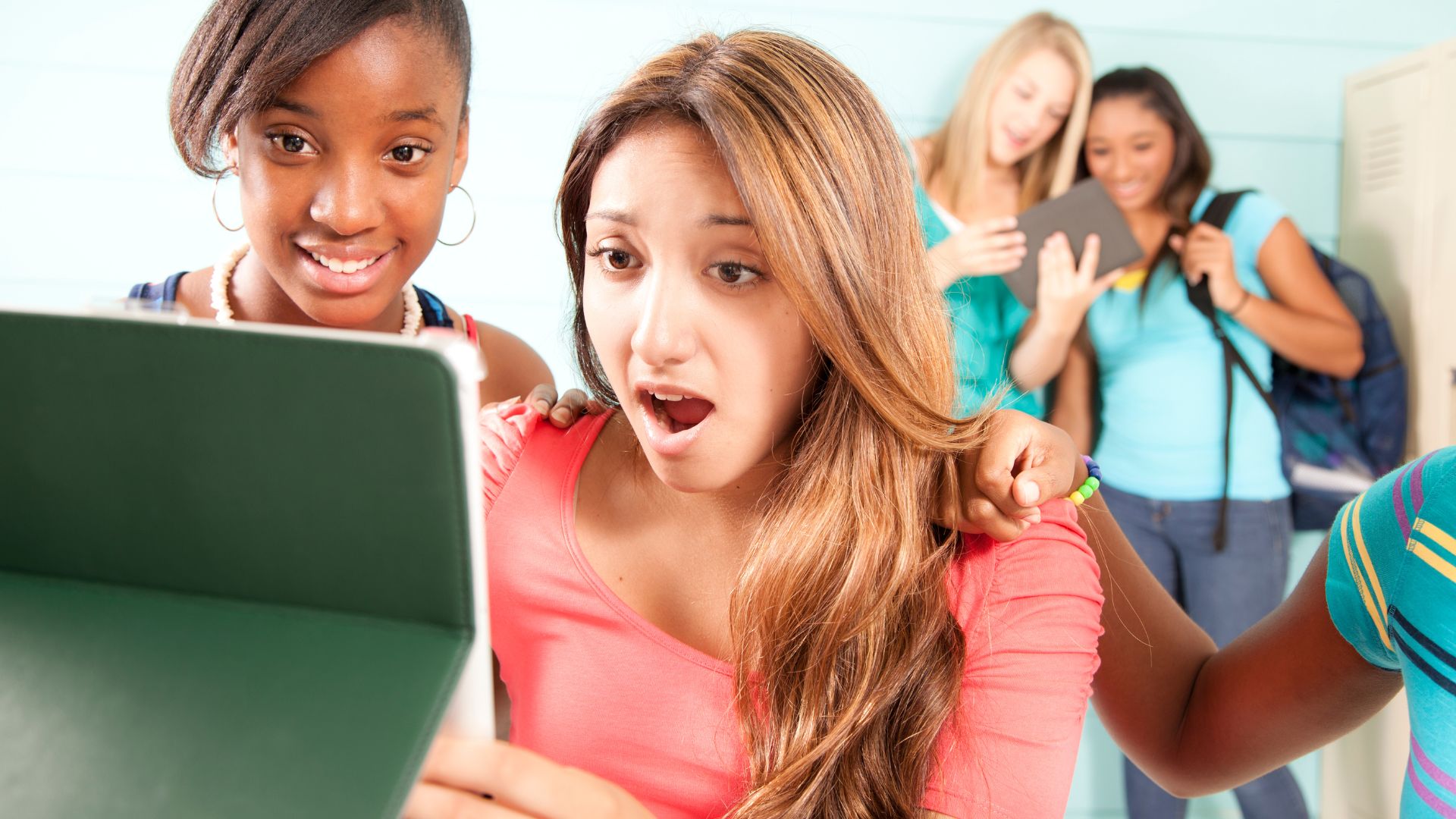
Devorah Heitner’s recent book describes how “Growing Up in Public” shapes kids’ self-esteem and identity development and what parents can do to help.
Key Points
- Parents should actively engage with kids’ digital activities as guides, not intruders or spies.
- Teaching digital literacy and critical thinking are keys to navigating online spaces safely.
- Focusing on how kids feel and act—not arbitrary measures like screentime—is a more effective way to monitor the effect of media use on mental health.
- Emphasizing mindful and intentional media use encourages a balance between online and offline activities.
Almost every online activity leaves a digital footprint that becomes permanent and searchable, its use out of the control of the owner. Kids are growing up with technology all around them, influencing normal developmental tasks that rely on peer interaction. Social media provides a stage for identity exploration by enabling kids to publicly “test” different versions of self. However, social networks expand feedback beyond legitimate peers to a broader public. The desire for social validation, paramount during adolescence, can create pressures to adopt an artificial façade or give in to peer pressure (Iwasa et al., 2023). Tweens and teens may not understand that something posted in a split second to make them desirable or popular can impact their digital footprint and follow them into adulthood. A short-term social gain can have longer-term costs when the permanence of online content makes it hard to reclaim an authentic self. How do we prepare our kids to successfully grow up in public?
In anticipation of our upcoming Cyberwise Chat with Dr. Devorah Heitner, I just finished reading her book “Growing Up in Public.” Dr. Heitner takes my question about preparing kids head-on and explores the impact of the ‘sharing and comparing’ culture on young minds. Her book is a balanced perspective on how kids interact with digital media drawn from research and extensive interviews with parents and kids. As a psychologist, media producer, and parent (with a ready soapbox for digital literacy), I found Dr. Heitner’s work to be smart and practical. While addressing parental fears, she does not give in to technophobia. Dr. Heitner views kids as having agency, worthy of respect and empathy, and needing guidance and empowerment, not as helpless victims. She emphasizes the importance of preparing kids to succeed through communication, mentoring, skill-building, empathy, and trust rather than anxiety-induced tracking, monitoring, and blind restrictions.
The Digital Landscape
“Growing Up in Public” describes the ever-changing digital landscape that our kids are navigating. It discusses how the ubiquitous presence of social media, online gaming, and digital communication has transformed traditional concepts of childhood and adolescence. Dr. Heitner emphasizes the benefits, such as increased connectivity and access to information, and the challenges of being social online, such as defining privacy, setting boundaries, and developing a healthy identity.
Research Applied to Real-Life
“Growing Up in Public” is full of real-life examples that enhance its relatability. Dr. Heitner shares her own stories, parent questions, and kids’ perspectives to illustrate how different the world of today’s teens is from what we parents experienced growing up. Dr. Heitner acknowledges the concerns over research that shows correlations between screen time, attention, and sleep and the findings related to social media use and mental health. While the results are often “it depends,” no parent wants to risk their own child’s well-being, and she provides practical advice for assessing your child.
Parental Guidance and Digital Literacy
Dr. Heitner provides a realistic guide for parents on how to help their children develop key digital literacy skills and encourages parents to take an active role in kids’ digital lives, not just skulk around in the background. She suggests practical ways for parents to discuss online safety, privacy, and the importance of balancing online and offline life. She also includes an important discussion of parent behaviors, such as the psychological implications of sharenting (parents who share their kids’ images and information) and the potential for undermining motivation and causing interpersonal conflict through continual digital monitoring.
What About College?
Parents will benefit from the information and strategies for dealing with tough topics. Dr. Heitner walks you through how to deal with sexting, canceling, shaming, and what to do when things go wrong. She also discusses the looming concerns over social media and college applications and whether ill-advised social media posts can really thwart your kids’ college admission chances.
Not surprisingly, Dr. Heitner feels like a kindred spirit, advocating for digital literacy to be part of the educational curriculum, preparing students from an early age to critically analyze and engage with digital content. She also touches on the importance of the “supply side” and for media producers and content creators to create media that considers young audiences’ developmental needs and vulnerabilities.
A Balanced Approach
What I like best is that “Growing Up in Public” doesn’t demonize technology. Dr. Heitner endorses a balanced, intentional approach. Digital media is an integral part of modern life, and successful use relies on critical thinking and mindful engagement with technology.
As both a parent and a professional in the field, I resonate with Dr. Heitner’s insights for guiding kids (and their parents) through the digital age. It underscores the need for an ongoing dialogue and education on digital literacy that is essential if we want our kids to not only survive but thrive in this connected world.
—
References
Heitner, D. (2023). Growing up in public: Coming of age in a digital world. TarcherPerigee.
Iwasa, Y., Hihara, S., Ishizaki, K., Yasui, G., Hiro, M., & Sugimura, K. (2023). Identity development and online and offline prosocial behaviors among early and middle adolescents. Frontiers in Psychology, 14. https://doi.org/10.3389/fpsyg.2023.1148347

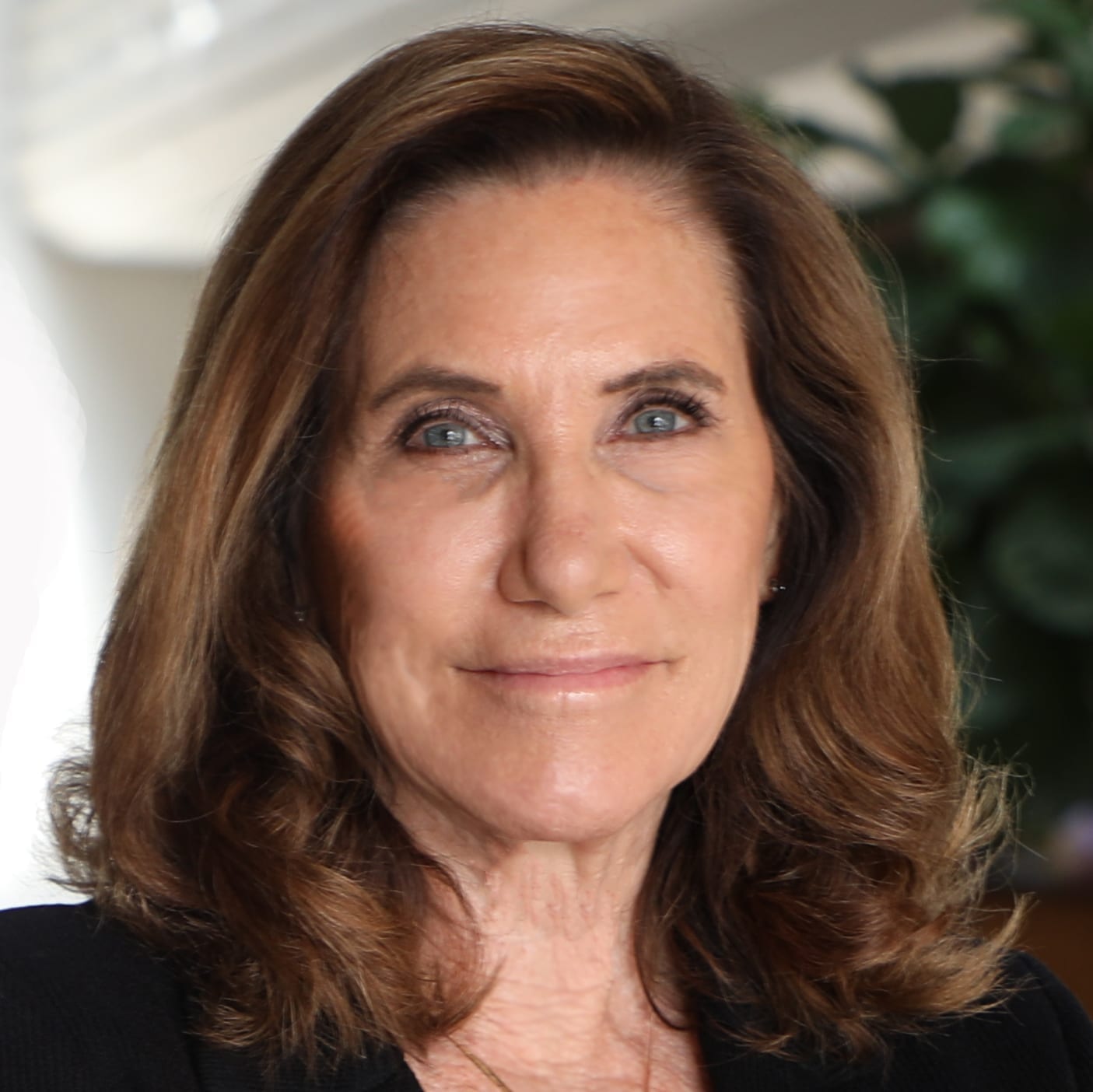 Dr. Pamela Rutledge is available to reporters for comments on the psychological and social impact of media and technology on individuals, society, organizations and brands.
Pamela,
Absolutely loving your articles and sharing them with my stepdaughter! I may make it to the Moon Picnic this year. Hope to see you there, Rebecca Larsen “Larsen”