
DR. PAM | MEDIA PSYCHOLOGIST
THE PSYCHOLOGY OF DIGITAL BEHAVIORS
  • Home
  • Blog
  • About
    • About Dr. Pamela Rutledge
    • Media Psychology
      • What Is A Media Psychologist?
      • 8 Reasons Why We Need Media Psychology
      • Careers in Media Psychology
      • Example Careers in Media Psychology
      • Media Psychology at Fielding Graduate University
      • Positive Media Psychology
    • MPRC
      • Media Psychology Research Center
    • Media Psychology Review
  • Consulting
    • Speaking & Consulting
    • Audience Engagement: Why Use Personas?
      • How to Build a Persona
    • Adapting to Change
    • Transmedia Storytelling
      • Storytelling Across Platforms
      • Transmedia Storytelling Starts with the Power of Story
      • Our Transmedia World
      • Transmedia Case Study: The Three Little Pigs
      • Transmedia Storytelling Workshop
  • Story Power
    • Brand Storytelling
    • Storytelling: Brands, Entertainment & Organizations
      • Storytelling for Organizations
      • Core Story: Case Study
  • In the News
    • Press Quotes & Interviews 2022-2025
    • 2021-2019
    • 2018-2016
    • 2016-2017
    • 2015-2013
    • 2012 & EARLIER
    • Video Interviews & Webinars
  • Resources
    • Mindful Media & Digital Literacy
      • Positive Media Psychology
      • Benefits of Video Games Part 1
      • Benefits of Video Games Part 2
      • Benefits of Video Games Part 3
      • Becoming Mindful: Exercises
      • Mindful Media Journal
    • Academic Materials
      • Media Psychology Syllabus 2021
      • Media Psychology Syllabus 2012
      • Media Psychology Syllabus 2015
    • Articles
      • Persuasion & Augmented Reality
      • Psychology of Transmedia Engagement
      • Theories of Attention
      • The Psychology of Color
      • Website Design: How to Use Psych Theory
      • Data Strategy: Listen to Your Consumers’ Stories
      • The Psychology of Story
  • Archives
  • Contact
DR. PAM | MEDIA PSYCHOLOGIST
  • Home
  • Blog
  • About
    • About Dr. Pamela Rutledge
    • Media Psychology
      • What Is A Media Psychologist?
      • 8 Reasons Why We Need Media Psychology
      • Careers in Media Psychology
      • Example Careers in Media Psychology
      • Media Psychology at Fielding Graduate University
      • Positive Media Psychology
    • MPRC
      • Media Psychology Research Center
    • Media Psychology Review
  • Consulting
    • Speaking & Consulting
    • Audience Engagement: Why Use Personas?
      • How to Build a Persona
    • Adapting to Change
    • Transmedia Storytelling
      • Storytelling Across Platforms
      • Transmedia Storytelling Starts with the Power of Story
      • Our Transmedia World
      • Transmedia Case Study: The Three Little Pigs
      • Transmedia Storytelling Workshop
  • Story Power
    • Brand Storytelling
    • Storytelling: Brands, Entertainment & Organizations
      • Storytelling for Organizations
      • Core Story: Case Study
  • In the News
    • Press Quotes & Interviews 2022-2025
    • 2021-2019
    • 2018-2016
    • 2016-2017
    • 2015-2013
    • 2012 & EARLIER
    • Video Interviews & Webinars
  • Resources
    • Mindful Media & Digital Literacy
      • Positive Media Psychology
      • Benefits of Video Games Part 1
      • Benefits of Video Games Part 2
      • Benefits of Video Games Part 3
      • Becoming Mindful: Exercises
      • Mindful Media Journal
    • Academic Materials
      • Media Psychology Syllabus 2021
      • Media Psychology Syllabus 2012
      • Media Psychology Syllabus 2015
    • Articles
      • Persuasion & Augmented Reality
      • Psychology of Transmedia Engagement
      • Theories of Attention
      • The Psychology of Color
      • Website Design: How to Use Psych Theory
      • Data Strategy: Listen to Your Consumers’ Stories
      • The Psychology of Story
  • Archives
  • Contact
Dec 16

A Tale of Two Trends: Augmented Reality and Transmedia Storytelling

  • December 16, 2010
  • Pamela Rutledge
  • 5 Comments

Two distinct trends – one is sticky, the other is not. A look at the psychology behind the momentum.
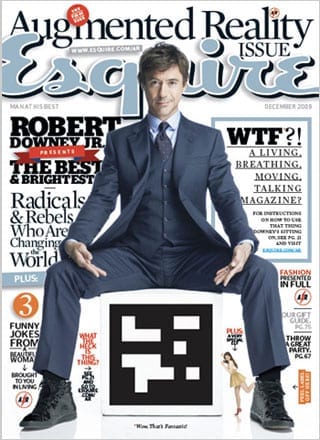
Not that it’s a competition, but two distinct trends have emerged in the last two years that are coming to a level of make it or break it – Augmented Reality (AR) and Transmedia Storytelling (TS). Last summer innovators were buzzing about Augmented Reality (AR). This fall the buzz is about Transmedia Storytelling (TS).  Is the marketplace so fickle that we hop from one ‘next new thing’ to the other, or is there something deeper going on?

The promise of immersive technologies, from which AR is the shiny newborn, is its potential to bring the imagination into the experienced world, and to turn the experienced world into a magical place of the imagination. With AR objects can reveal latent information and transform into games, messages or links, and things we imagine can be overlaid onto existing objects.  That’s nice, but there’s still a piece of technology between you and “it”. With technology as mediator, how immersive can it really be?

Transmedia storytelling is the buy-direct version of the imagination.  Though it may be interacted with via technology and media, the real storyworld of TS lies in the mind of the user. The story may start with a film or a TV episode, but the real value of TS is that the user carries the storyworld with them from one life event to the next – chatting about The Matrix with a friend on the phone, thinking about it in line at the grocery store, or Googling a question about Neo that popped up while they were driving home.  Any of these thoughts may then manifest in a user-generated YouTube, a blog post or an original script submitted by a fan.  There the technology is simply the transmission device, it’s not the driver of the experience.  It is, really, the imagination unplugged.

In the ring, TS is a much stickier trend than AR.  Which isn’t to say that AR doesn’t have a place – once it moves beyond the romance of the gimmick to the technology actually disappearing, then users will re-engage at a higher level.  Requiring no goggles, screens or devices, TS is a true, immersive and pervasive media. By existing in the minds of the user the reach of TS doesn’t stop at the number of dvds bought, comic book revenue or box office take.  It is potentially 24/7, which is exactly what this generation of social media users expects. For a generation accustomed to creating their own media content, having technology as a screen between themselves and experience is an anathema.

I would still place money on AR – it would just be a long-term bet. Ask any child if the world is a magical place and they’ll show you the lions, tigers and bears hiding behind a parked car or a tree. It would be fun to see that through a screen, or even your sunglasses, but why wait? Stories have been around forever and by the time you find the glasses to see them on your kid has already moved on to dinosaurs and rocket ships.


  • Facebook
  • Twitter
  • Reddit
  • LinkedIn
  • E-Mail

About The Author

Pamela Rutledge, PhD, MBA is the Director of the Media Psychology Research Center. A consultant, author, speaker, and professor, she consults on a variety of media projects developing audience engagement and brand storytelling strategies.

5 Comments

  1. 15 Techno-Cultural Trends for 2011 | The Media Psychology Blog
    December 17, 2010 at 4:31 pm ·

    […] 4.     Meaning will come from experience not from the technology. Innovations will come from working the gaps and creating narrative experiences that travel across and between media technologies.  Meaning will come from experience not from the technology.  We will lose interest in technology that stands between reality and us.  The technology will recede to place the focus on experience.  Technology isn’t sticky.  Experience is.  (See A Think Lab colleague Bonnie Buckner’s post comparing Augmented Reality and Transmedia Storytelling). […]

  2. Transmedia Storytelling im Museum « Das Kulturmanagement Blog
    January 17, 2011 at 11:13 pm ·

    […] heute haben, um auf sich aufmerksam zu machen. Transmedia Storytelling und Augmented Reality, eine Kombination, die nicht nur im Sukiennice Museum in Krakau ganz stark im Kommen ist. Aber ich vermute, für […]

  3. Martyn Butler
    May 8, 2012 at 5:36 am ·

    Augmented Reality could be awesome in Advertising, Marketing, Education, Entertainment and be a real boon in environments like Healthcare Museums and revolutionise Magazine & catalogue shopping.

    In spite of all these positives it might not happen

    Its all down to that sad old problem of Standards and walled garden to content and in this case the consumer EVEN if he or she Loves Augmented Reality on their devices will Never have the room or more likely the paitence to download yet another incompatable AR App just to see something float around their screen.

    What we really NEED is an open App tied to a scanner that will go and download the correct “Codec” to reveal the hidden content.

    This way the various vendors can guarantee their clients can view the content by using an “OPEN AR” Application but the content remains in the providers control with their own “Plug In”. (All of which is happening behind the scenes …. The Customer does not care if its a Blipper or Not …..

    Meanwhile I am off to delete a few AR apps because I need the space.

  4. Dr. Pamela Rutledge
    May 27, 2012 at 6:21 pm ·

    Hi Martyn,
    I agree that the multiple AR interfaces and lack of shared standards are slowing adoption both by organizations and consumers. The difference between these silos and previous competing tech standards is that people are less likely to tolerate it!

  5. A Tale of Two Trends: Augmented Reality and Transmedia Storytelling | Transmedia Producer
    February 21, 2013 at 4:36 pm ·

    […] via athinklab.com […]

Leave a reply

Your email address will not be published. Required fields are marked *

This site uses Akismet to reduce spam. Learn how your comment data is processed.

FOR THE PRESS

Dr. Pam Rutledge, media psychologistDr. Pamela Rutledge is available to reporters for comments on the psychological and social impact of media and technology on individuals, society, organizations and brands.  pamelarutledge@gmail.com

SEARCH THE SITE

RECENT POSTS

  • The Legacy of Daytime Talk Shows Lives in Your Feed
  • Oprah's High Road: Diverging Paths in Daytime Talk Shows
  • Daytime Talk Shows: Why We Couldn’t Look Away
  • FAFO Parenting: Letting Kids Learn the Hard Way
  • Meta Is Using Your AI Chats to “Personalize Your Experience”

MEDIA PSYCHOLOGY RESEARCH

The Media Psychology Research Center (MPRC) is an independent research organization directed by Dr. Pam Rutledge.  Read about MPRC at www.mprcenter.org.

CONSULTING PROJECTS

Dr. Rutledge consults on a variety of media projects using psychology to translate data into human behavior for powerful results.

  • Parenting in a Digital World webinar series
  • Persona Development for audience segmentation
  • Fan and Audience Engagement: Identifying audience narratives to satisfy needs
  • Brand Storytelling: Supercharging brand meaning

RECENT POSTS

  • The Legacy of Daytime Talk Shows Lives in Your Feed
  • Oprah's High Road: Diverging Paths in Daytime Talk Shows
  • Daytime Talk Shows: Why We Couldn’t Look Away
  • FAFO Parenting: Letting Kids Learn the Hard Way
  • Meta Is Using Your AI Chats to “Personalize Your Experience”

SEARCH

Content copyright Pamela Rutledge 2026.