DR. PAM | MEDIA PSYCHOLOGIST
THE PSYCHOLOGY OF DIGITAL BEHAVIORS
  • Home
  • Blog
  • About
    • About Dr. Pamela Rutledge
    • Media Psychology
      • What Is A Media Psychologist?
      • 8 Reasons Why We Need Media Psychology
      • Careers in Media Psychology
      • Example Careers in Media Psychology
      • Media Psychology at Fielding Graduate University
      • Positive Media Psychology
    • MPRC
      • Media Psychology Research Center
    • Media Psychology Review
  • Consulting
    • Speaking & Consulting
    • Audience Engagement: Why Use Personas?
      • How to Build a Persona
    • Adapting to Change
    • Transmedia Storytelling
      • Storytelling Across Platforms
      • Transmedia Storytelling Starts with the Power of Story
      • Our Transmedia World
      • Transmedia Case Study: The Three Little Pigs
      • Transmedia Storytelling Workshop
  • Story Power
    • Brand Storytelling
    • Storytelling: Brands, Entertainment & Organizations
      • Storytelling for Organizations
      • Core Story: Case Study
  • In the News
    • Press Quotes & Interviews 2022-2025
    • 2021-2019
    • 2018-2016
    • 2016-2017
    • 2015-2013
    • 2012 & EARLIER
    • Video Interviews & Webinars
  • Resources
    • Mindful Media & Digital Literacy
      • Positive Media Psychology
      • Benefits of Video Games Part 1
      • Benefits of Video Games Part 2
      • Benefits of Video Games Part 3
      • Becoming Mindful: Exercises
      • Mindful Media Journal
    • Academic Materials
      • Media Psychology Syllabus 2021
      • Media Psychology Syllabus 2012
      • Media Psychology Syllabus 2015
    • Articles
      • Persuasion & Augmented Reality
      • Psychology of Transmedia Engagement
      • Theories of Attention
      • The Psychology of Color
      • Website Design: How to Use Psych Theory
      • Data Strategy: Listen to Your Consumers’ Stories
      • The Psychology of Story
  • Archives
  • Contact
DR. PAM | MEDIA PSYCHOLOGIST
  • Home
  • Blog
  • About
    • About Dr. Pamela Rutledge
    • Media Psychology
      • What Is A Media Psychologist?
      • 8 Reasons Why We Need Media Psychology
      • Careers in Media Psychology
      • Example Careers in Media Psychology
      • Media Psychology at Fielding Graduate University
      • Positive Media Psychology
    • MPRC
      • Media Psychology Research Center
    • Media Psychology Review
  • Consulting
    • Speaking & Consulting
    • Audience Engagement: Why Use Personas?
      • How to Build a Persona
    • Adapting to Change
    • Transmedia Storytelling
      • Storytelling Across Platforms
      • Transmedia Storytelling Starts with the Power of Story
      • Our Transmedia World
      • Transmedia Case Study: The Three Little Pigs
      • Transmedia Storytelling Workshop
  • Story Power
    • Brand Storytelling
    • Storytelling: Brands, Entertainment & Organizations
      • Storytelling for Organizations
      • Core Story: Case Study
  • In the News
    • Press Quotes & Interviews 2022-2025
    • 2021-2019
    • 2018-2016
    • 2016-2017
    • 2015-2013
    • 2012 & EARLIER
    • Video Interviews & Webinars
  • Resources
    • Mindful Media & Digital Literacy
      • Positive Media Psychology
      • Benefits of Video Games Part 1
      • Benefits of Video Games Part 2
      • Benefits of Video Games Part 3
      • Becoming Mindful: Exercises
      • Mindful Media Journal
    • Academic Materials
      • Media Psychology Syllabus 2021
      • Media Psychology Syllabus 2012
      • Media Psychology Syllabus 2015
    • Articles
      • Persuasion & Augmented Reality
      • Psychology of Transmedia Engagement
      • Theories of Attention
      • The Psychology of Color
      • Website Design: How to Use Psych Theory
      • Data Strategy: Listen to Your Consumers’ Stories
      • The Psychology of Story
  • Archives
  • Contact
Feb 17

Levis: The Karma Capital That Got Away, Part 2

  • February 17, 2011
  • Pamela Rutledge
  • 1 Comment

By Pamela Rutledge and Bonnie Buckner

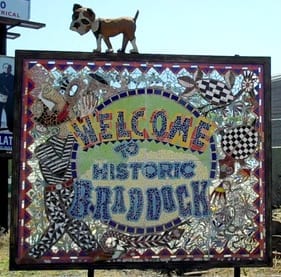
Welcome to Historic BraddockIn part 1 “Levi’s: Go Forth and Exploit,” we wrote about our problems with the Levi’s Go Forth Campaign, such as romanticizing and trivializing the Great Depression and exploiting the efforts of the town of Braddock, PA to fit their Steinbeckian narrative. Here, we will focus on the opportunities for what we call Karma Capital–economic profit combined with positive social impact–that got away.

Brands and corporations have significant impact on individuals and culture. The Levi’s campaign shows a considerable deafness to the current social and technological environment and the shifting psychologies and cultural sensibilities of their market. In a globally networked world, every message from a company and organization will ripple through the system. They could have created some serious Karma Capital by aligning social goals with their bottom line.

Levi’s missed an opportunities on two levels. Instead of a contrived narrative, they could have authentically celebrated attempts to reinvent and revitalize Braddock and towns like it. Granted, it doesn’t work as well with the ‘Grapes of Wrath’ grit look, but it would have both truth and inspiration going for it. Change is hard. It means letting go of something old to embrace something new. At the essence of the Levi’s campaign, the message is (or should be) that we all can reinvent ourselves through hard work. But Levi’s focus rests on the ‘stuck,’ not the potential or progress.

At a higher level, America can only reinvent itself if it moves beyond Industrial Age ideals and builds an economic base built on knowledge, technology-training, innovation, and flexibility. Campaigns such as this are like driving by looking through the rear view mirror. We need to face forward and reeducate and retrain people so that they can successfully move into industries with growth potential.

Levi’s is still marketing in the traditional model, forgetting that individuals matter and that every message has impact and the potential for positive change.  Levi’s could have focused on positive efforts to revitalize the town, such as Mayor John Fetterman’s “two-pronged approach” to attract homesteading, such as creating the first art gallery in the four-town region with artists’ studios and public art installations and encouraged projects such as growing organic vegetables in the shadow of a steel mill.

Braddock Vegetable Garden

Organic vegetable garden in the shadow of an old steel mill.

A better model, however, is a company like Zappos.  Levi’s could have taken a lesson from Zappos’ corporate culture and considered projects such as opening a call center in Braddock and launching a documentary-based campaign showing workers gaining computer literacy in a high-tech environment. And if they were REALLY smart, they would provide Levi jeans for all employees and their families.

This is a sad story of lost opportunities all around. Levi’s could have had a positive long-term impact on real people (and their brand) by taking action that would have resulted in genuine rather than transitory productivity.  They could have celebrated the positive rather than preparing a message that, from almost any angle, is negative.  They also built the campaign as a completely closed system, so audience participation is reduced to those who are making fun of the ads, when they could be engaging with Levi’s to promote a larger cause. Levi’s isn’t asking for help for Braddock or its citizens, they are merely using Braddock to ignite predominantly negative emotional triggers to promote sales.

Here are the lessons we can learn from Levi’s ill-conceived campaign:

  1. Don’t scare people by linking current conditions with metaphors of something far worse
  2. Don’t trivialize hardship or disrespect real people
  3. Take responsibility for the cultural symbols you invoke
  4. Focus on what people are accomplishing, not on the failures
  5. Make your brand part of a higher-level mission
  6. Invite your customers to join your efforts alongside your brand
  7. Align business success and growth with positive social impact
  • Facebook
  • Twitter
  • Reddit
  • LinkedIn
  • E-Mail

About The Author

Pamela Rutledge, PhD, MBA is the Director of the Media Psychology Research Center. A consultant, author, speaker, and professor, she consults on a variety of media projects developing audience engagement and brand storytelling strategies.

1 Comment

  1. Tweets that mention Levis: The Karma Capital That Got Away, Part 2 -- Topsy.com
    February 22, 2011 at 6:35 pm ·

    […] This post was mentioned on Twitter by Carol Phillips, Alexandra Patchen. Alexandra Patchen said: RT @carol_phillips: Fascinating critique of Levi's 'Go Forth' effort: Pt 1 http://bit.ly/erB5KM Pt 2 http://bit.ly/dJJs1J […]

Leave a reply

Your email address will not be published. Required fields are marked *

This site uses Akismet to reduce spam. Learn how your comment data is processed.

FOR THE PRESS

Dr. Pam Rutledge, media psychologistDr. Pamela Rutledge is available to reporters for comments on the psychological and social impact of media and technology on individuals, society, organizations and brands.  pamelarutledge@gmail.com

SEARCH THE SITE

RECENT POSTS

  • The Legacy of Daytime Talk Shows Lives in Your Feed
  • Oprah's High Road: Diverging Paths in Daytime Talk Shows
  • Daytime Talk Shows: Why We Couldn’t Look Away
  • FAFO Parenting: Letting Kids Learn the Hard Way
  • Meta Is Using Your AI Chats to “Personalize Your Experience”

MEDIA PSYCHOLOGY RESEARCH

The Media Psychology Research Center (MPRC) is an independent research organization directed by Dr. Pam Rutledge.  Read about MPRC at www.mprcenter.org.

CONSULTING PROJECTS

Dr. Rutledge consults on a variety of media projects using psychology to translate data into human behavior for powerful results.

  • Parenting in a Digital World webinar series
  • Persona Development for audience segmentation
  • Fan and Audience Engagement: Identifying audience narratives to satisfy needs
  • Brand Storytelling: Supercharging brand meaning

RECENT POSTS

  • The Legacy of Daytime Talk Shows Lives in Your Feed
  • Oprah's High Road: Diverging Paths in Daytime Talk Shows
  • Daytime Talk Shows: Why We Couldn’t Look Away
  • FAFO Parenting: Letting Kids Learn the Hard Way
  • Meta Is Using Your AI Chats to “Personalize Your Experience”

SEARCH

Content copyright Pamela Rutledge 2026.