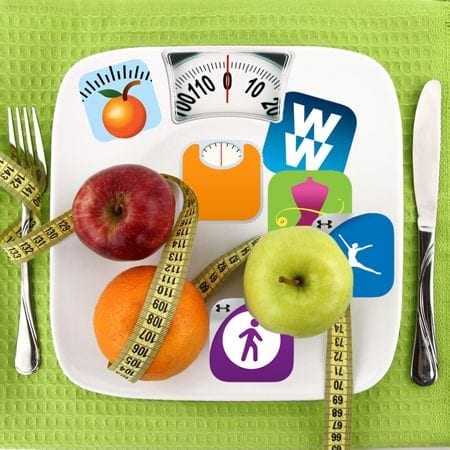
 There are many apps designed to help people lose weight. The bad news is that it takes more than a cool app to do so. Weight loss is about sustainable behavior change and it requires emotional and cognitive commitment. The good news is that apps are, in fact, very cool tools that can provide motivation, structure and feedback to get you started and keep you on track.
There are many apps designed to help people lose weight. The bad news is that it takes more than a cool app to do so. Weight loss is about sustainable behavior change and it requires emotional and cognitive commitment. The good news is that apps are, in fact, very cool tools that can provide motivation, structure and feedback to get you started and keep you on track.
Apps support the two most effective weight loss strategies: keeping track of what you eat and social support
There are two effective and empirically validated strategies for losing weight. The first is self-monitoring, i.e., some method of keeping a log or diary of your eating activity (e.g., Helsel, Jakicic, & Otto, 2007). The second is social support (e.g., Livhits, et al., 2011; Tate, Wing, & Winett, 2001). Apps can help you with both.
Don’t hate me, but don’t start with the app. It is always a good idea to consult with a healthcare professional before you plunge into any diet or exercise plan in spite of the myriad of diet books, programs, experts and apps out there promising answers. Yeah, yeah, yeah. Heard it a million times, right? But remember, apps are pieces of software. They do not, in spite of how it might feel, actually KNOW you. Seeing a professional (even one quick visit) is crucial if you have any health issues, but it can also help you to separate fact from fiction. Doctors and nutritionists can provide you with accurate information about nutrition, dieting plans and help you set realistic goals so you can set yourself up to succeed, not fail.
The body is a complex mechanism and food is the fuel that keeps your brain working, your heart beating and your blood pumping. Understanding some basic nutrition will keep you from adopting a plan of action that has the opposite effect of what you intend. Not all apps (or diet books) will tell you that:
- Reducing caloric intake to too low a level tells your brain that you are starving. To protect you, your brain lowers your metabolism so it burns calories more slowly. The result? Constant hunger and minimal weight loss. Extremely restrictive diets are also unsustainable and can lead to binge behaviors
- Exercising too much or too strenuously without preparation can result in a host of injuries. The results? All those good intentions make it harder to exercise in the future.
- Not all calories are created equal; the right balance of protein, carbohydrates and healthy fats is critical to healthy weight loss but more importantly your longer-term health. The result? The wrong choice of foods may fit calorie guidelines but leave you hungry, tired cranky or stupid.
No app alone will help you avoid the biggest mistake: unrealistic expectations. How long did it take to put on that extra 20 pounds? I guarantee it didn’t happen in a week or even in a month. Give yourself a reasonable amount of time to lose the weight so you are creating a new relationship with food and can sustain your hard work. Don’t be fooled by quick weight loss schemes that promise immediate results. Just because the app will let you enter a goal in October to lose 50 pounds by Christmas doesn’t mean that it’s reasonable. People who try to do too much too fast find that their diet is impossible to sustain and frequently end up with weight gain rather than loss.
As you will see, not all apps are created equal. If you look around, you will be able to find an app that supports a plan recommended by your doctor or nutritionist. Few weight loss plans focus on food to the exclusion of exercise and this is a good thing. Fitness instructors and coaches are great sources for exercise programs that are realistic for your current fitness level and abilities. You can replicate their suggestions on your app. Caveat: if your fitness instructor has not been trained in nutrition, he or she should not be the sole source of your diet advice.
In Part 2, I will discuss what things apps do well. In Part 3, I give you some pointers on how to pick out an app that works for you.
Previously posted on PsychologyToday.com in Positively Media.
References
Helsel, D. L., Jakicic, J. M., & Otto, A. D. (2007). Comparison of Techniques for Self-Monitoring Eating and Exercise Behaviors on Weight Loss in a Correspondence-Based Intervention. Journal of the American Dietetic Association, 107(10), 1807-1810.
Livhits, M., Mercado, C., Yermilov, I., Parikh, J. A., Dutson, E., Mehran, A., et al. (2011). Is Social Support Associated with Greater Weight Loss after Bariatric Surgery?: A Systematic Review. Obesity Reviews, 12(2), 142-148.
Tate, D. F., Wing, R. R., & Winett, R. A. (2001). Using Internet Technology to Deliver a Behavioral Weight Loss Program. JAMA, 285(9), 1172-1177.

 Dr. Pamela Rutledge is available to reporters for comments on the psychological and social impact of media and technology on individuals, society, organizations and brands.
#MediaPsych RT @mediapsychology: Digital #WeightLoss: Before You Get a Diet App READ THIS http://t.co/tpaS6Qbji0 (via @pamelarutledge)
RT @pamelarutledge: Digital Weight Loss (Part 1): Before You Get a Diet App: There are many apps designed to help people l… http://t.co/r…
Thanks, Pam for the informative article. I totally agree with you apps can be a real aid for weight loss, however getting help from a qualified professional such as a registered dietitian is also vital.
Thanks Ellen, for taking the time to respond!