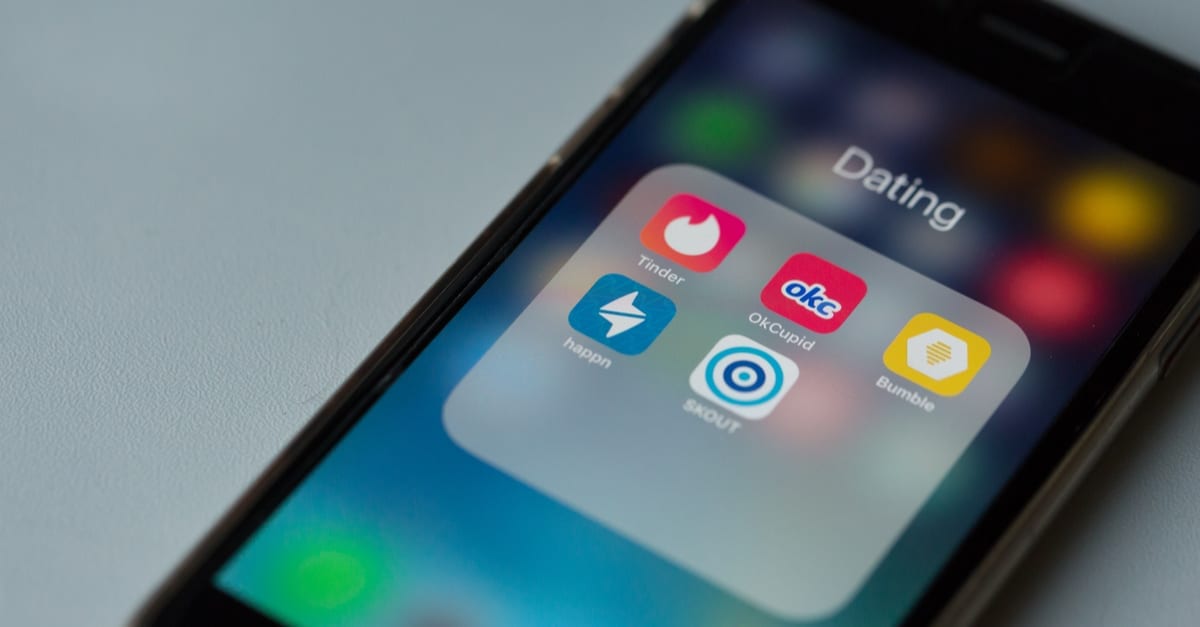
The increasingly contentious and politicized environment is changing how we publicly align with issues, especially when it comes to seeking relationships. As political arguments become increasingly binary and emotional, there is a premium on knowing a potential partner’s political affiliations. OkCupid saw a 187% uptick in mentions of political affiliation from 2017-2018 alone. Assuming a belief system based on a political group is not always reliable. Is it worth the risk to find out, or are we content to be guilty of further perpetuating stereotypes?
Would You Date a Trump Voter?
It’s hard to make this trade-off when political labels can trigger such violent emotions and we’re already worn out by six months of social distancing. It doesn’t feel like there’s much middle ground on social media with the increasing displaying political affiliations to signal social and moral values. Political labels become litmus tests to screen and judge others, especially on dating app profiles where political beliefs are broadcast more prominently than ever before, for good reason. Pew Internet reported that seven-in-ten Democrats wouldn’t consider having a relationship with a Trump voter. Dating.com reported that 84% of singles surveyed were not interested in dating someone with opposing political views. OkCupid found that 72% of females surveyed felt the same way. Major dating platforms like OkCupid, Hinge, and Bumble now have filters to eliminate matches with incompatible politics.
‘Pina Coladas and walks in the rain’ hardly figure in finding a match when political affiliation is interpreted as support for social behaviors—from wearing masks to law enforcement tactics. It’s not about common sense, justice, or even science. It’s the fundamental schism between opposing belief sets that results in automatic reactions—fight or flight, approach or avoid– not thoughtful response. Dating someone who adheres to behaviors you consider dangerous is not a great way to start a relationship.
Political Stereotypes Make the World Seem Simpler
Reducing big or complicated concepts to a stereotype is an innate cognitive bias and one way the brain simplifies information processing. Stereotypes are problematic when people are unaware of unconscious beliefs that create prejudices based on stereotypical socially-constructed associations. However, it is in politician’s best interests to make as clear a division between “sides” as possible to get votes. Our leaders demonstrate a range of behaviors, such as name-calling, fear-mongering, misinformation, and bullying, that amplify and reinforce the use of stereotypes and labels to dehumanize proponents and ridicule opposing views.
Being reactive to labels makes it difficult to have thoughtful debates on the pros and cons of political perspective on a date. People are anxious and afraid and are inclined toward kneejerk emotional reactions to political labels. Opposing points of view can undermine our comfort and feel like an attack on what we value in life, such as health, family, community, or society. This perception is instinctive—part of innate survival instinct—and heightens the emotional tendency to draw tribal lines and “othering.” Amplified by the COVID environment, it’s not surprising that political affiliation is unconsciously (or even consciously) equated with danger. Who wants to date someone that doesn’t feel psychologically safe?
Relationships may start with chemistry, but they endure with respect, trust, beliefs, and goals. The alignment of values is an essential aspect of a good relationship. Match.com found that 98% of singles want a partner who they can talk about political issues within sharp contrast to the old adage of never talking about religion or politics in social situations. Since so many social behaviors have become highly politicized, political affiliation and activism not only express social values but imply personal actions as well. Dating can be a good distraction from the real world—especially when people feel vulnerable and isolated—but not if it adds to tension and conflict.
Political labels in dating profiles aren’t just a way of expressing what matters to you. They are a line in the sand, a means of ‘curating’ out people with a set of beliefs that are dealbreakers and where no relationship is possible. Whether this represents a decline in civility or, as some suggest, a rise in narcissism, the socio-political behaviors around dating are changing. When an action as simple as wearing masks in public is seen as political affiliation rather than science, it is no longer about the mask. It is a statement of values and beliefs that is interpreted far beyond any issue about how a virus spreads. The mask becomes a signal of support for social issues that have nothing to do with the pandemic and get amplified by frustration with current political events.
Political labels are so volatile that Match.com now gives people a choice of nine political views to select—but that won’t help. Labeling will only escalate into the November election as discomfort and uncertainty rise, and the discourse gets meaner.
Political Labels Don’t Always Communicate Values
The result is that many people will swipe left when they see an opposing political position, finding the person unacceptable without ever giving them a try. Political views are sufficiently polarized and intractable that they are used to gauge the potential of the relationship—and the level of fear and anxiety means that we all want the comfort of having our world views validated. The divide has become sufficiently pronounced since Trump’s election that it has spawned the creation of specialized dating apps for politically-like-minded such as “Righter” and “Liberal Hearts.”
Despite the importance of sharing similar values in a relationship, don’t assume that your definition of a group or label is the same as the other person’s. Political assumptions can sabotage an otherwise potentially good relationship. It may be hard to have the level of composure required to stay calm and nonjudgmental, but an individual’s beliefs or values cannot be predicted from a specific label. Labels are subjective narratives, and in times of fear and social conflict, internal and external definitions serve different purposes and are unlikely to align. Be aware of the tendency to assign others to group stereotypes and assume the ‘worst.’ People can have complex and even contradictory identities, seeing themselves as members of many different categories. Externally imposed labels do not necessarily align with internal belief systems.
Let’s face it. We all have certain beliefs we would find unacceptable in a partner and the COVID environment makes us less tolerant. It’s important to make sure the critical ones match up. But as individuals, what matters to us varies not just in importance but in interpretation. So if you’re looking to date and find someone who seems like a good fit except for their political affiliation, it’s always good to clarify before you rely on labels.
References
Brown, A. (2020). Most Democrats who are looking for a relationship would not consider dating a Trump voter. Pew Research Center. Retrieved September 4, 2020 from https://www.pewresearch.org/fact-tank/2020/04/24/most-democrats-who-are-looking-for-a-relationship-would-not-consider-dating-a-trump-voter/

 Dr. Pamela Rutledge is available to reporters for comments on the psychological and social impact of media and technology on individuals, society, organizations and brands.