DR. PAM | MEDIA PSYCHOLOGIST
THE PSYCHOLOGY OF DIGITAL BEHAVIORS
  • Home
  • Blog
  • About
    • About Dr. Pamela Rutledge
    • Media Psychology
      • What Is A Media Psychologist?
      • 8 Reasons Why We Need Media Psychology
      • Careers in Media Psychology
      • Example Careers in Media Psychology
      • Media Psychology at Fielding Graduate University
      • Positive Media Psychology
    • MPRC
      • Media Psychology Research Center
    • Media Psychology Review
  • Consulting
    • Speaking & Consulting
    • Audience Engagement: Why Use Personas?
      • How to Build a Persona
    • Adapting to Change
    • Transmedia Storytelling
      • Storytelling Across Platforms
      • Transmedia Storytelling Starts with the Power of Story
      • Our Transmedia World
      • Transmedia Case Study: The Three Little Pigs
      • Transmedia Storytelling Workshop
  • Story Power
    • Brand Storytelling
    • Storytelling: Brands, Entertainment & Organizations
      • Storytelling for Organizations
      • Core Story: Case Study
  • In the News
    • Press Quotes & Interviews 2022-2025
    • 2021-2019
    • 2018-2016
    • 2016-2017
    • 2015-2013
    • 2012 & EARLIER
    • Video Interviews & Webinars
  • Resources
    • Mindful Media & Digital Literacy
      • Positive Media Psychology
      • Benefits of Video Games Part 1
      • Benefits of Video Games Part 2
      • Benefits of Video Games Part 3
      • Becoming Mindful: Exercises
      • Mindful Media Journal
    • Academic Materials
      • Media Psychology Syllabus 2021
      • Media Psychology Syllabus 2012
      • Media Psychology Syllabus 2015
    • Articles
      • Persuasion & Augmented Reality
      • Psychology of Transmedia Engagement
      • Theories of Attention
      • The Psychology of Color
      • Website Design: How to Use Psych Theory
      • Data Strategy: Listen to Your Consumers’ Stories
      • The Psychology of Story
  • Archives
  • Contact
DR. PAM | MEDIA PSYCHOLOGIST
  • Home
  • Blog
  • About
    • About Dr. Pamela Rutledge
    • Media Psychology
      • What Is A Media Psychologist?
      • 8 Reasons Why We Need Media Psychology
      • Careers in Media Psychology
      • Example Careers in Media Psychology
      • Media Psychology at Fielding Graduate University
      • Positive Media Psychology
    • MPRC
      • Media Psychology Research Center
    • Media Psychology Review
  • Consulting
    • Speaking & Consulting
    • Audience Engagement: Why Use Personas?
      • How to Build a Persona
    • Adapting to Change
    • Transmedia Storytelling
      • Storytelling Across Platforms
      • Transmedia Storytelling Starts with the Power of Story
      • Our Transmedia World
      • Transmedia Case Study: The Three Little Pigs
      • Transmedia Storytelling Workshop
  • Story Power
    • Brand Storytelling
    • Storytelling: Brands, Entertainment & Organizations
      • Storytelling for Organizations
      • Core Story: Case Study
  • In the News
    • Press Quotes & Interviews 2022-2025
    • 2021-2019
    • 2018-2016
    • 2016-2017
    • 2015-2013
    • 2012 & EARLIER
    • Video Interviews & Webinars
  • Resources
    • Mindful Media & Digital Literacy
      • Positive Media Psychology
      • Benefits of Video Games Part 1
      • Benefits of Video Games Part 2
      • Benefits of Video Games Part 3
      • Becoming Mindful: Exercises
      • Mindful Media Journal
    • Academic Materials
      • Media Psychology Syllabus 2021
      • Media Psychology Syllabus 2012
      • Media Psychology Syllabus 2015
    • Articles
      • Persuasion & Augmented Reality
      • Psychology of Transmedia Engagement
      • Theories of Attention
      • The Psychology of Color
      • Website Design: How to Use Psych Theory
      • Data Strategy: Listen to Your Consumers’ Stories
      • The Psychology of Story
  • Archives
  • Contact
Mar 15

DataViz: See the Importance of Social Distancing

  • March 15, 2020
  • Pamela Rutledge
  • 1 Comment

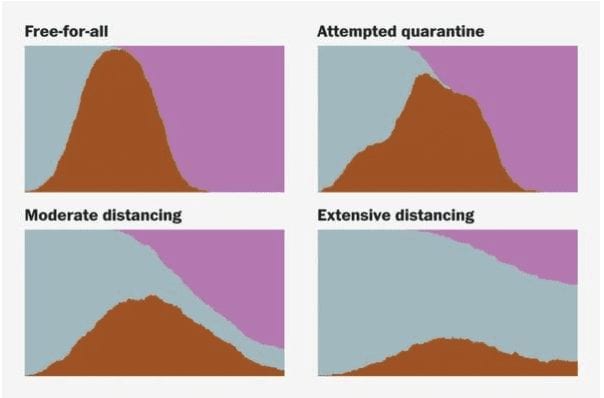
I’m a big fan of data visualization because mages can make complex things compelling. Few things are more complex than the wide-reaching implications of a pandemics like COVID-19. An article by Harry Stevens in The Washington Post includes a series of interactive graphics that demonstrate the power of contagion and why social distancing is so important in managing the current outbreak

The curves below makes it pretty clear why precautions will keep us from overtaxing medical resources so we can meet healthcare demands. I don’t know about you, but I don’t want a doctor having to decide whether me or the guy next to me gets the oxygen. I’m willing to say home to keep that from happening.

Why outbreaks like coronavirus spread exponentially, and how to “flatten the curve”

It’s hard, I know, to maintain the intensity of effort needed to guard against an unseen virus that is contagious even before symptoms show up and needs a minimum two-week quarantine to be safe from further exposure. It would be much easier if people who were contagious turned pink or had a yellow Twilight-Zone kind of glow. But they don’t. Coronavirus is invisible with a long incubation. This means we have to have a sustained effort at isolation, not just hiding out for a couple of days.

This is especially hard because people are, by nature, social beings. Human contact is essential to our mental and physical health. Cognitive biases also work against us–we inherently assume that others are more vulnerable than we are. As a species, we are notoriously bad at estimating probabilities. Remember, this isn’t about you personally. It’s about SPREAD. Use FaceTime and Zoom. Try to adopt a new risk profile by channeling #EddieIzzard: Cake or Death.

Instead of buying extra toilet paper, focus your energy and assuage your anxiety by a concerted effort to eliminate or minimize social contact. No playdate or birthday parties, no manicures, haircuts, or restaurant lunches, cut down on trips to the store, use delivery services, and recognize that just because you know someone well, you have no way of knowing where they might have been in contact with the virus. As you’ll see in the Post’s graphics, it spreads fast.

The article does a very good job job of explaining an agent-based contagion model. It demonstrates the speed of infection through a population–with and without barriers. Please share this with all your stubborn and/or selfish friends who don’t get the importance of everyone working together and avoiding social contact to slow the impact of COVID-19 on the United States as a system. This is the time to step up, stay home, and put individual convenience aside.

If the other graphics don’t convince you of the importance of treatment capacity, check this out:
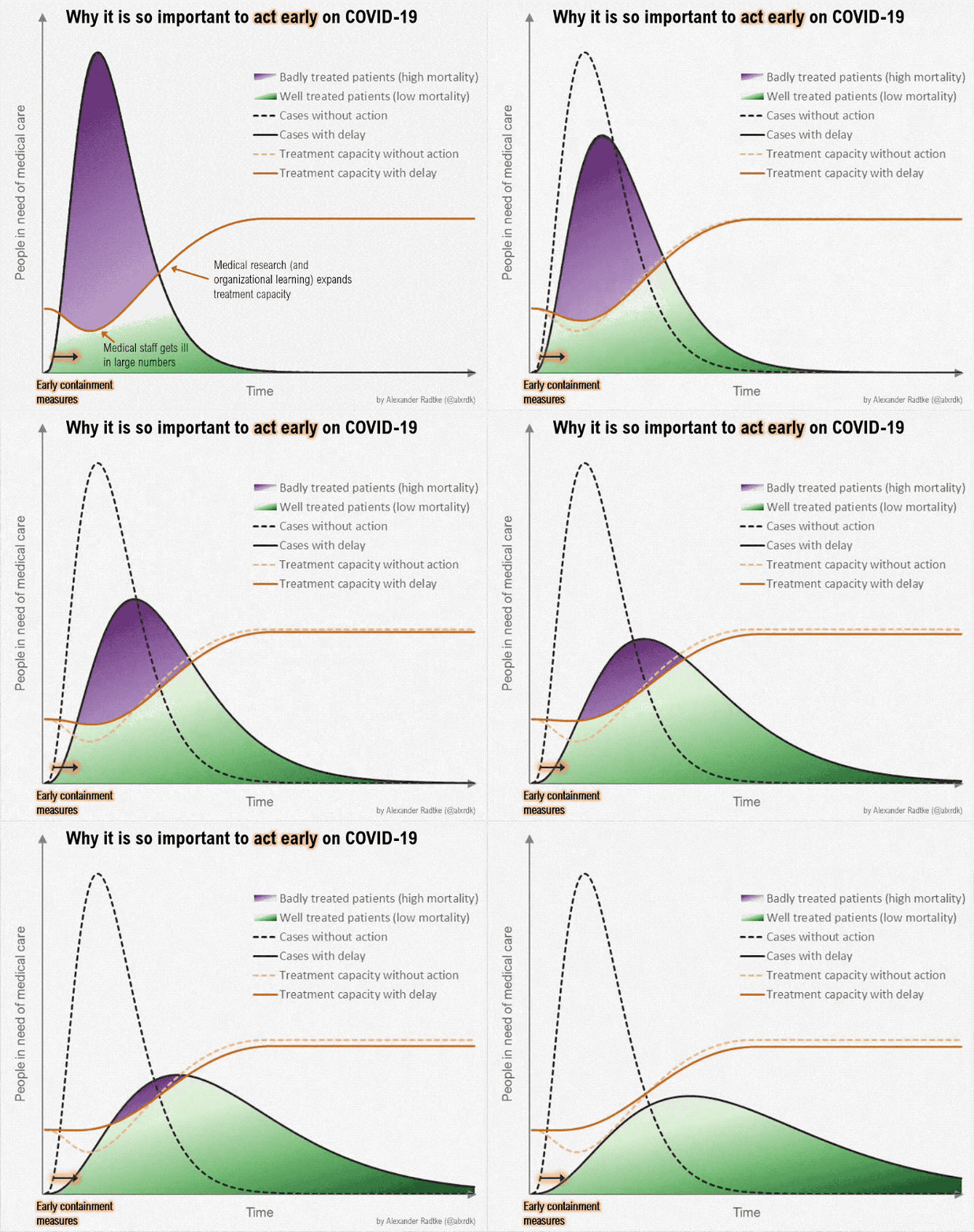
“The coronavirus can possibly infect a lot more people than there are those who can provide medical care. But if we slow the spread, and there are fewer people in need of care at the same time, the difference might be less overbearing. This version of the “flatten the curve” graphic by Alexander Radtke, first made by Rosamund Pearce for The Economist, illustrates the difference in animated form.” Flattenthecurve.com @alxrdk on Twitter.

Keep washing your hands and taking precautions, but keep reminding yourself that social distancing is the only way to slow the rate of spread and increase the ability of facilities to handle the needs of those who are hit hard.

Many thanks to The Washington Post for a great article & such compelling graphics.


Stevens, H. (2020, March 14). Why outbreaks like coronavirus spread exponentially, and how to “flatten the curve.” The Washington Post. Retrieved from https://www.washingtonpost.com/graphics/2020/world/corona-simulator/


  • Facebook
  • Twitter
  • Reddit
  • LinkedIn
  • E-Mail

About The Author

Pamela Rutledge, PhD, MBA is the Director of the Media Psychology Research Center. A consultant, author, speaker, and professor, she consults on a variety of media projects developing audience engagement and brand storytelling strategies.

1 Comment

  1. Dana De Nault
    March 16, 2020 at 9:01 pm ·

    Hi Pam! Great comments here and unless you object I will repost on LinkedIn. I hope you and yours are well and perhaps once that curve flattens we can figure out how to connect in person since we venture south pretty regularly. Virtual Abracos! Dana

Leave a reply

Your email address will not be published. Required fields are marked *

This site uses Akismet to reduce spam. Learn how your comment data is processed.

FOR THE PRESS

Dr. Pam Rutledge, media psychologistDr. Pamela Rutledge is available to reporters for comments on the psychological and social impact of media and technology on individuals, society, organizations and brands.  pamelarutledge@gmail.com

SEARCH THE SITE

RECENT POSTS

  • The Legacy of Daytime Talk Shows Lives in Your Feed
  • Oprah's High Road: Diverging Paths in Daytime Talk Shows
  • Daytime Talk Shows: Why We Couldn’t Look Away
  • FAFO Parenting: Letting Kids Learn the Hard Way
  • Meta Is Using Your AI Chats to “Personalize Your Experience”

MEDIA PSYCHOLOGY RESEARCH

The Media Psychology Research Center (MPRC) is an independent research organization directed by Dr. Pam Rutledge.  Read about MPRC at www.mprcenter.org.

CONSULTING PROJECTS

Dr. Rutledge consults on a variety of media projects using psychology to translate data into human behavior for powerful results.

  • Parenting in a Digital World webinar series
  • Persona Development for audience segmentation
  • Fan and Audience Engagement: Identifying audience narratives to satisfy needs
  • Brand Storytelling: Supercharging brand meaning

RECENT POSTS

  • The Legacy of Daytime Talk Shows Lives in Your Feed
  • Oprah's High Road: Diverging Paths in Daytime Talk Shows
  • Daytime Talk Shows: Why We Couldn’t Look Away
  • FAFO Parenting: Letting Kids Learn the Hard Way
  • Meta Is Using Your AI Chats to “Personalize Your Experience”

SEARCH

Content copyright Pamela Rutledge 2026.