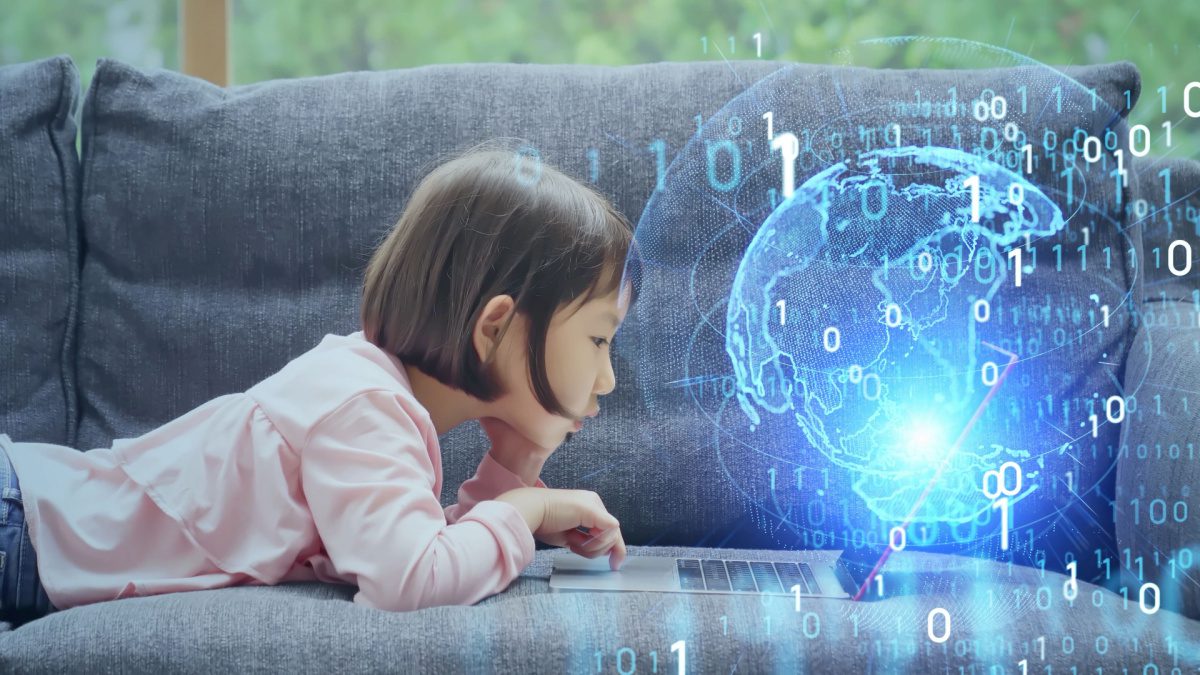
- Digital resilience combines resilience with media literacy
- Cognitive and emotional skills create assets that build resilience on and offline
- Every opportunity to learn and practice adds to a child’s resiliency “toolbox”
- Parents can play a big role in helping children build digital resilience
What is Digital Resilience?
Digital resilience is the ability to bounce back from challenges in an online world. Like resilience, digital resilience is a skill that builds each time you learn how to deal with, adapt to, and overcome challenges. Like learning to ride a bike, every event that lets you overcome an obstacle and maybe get a few skinned knees but still be OK is evidence of your strengths and skills and builds the self-confidence that fuels resilience.
Digital resilience is the confidence that you can cope with things that may go wrong online. It has three parts: 1) the knowledge about how to judge events and recognize risks online, 2), the self-confidence gained from experience and observing others, and 3) the practical and emotional skills that enable coping and self-regulation. Every opportunity to practice skills and learn strategies adds to a child’s resiliency “toolbox,” making them more confident and more capable of handling future problems.
The digital world is full of benefits and challenges. Resiliency draws on your emotional capacity to stay positive and forward-looking. The psychologist Barbara Fredrickson (2001) has devoted her career to showing how positive emotions provide the fuel for resilience. Assets are the cognitive and emotional characteristics and skills developed from experience that help protect a child facing high-risk situations.
In developing resilience programs for children and adults, psychologists now realize that promoting healthy development and competence is more important than preventing problems because building strengths is not risk-dependent (Gregory & Rutledge, 2016).
Building Resilience Comes from Skills, Knowledge, and Practice
Parents can play a big role in helping children build the strengths they need for digital resilience by doing the following:
‘1) Start by building an open and trusting relationship with kids—research shows that consistent and unconditional love and support are the most important factors in building resiliency.
2) Make sure your children develop a basic knowledge of media literacy and digital skills—whether this is at school or at home.
3) Allow children to engage with appropriate online opportunities and challenges. As scary as the digital world is for parents, avoidance and restriction not only deny kids opportunities to practice with healthy, age-appropriate boundaries and oversight, it increases the chances that kids will go online without supervision and not be prepared when they run into trouble.
4) Resist the urge to fix things yourself when kids run into trouble. Online problems are often like offline ones, but the digital environment can change the rules by amplifying the impact. Bullying exists on and offline—the fact that they may differ in execution doesn’t stop a parent from wanting to rush in and protect their child. Interpersonal conflicts are not restricted to face-to-face. Beyond the serious issues like cyberbullying, social media, and interactive games that can be the site of small squabbles (like losing an in-game item or getting cheated in a trade) to large ones (being rejected by friends). Online is just as real to kids as offline, so don’t expect them to distinguish between online and offline in the magnitude of their emotional anguish.
5) For the social issues, listen non-judgmentally, and help the child express their emotions and brainstorm solutions. This builds their set of coping strategies. The focus on social connections grows steadily from tweens to teens and young adults. The more kids can practice solutions to relational problems as tweens, the easier their teenage years will be.
6) For serious problems, like bullies or predators, teach kids how to recognize the signs of trouble and what to do. Some are the same as offline: get a responsible adult, don’t interact. Some are digital-specific, like how to report and block users, and update privacy settings. Knowledge not only gives kids a greater sense of control, but they also know they don’t have to solve the really bad circumstances themselves without your love and support.
7) Don’t underestimate the importance of parents’ and caregivers’ behavior on kids’ digital resilience. People all learn through observation. Make sure you are modeling healthy digital behaviors and good coping skills in the face of adversity.
8) Pay attention to the messages you send about technology use. One of the problems in building digital resilience is the messages parents unintentionally send to kids. If you worry constantly and fear that every online encounter might be dangerous, you are sending three messages: 1) the world is scary, making the child more anxious and fearful, 2) you don’t think the child can cope, and 3) the child is better off keeping their digital problems a secret that seeking help from you because you’ll be mad at them (victim blaming) or take away their devices.
9) Recognize the many learning opportunities in entertainment media that are not just fun but provide good examples of resilience and provide non-confrontational conversational entry points. Movies are an effective and practical way to introduce and demonstrate resilience and inspire children of all ages to overcome their own challenges in creative ways. Finding Forrester, Moana, Zootopia, Soul Surfer, Brave, and Penguin Bloom are among the many examples of resilience in movies. For a full list see Positive Psychology at the Movies by fellow PT blogger Ryan Niemiec and Danny Wedding (2013).
10) Age-appropriate interactive social technologies, like games, can provide a chance to practice social skills like collaboration, empathy, and self-regulation—all strengths that contribute to resilience. Minecraft, for example, provides limitless opportunities to collect resources and build anything you can imagine and collaborate and share with others. Games can provide a way for kids to build confidence, and, as you may have noticed, kids demonstrate a lot of resilience and persistence when trying to level up in video games. There are also several apps that can help kids and adults build resilience by practicing skills such as mindfulness, cognitive reappraisal, and empathy, such as MindShift and Headspace.
Digital Resilience is a Life Skill
Digital resilience is a life skill. It is not one you build by staying in your comfort zone. Helping your kids build digital resilience doesn’t just protect them. It expands their opportunities by giving them internal strength and judgment. There is no greater protection in the age of Instagram or whatever comes next.
References
Fredrickson, B. L. (2001). The Role of Positive Emotions in Positive Psychology. American Psychologist, 56(3), 218-226.
Gregory, E. M., & Rutledge, P. (2016). Exploring Positive Psychology: The Science of Happiness and Well-Being. ABC-Clio Praeger.
Niemiec, R., & Wedding, D. (2013). Positive Psychology at the Movies: Using Films to Build Virtues and Character Strengths. Hogrefe & Huber Publishers.

 Dr. Pamela Rutledge is available to reporters for comments on the psychological and social impact of media and technology on individuals, society, organizations and brands.