DR. PAM | MEDIA PSYCHOLOGIST
THE PSYCHOLOGY OF DIGITAL BEHAVIORS
  • Home
  • Blog
  • About
    • About Dr. Pamela Rutledge
    • Media Psychology
      • What Is A Media Psychologist?
      • 8 Reasons Why We Need Media Psychology
      • Careers in Media Psychology
      • Example Careers in Media Psychology
      • Media Psychology at Fielding Graduate University
      • Positive Media Psychology
    • MPRC
      • Media Psychology Research Center
    • Media Psychology Review
  • Consulting
    • Speaking & Consulting
    • Audience Engagement: Why Use Personas?
      • How to Build a Persona
    • Adapting to Change
    • Transmedia Storytelling
      • Storytelling Across Platforms
      • Transmedia Storytelling Starts with the Power of Story
      • Our Transmedia World
      • Transmedia Case Study: The Three Little Pigs
      • Transmedia Storytelling Workshop
  • Story Power
    • Brand Storytelling
    • Storytelling: Brands, Entertainment & Organizations
      • Storytelling for Organizations
      • Core Story: Case Study
  • In the News
    • Press Quotes & Interviews 2022-2025
    • 2021-2019
    • 2018-2016
    • 2016-2017
    • 2015-2013
    • 2012 & EARLIER
    • Video Interviews & Webinars
  • Resources
    • Mindful Media & Digital Literacy
      • Positive Media Psychology
      • Benefits of Video Games Part 1
      • Benefits of Video Games Part 2
      • Benefits of Video Games Part 3
      • Becoming Mindful: Exercises
      • Mindful Media Journal
    • Academic Materials
      • Media Psychology Syllabus 2021
      • Media Psychology Syllabus 2012
      • Media Psychology Syllabus 2015
    • Articles
      • Persuasion & Augmented Reality
      • Psychology of Transmedia Engagement
      • Theories of Attention
      • The Psychology of Color
      • Website Design: How to Use Psych Theory
      • Data Strategy: Listen to Your Consumers’ Stories
      • The Psychology of Story
  • Archives
  • Contact
DR. PAM | MEDIA PSYCHOLOGIST
  • Home
  • Blog
  • About
    • About Dr. Pamela Rutledge
    • Media Psychology
      • What Is A Media Psychologist?
      • 8 Reasons Why We Need Media Psychology
      • Careers in Media Psychology
      • Example Careers in Media Psychology
      • Media Psychology at Fielding Graduate University
      • Positive Media Psychology
    • MPRC
      • Media Psychology Research Center
    • Media Psychology Review
  • Consulting
    • Speaking & Consulting
    • Audience Engagement: Why Use Personas?
      • How to Build a Persona
    • Adapting to Change
    • Transmedia Storytelling
      • Storytelling Across Platforms
      • Transmedia Storytelling Starts with the Power of Story
      • Our Transmedia World
      • Transmedia Case Study: The Three Little Pigs
      • Transmedia Storytelling Workshop
  • Story Power
    • Brand Storytelling
    • Storytelling: Brands, Entertainment & Organizations
      • Storytelling for Organizations
      • Core Story: Case Study
  • In the News
    • Press Quotes & Interviews 2022-2025
    • 2021-2019
    • 2018-2016
    • 2016-2017
    • 2015-2013
    • 2012 & EARLIER
    • Video Interviews & Webinars
  • Resources
    • Mindful Media & Digital Literacy
      • Positive Media Psychology
      • Benefits of Video Games Part 1
      • Benefits of Video Games Part 2
      • Benefits of Video Games Part 3
      • Becoming Mindful: Exercises
      • Mindful Media Journal
    • Academic Materials
      • Media Psychology Syllabus 2021
      • Media Psychology Syllabus 2012
      • Media Psychology Syllabus 2015
    • Articles
      • Persuasion & Augmented Reality
      • Psychology of Transmedia Engagement
      • Theories of Attention
      • The Psychology of Color
      • Website Design: How to Use Psych Theory
      • Data Strategy: Listen to Your Consumers’ Stories
      • The Psychology of Story
  • Archives
  • Contact
Jun 11

Six Weiner Lessons for Social Media

  • June 11, 2011
  • Pamela Rutledge
  • 1 Comment

Politicians may have personalities predisposed to risk-taking behaviors. The same is often true with CEOs and Rock Stars. These kinds of occupations attract competitiveness, narcissism, and the need for power along with talent, tenacity, resilience, and the willingness to take risks. A bigger problem however is when success turns into Celebrity Syndrome, especially in the age of social media. The only cure is a serious reality check.

In Celebrity Syndrome, the people who achieve success or notoriety lose the ability to see themselves as ‘regular’ folks, subject to the same social norms and laws of gravity as the rest of us.

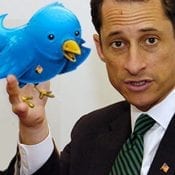
ThAnthony Weiner and the Twitter Faux Pase problem with getting cured is that reality checks at the top are hard to come by. When you have status and power, your world is full of fans, sycophants, power-seekers, and people on your payroll who reflect back the image that you want to see. It’s pretty hard to get real information — even if you actually wanted it — which most don’t. And it’s pretty easy to have sense of immunity and the ability to rationalize your behavior.

Hubris, along with a dose of entitlement, is not very attractive — let’s face it. But it used to be much easier to keep that kind of unpleasantness under wraps. Until now. Social media has changed all that. We can communicate anything, anytime, anywhere and, most importantly, with anyone. It’s pretty much summed up by the built-in first post on a WordPress blog: “Hello, world!”

In a socially networked society, it’s hard to keep secrets, especially when you’ve achieved a level of status that puts you on other people’s radar. There is no such thing as controlling a message whether you’re a company, brand, government, or a Weiner. If the Defense Department and the CIA can’t do it, what was Weiner thinking?

We have seen other examples of the inappropriate use of social media technologies. The surprising thing is that people are surprised — not about the behaviors, which is another and more serious problem altogether — but about the way they are uncovered. These are new and powerful technologies. They have redefined communication. Information travels with a continuing ripple effect, like pebbles continually dropped in a pond every time the information hits a new spot. This environment really thwarts the old “cover-up” and “spin” mentality. Whoever ignores the power of networked communications and social capital, does so at his peril.

Information travels across networks in ripples

Here are six lessons you can learn from Weiner’s experience:

  • Learn how the technology works BEFORE you use it. We don’t hand our kids the car keys and say, “give it a go!” We teach them. The technology changes have come fast, but lack of knowledge is no excuse online anymore than it is on the highway. This is serious stuff and can have huge real world implications. (Congress got a wake-up call, based on the numbers from Tweetcongress.org showing Twitter use down 28% since “Weinergate.” Story and wonderful graphic on Media Bistro.)
  • Social media is the new elevator. You never know who may be listening to your conversations.
  • The social media environment exposes liars and cheats. Don’t say you didn’t do something if you did. Your only hope is to come clean (or better yet, be clean in the first place.) Information and pictures are permanent and searchable once they hit the web.
  • Social networks redefine privacy. Hiding doesn’t work.
  • Social media demands transparency. While we present different parts of ourselves in different environments, just like we dress differently when we go to parties compared to gardening, credibility comes from coherence.

I suppose a higher-level question is why we tolerate and even overlook such behaviors in our elected officials and heads of industry. It would seem that if someone were unable to exercise good judgment in his/her personal life, he/she wouldn’t stand a fighting chance in tough decisions or in the face of a powerful lobbyist. It certainly isn’t worth a dime of taxpayer dollars to prove there’s an ethical issue around Weiner — I mean really. That’s just an insult to our intelligence. This leads me to the final Weiner lesson:

  • Social media shifts power in society. The same crowd power that propelled Lady Gaga and Justin Bieber to the top of the Forbes celebrity power list also allowed the plight of a Tunisian fruit vendor to be seen by the world, toppled a government in Egypt. and exposed (no pun intended) Weiner’s indiscretions. If there’s anything we’ve learned from the last year, it’s that we can have a voice and make change happen if we all Tweet together.

Social media amplifies our voice. We can demand a more responsible (in all senses of the word) government and society whether it’s using votes, Tweets, dollars, or using the TV remote. After all, we really are in this together.


Cross-posted on Psychology Today’s Positively Media.

  • Facebook
  • Twitter
  • Reddit
  • LinkedIn
  • E-Mail

About The Author

Pamela Rutledge, PhD, MBA is the Director of the Media Psychology Research Center. A consultant, author, speaker, and professor, she consults on a variety of media projects developing audience engagement and brand storytelling strategies.

1 Comment

  1. Six Weiner Lessons for Social Media | Media Psychology Impact
    June 11, 2011 at 10:08 am ·

    […] Cross-posted on Psychology Today’s Positively Media and  A Think Lab. […]

Leave a reply

Your email address will not be published. Required fields are marked *

This site uses Akismet to reduce spam. Learn how your comment data is processed.

FOR THE PRESS

Dr. Pam Rutledge, media psychologistDr. Pamela Rutledge is available to reporters for comments on the psychological and social impact of media and technology on individuals, society, organizations and brands.  pamelarutledge@gmail.com

SEARCH THE SITE

RECENT POSTS

  • The Legacy of Daytime Talk Shows Lives in Your Feed
  • Oprah's High Road: Diverging Paths in Daytime Talk Shows
  • Daytime Talk Shows: Why We Couldn’t Look Away
  • FAFO Parenting: Letting Kids Learn the Hard Way
  • Meta Is Using Your AI Chats to “Personalize Your Experience”

MEDIA PSYCHOLOGY RESEARCH

The Media Psychology Research Center (MPRC) is an independent research organization directed by Dr. Pam Rutledge.  Read about MPRC at www.mprcenter.org.

CONSULTING PROJECTS

Dr. Rutledge consults on a variety of media projects using psychology to translate data into human behavior for powerful results.

  • Parenting in a Digital World webinar series
  • Persona Development for audience segmentation
  • Fan and Audience Engagement: Identifying audience narratives to satisfy needs
  • Brand Storytelling: Supercharging brand meaning

RECENT POSTS

  • The Legacy of Daytime Talk Shows Lives in Your Feed
  • Oprah's High Road: Diverging Paths in Daytime Talk Shows
  • Daytime Talk Shows: Why We Couldn’t Look Away
  • FAFO Parenting: Letting Kids Learn the Hard Way
  • Meta Is Using Your AI Chats to “Personalize Your Experience”

SEARCH

Content copyright Pamela Rutledge 2026.